The Vatican’s Quiet Role in Anthropic AI Ethics
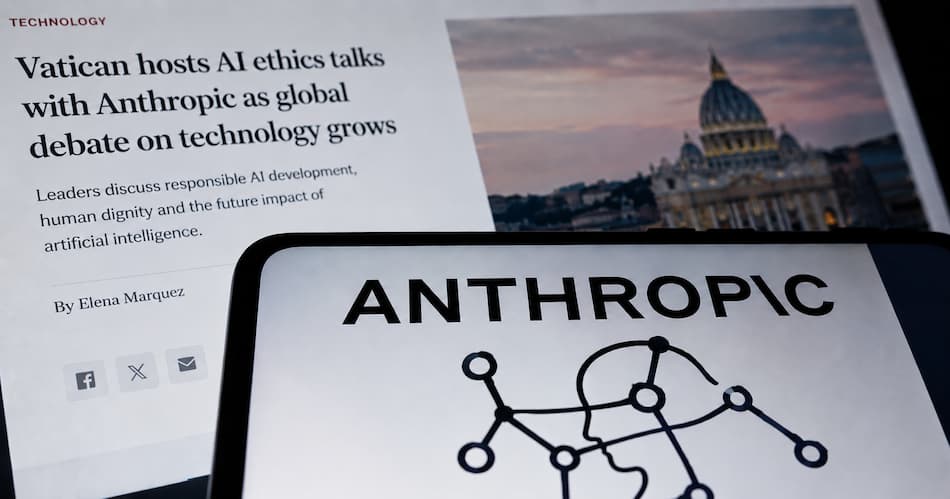
AI companies keep saying they want to build safe systems, but most readers are left with a basic question. Who gets to define “safe,” and whose values end up inside the model? The recent Vatican Anthropic AI ethics story matters because it turns that abstract debate into something concrete. Wired reported on a Catholic priest working inside Anthropic’s trust and safety orbit, which puts religion, corporate governance, and AI policy in the same frame. That is not a sideshow. It speaks to how labs are trying to shape public trust while they race to release stronger systems. If you care about AI governance, model behavior, or the politics behind alignment, this is worth your attention now, not later.
What matters most here
- The Vatican Anthropic AI ethics story is really about legitimacy. Anthropic is showing that safety work reaches beyond engineering teams.
- Religious input in AI is unusual, but not irrational. Faith institutions have long dealt with moral philosophy, human dignity, and social impact.
- This does not mean the Vatican controls Anthropic. It means value-setting in AI is broader, and messier, than many companies admit.
- The bigger issue is transparency. Readers should ask which voices shape model rules, and which voices are missing.
Why the Vatican Anthropic AI ethics link stands out
Most AI ethics stories follow a familiar script. A company hires former regulators, policy staff, or academic researchers, then points to them as proof that it takes safety seriously. A Vatican-linked figure inside that process lands differently.
Why? Because religion is one of the oldest systems for thinking about human behavior, moral limits, and social obligation. AI firms often present alignment as a technical problem. But it is also a judgment problem, a power problem, and a culture problem. That is where this gets interesting.
Look, Anthropic has built its public image around safety, constitutional AI, and careful deployment. So the presence of a priest or Vatican-affiliated adviser fits the brand. It tells the outside world that the company wants moral depth, not just policy theater.
AI alignment is never only about code. It is about whose rules get written down, who enforces them, and what counts as harm.
What this says about AI governance
The strongest takeaway is simple. AI governance is becoming a coalition project. Engineers still build the systems, but the rules around those systems now draw input from policy experts, philosophers, security staff, and, in some cases, religious thinkers.
That makes sense. If a model answers questions about death, family, violence, law, politics, or faith, then the choices behind refusals and outputs cannot come from benchmark scores alone. A model is not a calculator. It is closer to a public-facing institution, even if companies hate hearing that.
And institutions need norms.
Think of it like city planning. Architects can design the roads, but they do not get to decide traffic law, zoning, emergency access, and school placement by themselves. AI labs are learning the same lesson, sometimes awkwardly.
Is religious involvement in AI ethics a problem?
It depends on how it is handled. Religious perspectives can add substance to debates about dignity, agency, consent, labor, and vulnerable populations. Catholic social teaching, for example, has a long paper trail on technology, inequality, and the common good. That is a real intellectual tradition, not window dressing.
But there is a catch. If one moral framework gets unusual influence without public scrutiny, critics are right to push back. AI systems serve global users with mixed beliefs. No single church, nation, company, or ideology should quietly set the defaults for everyone else.
That tension is the whole story.
The practical question is not whether religious voices should be allowed in the room. Of course they should. The practical question is whether companies are honest about who else is in the room, what authority they have, and how final decisions get made.
What readers should ask about the Vatican Anthropic AI ethics story
If you want to read this story with a clear head, focus on structure, not symbolism. Titles and affiliations matter less than decision-making power.
- What exact role did the Vatican-linked figure hold? Advisory roles, trust and safety roles, and governance roles are very different.
- Did this person shape model policy, public messaging, or internal review? Those are not the same job.
- What other perspectives were involved? Human rights experts, regional specialists, legal scholars, and user researchers should also have input.
- How transparent is Anthropic about value choices? Published policies matter more than vague safety branding.
- Is this substantive, or is it reputational insurance? Honestly, that is the sharpest question in the stack.
Anthropic’s safety image, and where skepticism fits
Anthropic has positioned itself as one of the more careful AI labs. It talks more openly than many rivals about model behavior, risk controls, and alignment methods. That earns some credit.
But safety branding can also become a shield. A company may surround itself with ethicists, nonprofits, and respected institutions while still making rushed product choices under market pressure. We have seen versions of that pattern all over tech. Why would AI be immune?
So yes, the Vatican angle is striking. But the real test is whether Anthropic’s governance produces better outcomes. Are harmful outputs reduced? Are red-team practices solid? Are policy decisions documented? Are external concerns addressed before release, not after a public mess?
That is the scorecard that matters.
What this means for the future of AI ethics
Expect more strange bedfellows. AI labs want legitimacy, and they know technical talent alone will not buy it. You will likely see deeper ties with universities, civil society groups, national governments, labor experts, and moral philosophers. Some partnerships will help. Some will be cosmetic.
There is also a larger shift underway. AI ethics is moving from broad principle statements to institutional design. That means oversight boards, deployment rules, escalation channels, documented constitutions, and public accountability. Less vibe, more machinery.
That shift is overdue (and still incomplete).
If the Wired report pushes more readers to ask who shapes AI values behind the scenes, good. That is a healthier debate than treating alignment as a magical technical layer that appears after training. It never worked that way.
Where to keep your eye next
The Vatican Anthropic AI ethics story is less about one priest and more about a widening power map around AI. Companies are building systems that mediate information, advice, and judgment at scale. That means every hidden influence matters more than the press release suggests.
So keep your eye on governance documents, staffing choices, and who gets authority in trust and safety. The next phase of AI will not be shaped only by model size or compute budgets. It will be shaped by the people who decide what the model should do when the answer is morally messy. Who do you want those people to be?