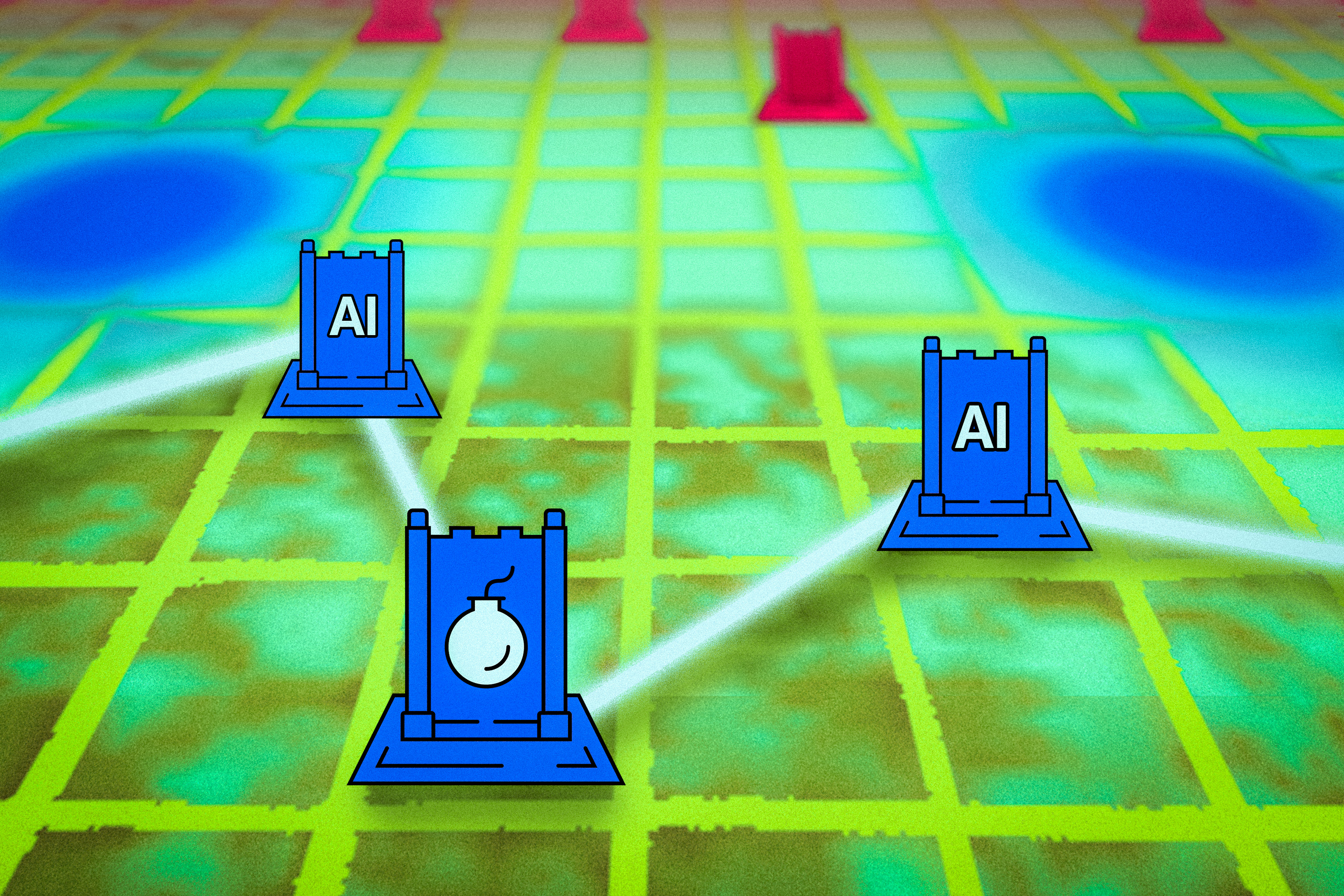
World Models: Promise, Limits, and What They Really Simulate
World models are getting a lot of attention because they promise something plain language has struggled to name: a system that can build an internal picture of how the world changes over time. That matters now because AI teams want models that can plan, predict, and act with less trial and error. The phrase world models sounds sweeping, almost too sweeping. And that is the problem. The real systems are useful, but they are still narrow, brittle, and expensive to scale.
If you are trying to separate serious work from hype, you need to know where these models help and where they fall apart. Can they really simulate everything? Not close. But they can already do enough to change how robots, games, and agent systems are built.
- World models predict how an environment may change, not just what text comes next.
- They are strongest in closed or semi-closed settings like games, labs, and robotics demos.
- Long-horizon planning still breaks because small errors pile up fast.
- Better simulations do not erase the need for real-world testing.
- The most useful systems combine prediction, memory, and feedback from the environment.
What world models are actually for
A world model is a model that learns an internal representation of how things work. It tries to answer questions like: If I take this action, what happens next? What state will the environment be in after five steps? Which path is most likely to succeed?
That makes the idea useful for planning. A robot arm can test actions in its internal model before moving. A game agent can estimate the outcome of a move without touching the live environment. A self-driving stack can, in theory, reduce wasted computation by focusing on likely futures.
Think of it like an architect’s model of a building. It helps you see where a wall goes and whether a stairway fits, but it does not replace the building inspection. Real-world friction still matters.
Why the world models idea keeps coming back
Researchers have chased this for years because it attacks a hard problem. Pure pattern matching is weak at planning. Pure search is slow and costly. A world model sits in the middle. It gives an agent a guess about the next state before the action happens.
That is why people keep returning to model-based reinforcement learning, video prediction systems, and latent-space simulators. They are all trying to compress reality into something a machine can reason over. The wins are real. Dreamer-style agents from Google DeepMind, for example, have shown that learned internal rollouts can support control tasks without direct planning in pixel space.
The pitch is not “simulate reality perfectly.” The pitch is “simulate enough of reality to make better decisions faster.”
Where world models work well
World models tend to perform best where the rules are stable and the state space is bounded. That includes video games, robot manipulation in controlled spaces, warehouse picking, and certain industrial tasks. In those settings, the model can learn repeatable patterns and use them to predict outcomes with decent accuracy.
They are also useful when data is expensive. If you can reduce the number of real-world trials, you save time and money. That is a big deal in robotics, where every failure can mean wear, downtime, or a smashed gripper. And in some simulation-heavy workflows, the model can act like a fast proxy before the real system takes over.
- Learn from observation and action data.
- Compress the state into a latent representation.
- Roll forward possible futures inside that learned space.
- Choose actions that look best under the model.
That pipeline is clean on paper. In practice, each step can wobble.
Why world models still fail under pressure
Here’s the thing. Prediction errors compound. If the first step is slightly off, the second step is built on a bad foundation, and the third gets worse. After a while, the model’s imagined future stops looking like the real one. This is the classic long-horizon problem.
They also struggle with novelty. If the model has never seen a weird lighting condition, a broken sensor, or a human doing something unexpected, its internal simulation can drift quickly. That is why these systems often look impressive in demos and less impressive in messy environments.
Training data is another choke point. A model learns the world it has seen, not the world you wish existed. If the data skews toward common cases, edge cases get thin coverage. That matters a lot in safety-critical settings.
Useful prediction is not the same as faithful physics.
World models in AI, not fantasy
The strongest current systems are hybrid. They do not rely on a single magical simulator. They mix learned prediction with search, memory, explicit rules, or external tools. That is the sane path. Pure end-to-end dreaming sounds elegant, but it tends to break when the task gets messy.
Recent work across robotics and agent design points in the same direction. Use the model to narrow options. Use real feedback to correct it. Use planning where it helps, and stop pretending the learned world is the real world. That distinction matters.
OpenAI, Google DeepMind, and other labs have all explored variants of this idea, each with different tradeoffs. Some focus on video and latent dynamics. Some focus on control. Some focus on agents that can reason about next steps inside a compact state space. The labels change. The core challenge does not.
What to watch for in the next wave
Look for systems that can recover from bad predictions, not just make pretty rollouts. Look for better uncertainty estimates, because a model that knows when it is guessing is far more useful than one that sounds confident. And look for tighter loops between simulation and reality (that part is non-negotiable).
Will world models simulate everything? No. But they may become a better planning layer for machines that need to act in the real world. That is a much more practical goal, and a far more honest one.
What this means if you build or buy AI systems
If you are evaluating products or building internal tools, ask a blunt question: what part of the environment is the model actually learning, and what part is still handled by outside systems? If the answer is vague, the vendor is probably selling aspiration.
Good use cases have clear state, clear feedback, and measurable outcomes. Bad ones ask the model to infer too much from too little. That is where the pitch gets slippery. A world model is like a chess engine for reality only in the narrow sense that both need a board. Reality keeps changing the board.
For now, the smartest stance is skeptical but open. These models are real. Their limits are real too. The next breakthrough will not come from claiming they can simulate everything. It will come from proving they can simulate the right things, at the right speed, with fewer mistakes. Who is building that system well enough to trust?