AI Cyber Deception Is Turning Scammers’ Own Tactics Against Them
Your security team has a simple problem: attackers move fast, automate well, and do not care how much noise they create. AI cyber deception matters now because it gives defenders a way to fight on the same tempo without handing every task to an overworked analyst. Wired recently reported on tools that use AI to engage scammers, imitate targets, and waste criminal time. That sounds funny at first. It is also a serious shift in cyber defense, because time, attention, and trust are the fuel behind phishing, fraud, and social engineering.
What Stands Out
- AI cyber deception can stall scammers by keeping them talking to bots instead of real victims.
- The best systems collect intelligence while they delay attacks, including scripts, wallet addresses, domains, and new lures.
- This approach works best as a support layer, not as a replacement for detection, takedown, or user training.
- Legal and ethical limits matter because deception tools can collect sensitive data or interact with real people.
What AI Cyber Deception Actually Does
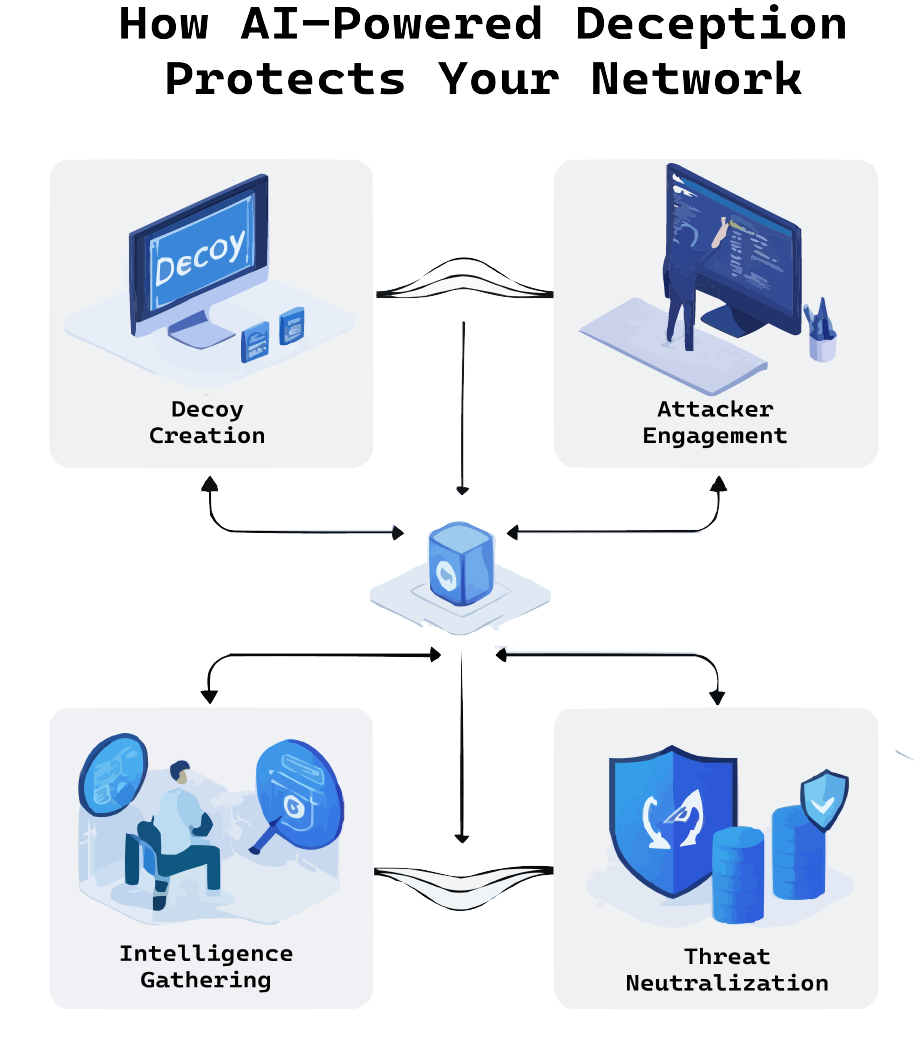
AI cyber deception uses automated agents to mislead, delay, or study attackers. Think of it as the security version of a full-court press in basketball: you are not only defending the basket, you are making every move harder and more tiring.
Older deception tools included honeypots, fake credentials, decoy servers, and sinkholed domains. The new twist is conversation. Large language models can answer scam messages, ask follow-up questions, mimic confusion, and keep a fraudster engaged for minutes or hours.
The point is not to outsmart every criminal. The point is to make crime less efficient at scale.
That is why this field is getting attention. If one scammer can message 500 people a day with automation, a defender needs a counterweight. AI agents can respond at machine speed while still sounding human enough to keep the scammer invested.
Why AI Cyber Deception Is Useful Against Scams
Most scams depend on a narrow window. The attacker wants panic, speed, and a victim who does not stop to verify the story. A fake bank alert, a romance pitch, a crypto investment offer, or an IT help desk impersonation all work better when the target reacts quickly.
AI deception breaks that rhythm. It can ask for clarification, pretend to misunderstand payment instructions, or request proof that forces the scammer to reveal more infrastructure. Why give them a clean path when you can make every step sticky?
That changes the economics.
A delayed scammer is not harmless, but they are less productive. If a bot can waste 20 minutes, gather a phone number, capture a phishing link, and flag a crypto wallet, that interaction may help investigators, platforms, and financial institutions respond faster.
Where The Data Becomes Valuable
The underrated part of AI cyber deception is threat intelligence. A good deception system does not merely chat. It records the playbook.
Security teams can use these interactions to track:
- Fresh phishing domains before they spread widely.
- Payment instructions tied to mule accounts or crypto wallets.
- Scripts used by call centers or fraud crews.
- Language patterns that reveal region, target type, or campaign goals.
- Malware links, credential-harvesting pages, and fake support portals.
This is practical data. A bank can block a beneficiary account. A hosting provider can suspend a domain. A messaging platform can train classifiers on fresh scam language. And a company can update employee training with examples taken from real attempts (with sensitive details stripped out).
AI Cyber Deception Still Has Hard Limits
Look, this is where I get wary of the sales pitch. AI can waste a scammer’s time, but it cannot fix bad identity controls, weak email filtering, exposed admin panels, or a payment approval process that relies on one rushed employee.
Attackers also adapt. If defenders use bots, criminals will test for bots. They may ask strange questions, demand voice notes, or move conversations to encrypted channels where monitoring is harder. Some will use their own AI to screen replies and avoid low-value targets.
There is also a safety line. A deception bot should not encourage a crime, make threats, impersonate law enforcement, or collect more personal data than needed. Security teams need clear retention rules, legal review, and human oversight for edge cases.
How Companies Should Use AI Cyber Deception
The best use is targeted and boring. That is a compliment in security. You want tools that reduce risk without creating a circus for the legal team.
- Start with one abuse channel. Pick phishing emails, fake customer support chats, brand impersonation, or SMS fraud. Do not try to cover everything at once.
- Define the win. Are you trying to waste attacker time, collect indicators, protect customers, or speed takedowns? Each goal needs different data.
- Keep humans in the loop. Let analysts review samples, approve escalation rules, and tune the bot’s behavior.
- Strip sensitive data. Store only what you need for detection, investigation, or reporting.
- Connect it to action. Feed domains, wallet addresses, phone numbers, and scripts into your fraud, SOC, and brand-protection workflows.
A tool that only produces amusing transcripts is a novelty. A tool that sends verified indicators into blocking systems, takedown queues, and case management is useful.
What This Means For Cybercriminals
Scammers have enjoyed a lopsided advantage for years. They could automate outreach while defenders had to investigate one report at a time. AI cyber deception starts to narrow that gap by making attacker labor less predictable.
It may hit lower-tier fraud first. Boiler-room crews, romance scammers, refund fraud operators, and phishing affiliates rely on repeatable scripts. Those scripts are easier to stretch, confuse, and map. More skilled intrusion groups will be harder to trap, but even they can be nudged into revealing infrastructure if the decoy is good enough.
The cat-and-mouse cycle will not stop. It never does. But defenders do not need perfection. They need friction, visibility, and faster paths from signal to action.
The Smart Bet From Here
AI cyber deception should become part of the fraud and security stack, especially for banks, marketplaces, telecoms, and consumer platforms. Wired’s reporting points to a real change: defenders are no longer limited to blocking messages after harm starts. They can engage attackers, study them, and waste their time.
Still, the practical next step is modest. Pick one scam type your users face every week, run a controlled deception pilot, and measure whether it produces better takedowns, fewer repeat lures, or faster investigations. If it cannot do that, it is theater. If it can, criminals are about to spend a lot more time talking to machines.


