AI Diagnosis Model Helps Patients Find Answers
Years of pain, tests, and dead ends can leave you with one hard question: why is this happening to me? That is why the rise of an AI diagnosis model matters. It can help doctors spot patterns faster, connect rare symptoms, and narrow the search when standard workups stall. For patients stuck in medical limbo, that can feel seismic.
But speed is not the same as certainty. The real value is not a machine replacing your doctor. It is a tool that can surface leads a human team might miss, especially when the case is unusual or the symptoms do not fit a neat box. Look, that is a very different promise from the usual AI hype.
So what can this model actually do, and where should you stay skeptical?
What stands out about the AI diagnosis model
- It can help clinicians sort through long, messy symptom histories faster.
- It is useful when a patient has seen multiple specialists without a clear answer.
- It works best as a decision support tool, not as a final judge.
- It may help shorten the path to a diagnosis for rare or overlooked conditions.
- It still depends on good data, careful oversight, and real clinical judgment.
The promise here is simple. Better pattern recognition can save time, and in medicine, time often means less suffering.
How the AI diagnosis model fits into real care
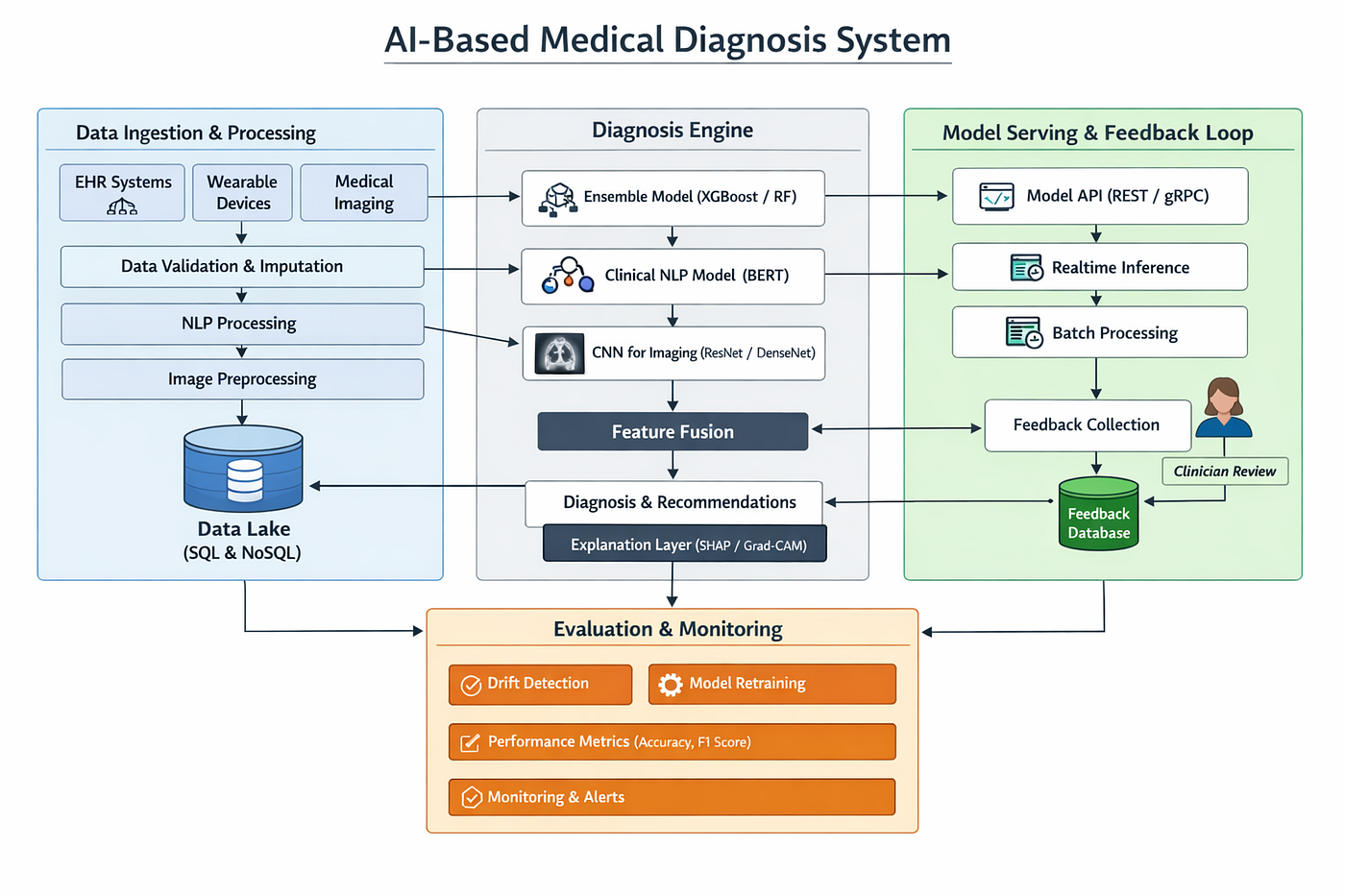
Doctors already use judgment, imaging, lab work, and specialist referrals to piece together a diagnosis. The AI diagnosis model adds another layer. It scans symptom patterns, prior records, and clinical clues, then suggests possibilities worth checking.
Think of it like a veteran mechanic listening to an engine while also running a diagnostic scanner. The scanner can point to trouble, but it cannot turn the wrench. The same logic applies here.
That matters because many patients with rare diseases or hard-to-pin-down conditions spend years being told that their symptoms are vague, stress-related, or unrelated. An AI system can help reopen the file. And sometimes that is enough to change the outcome.
Why the AI diagnosis model matters for patients with uncertainty
Medical uncertainty is exhausting. You may face repeat visits, conflicting opinions, and the quiet fear that nobody is connecting the dots. A model that helps clinicians notice patterns earlier can reduce that churn.
Here is the practical upside:
- Faster triage when a case needs urgent attention.
- Better referral targeting so you reach the right specialist sooner.
- Stronger differential diagnosis when symptoms overlap across several conditions.
- Less friction in long diagnostic journeys, which often drain time and money.
And yes, that can be a big deal. Why keep running the same tests if a new tool can point to a more precise next step?
Where the AI diagnosis model can go wrong
AI systems learn from data, and medical data can be uneven, incomplete, or biased. If the training set skews toward certain ages, ethnic groups, or clinical settings, the model may miss people who do not look like the norm. That is not a theoretical problem. It is a real one.
There is also the risk of overreliance. A confident suggestion from software can sound persuasive, even when the evidence is thin. That is why the strongest use case is a human clinician using the model as one input among many, not as a shortcut around clinical work.
The best AI diagnosis systems should make doctors slower in the right way. Slower enough to ask better questions. Faster enough to avoid wasted months.
What you should ask if your doctor uses an AI diagnosis model
If your care team brings AI into the diagnostic process, ask direct questions. You do not need jargon. You need clarity.
- What data did the system use to make this suggestion?
- How often has it been tested in patients like me?
- Is this a recommendation or a confirmed diagnosis?
- What other causes are still being considered?
- What test or specialist visit comes next?
Those questions keep the process grounded. They also remind everyone that a tool is only as good as the clinical follow-through around it.
What the ABC News report signals about the bigger shift
The story points to a wider shift in healthcare. AI is moving from image reading and paperwork into the messier work of diagnosis. That is a tougher problem, because diagnosis is not one clue. It is a chain of clues, context, and judgment.
That is why the news matters beyond one patient or one hospital. If these systems keep improving, they could help shorten diagnostic odysseys for people with rare disease, complex symptoms, or overlapping conditions. But the bar should stay high. Hospitals, regulators, and clinicians need proof that these tools work across real patients, not just polished demos.
The question is not whether AI can help at all. The question is whether it helps the right patients, in the right setting, without adding new blind spots.
What comes next for AI diagnosis model adoption
The next phase will be about trust, validation, and workflow. If the tool slows down doctors, creates noise, or misses edge cases, adoption will stall. If it consistently helps uncover answers that would otherwise take years, it will spread fast.
That is the tension. Not every shiny model deserves a place in patient care. But the ones that help people escape diagnostic purgatory? Those deserve a hard look.
And if you are a patient, the next question is worth asking at your next appointment: could an AI diagnosis model help rule in, or rule out, what everyone else has missed?