AI Interpretability and the Alien Mind Problem
You can ask a modern AI system a plain question and get a fluent answer in seconds. That ease is the problem. AI interpretability matters now because the surface keeps getting smoother while the internals remain strange, compressed, and hard to inspect. OpenAI’s “An Alien Mind” points at the tension many researchers and product teams already feel: these models can act familiar without being familiar. They do not store ideas, intentions, or facts the way people do. They learn patterns across vast data, then turn those patterns into useful output. Sometimes that works. Sometimes it fails in ways that look bizarre. If you are putting AI into search, coding, customer support, finance, health, or education, you need more than a good demo. You need ways to ask what the system is doing, why it is doing it, and where its confidence is misplaced.
What to Watch
- Fluency is not evidence of understanding. A polished answer can still rest on weak reasoning.
- Model behavior can shift with small prompt changes. That makes testing harder than normal software QA.
- Interpretability is a safety tool, not a magic scanner. It can reveal patterns, but it does not explain everything.
- Teams need layered checks. Use evaluations, monitoring, red teaming, and human review together.
Why AI Interpretability Matters for “Alien” Systems
OpenAI’s framing is useful because it cuts through a common mistake. People see language and infer a mind like theirs. I have covered AI long enough to see this error repeat every few years, first with chatbots, then with voice assistants, now with large language models.
These systems are alien in a practical sense. They can produce a legal memo, debug Python, or summarize a medical paper, but their internal route to the answer is not a human chain of thought. It is distributed across activations, weights, attention patterns, and learned features. That does not make them useless. It makes them hard to trust blindly.
OpenAI’s “An Alien Mind” is best read as a warning against treating natural language output as a window into human-like reasoning.
Here’s the thing. Normal software usually fails because a developer wrote bad logic, missed an edge case, or shipped a bug. AI systems fail because the learned behavior itself can be fuzzy. Asking “where is the bug?” may be the wrong question. The better question is, “What behavior did the model learn, and under what pressure does it break?”
That is where AI interpretability earns its keep.
What AI Interpretability Can Actually Show
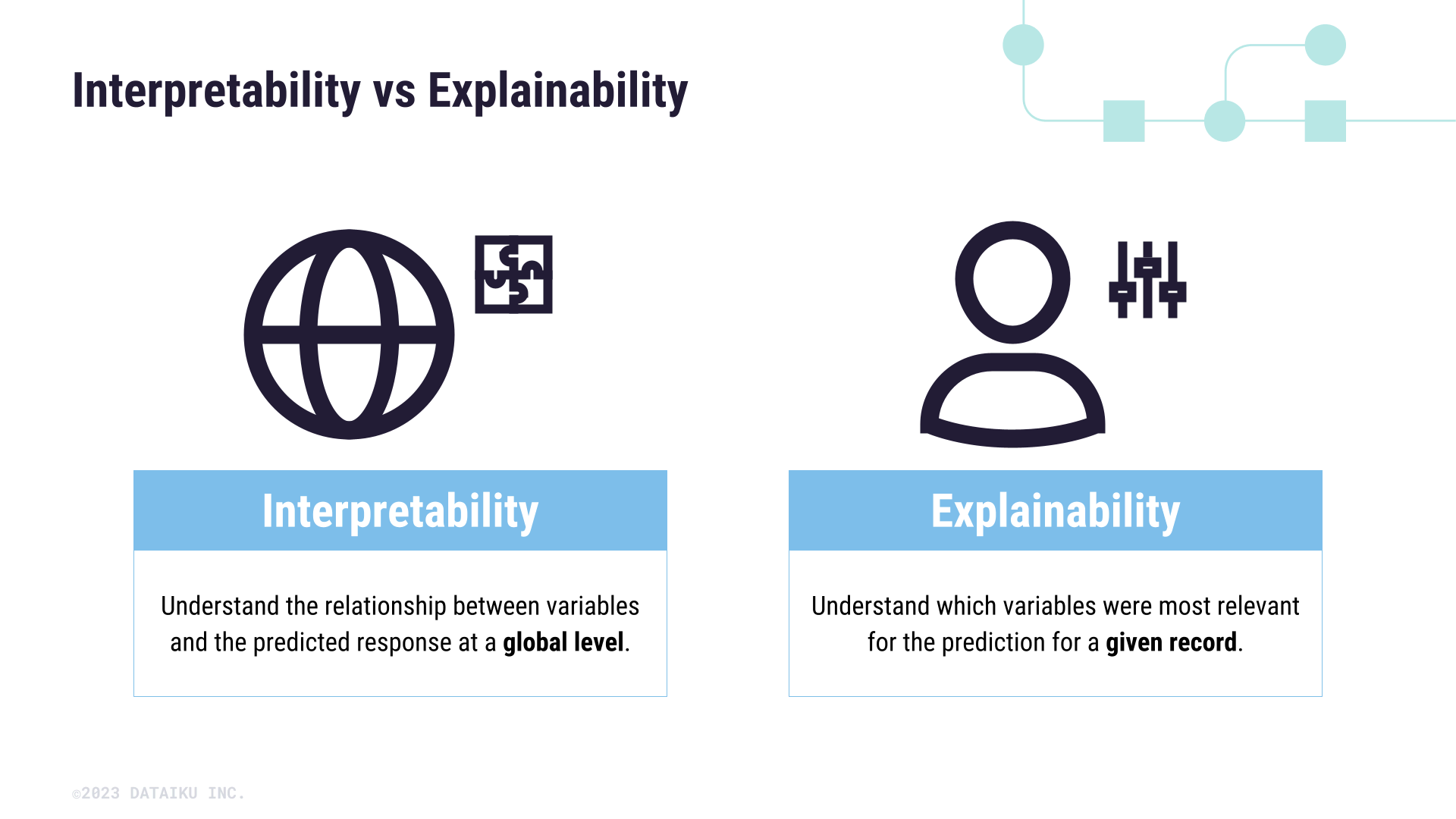
AI interpretability is the set of methods used to understand how a model turns input into output. In large language models, that may include probing internal activations, tracing attention behavior, mapping learned features, or testing how model responses change when specific signals are changed.
Think of it like tasting soup while cooking. You cannot identify every molecule in the pot, but you can tell when there is too much salt, when the heat is wrong, or when one ingredient overwhelms the rest. Interpretability gives researchers a partial taste of the model’s internal recipe.
Useful signals
- Feature detection: Researchers look for internal units or patterns tied to concepts, behaviors, or topics.
- Attribution: Teams test which parts of an input influenced an answer.
- Activation analysis: Engineers inspect internal model states to see whether certain behaviors appear before output.
- Behavioral evals: Test suites measure how often a model lies, refuses, hallucinates, follows instructions, or changes under pressure.
None of this gives you a neat “thought transcript.” Be skeptical of anyone who claims otherwise. Interpretability is still young, and large models are not built for easy inspection.
The Hard Limits of AI Interpretability
The most honest thing to say about AI interpretability is that it is necessary and incomplete. It can help you spot patterns. It can support safer deployment. But it cannot guarantee that a model will behave well in every setting, especially when users, tools, and live data enter the picture.
Why is this so hard? Scale is one reason. A frontier model may contain billions or trillions of parameters, and its behavior depends on training data, alignment methods, system prompts, user prompts, retrieval tools, and deployment rules. Change one layer and the final behavior may move.
Another issue is translation. Even when researchers identify a feature, naming it in human terms can be slippery. A pattern may look like “deception,” “sycophancy,” or “medical caution,” but the model may not hold that concept in a human way. The label is our map, not the territory.
And yes, that should make buyers uneasy.
How to Apply AI Interpretability in Real Products
If you run an AI product team, do not wait for perfect interpretability before building guardrails. You will be waiting a long time. Instead, treat AI interpretability as one layer in a broader control system.
- Define forbidden failures. Write down the model behaviors you cannot accept, such as fabricating citations, giving medical instructions without qualification, exposing private data, or taking actions without user consent.
- Build task-specific evals. Generic benchmark scores are not enough. Test the exact workflows your users will run.
- Inspect failures, not just averages. A model that scores 94 percent may still fail on the 6 percent that matters most.
- Use interpretability findings to update tests. If internal analysis shows a model clusters risky prompts in a strange way, turn that pattern into a regression test.
- Monitor live behavior. Watch drift, user complaints, refusal rates, tool calls, and high-risk outputs after launch.
Look, this is less glamorous than a demo video. It is also how serious systems get built. Aviation, payments, and cloud infrastructure all learned the same lesson: trust comes from boring controls that work under stress.
What Leaders Should Ask Vendors
Most companies buying AI tools will not run their own interpretability lab. Fair enough. But they can ask sharper questions. If a vendor waves away model opacity with confidence theater, push back.
- What evaluations do you run for our specific use case?
- How do you test hallucination, prompt injection, data leakage, and unsafe tool use?
- Can we see failure examples, not only success stories?
- How are model updates tested before release?
- What controls exist for logging, audit trails, and human review?
- Do you use interpretability research to change training, policy, or product behavior?
These questions are not academic. They decide whether your AI system becomes a controlled assistant or a liability with a nice chat box.
The Real Message Behind the Alien Mind
OpenAI’s “An Alien Mind” lands because it resists the easy story. AI is not simply a calculator with better grammar. It is also not a person in a server rack. The more useful position sits between those claims, and it is less comforting.
Modern models are powerful pattern systems that can perform tasks once thought to require human judgment. They can also be brittle, overconfident, and opaque. That mix demands humility from researchers and discipline from companies shipping AI into daily work.
My view after years on this beat: the next trust gap will not be about whether AI can answer questions. It will be about whether teams can prove their systems behave within clear boundaries. AI interpretability is one of the few tools that can make those boundaries visible, even if the view is still grainy.
The practical next step is simple. Before you add another AI feature, write down the failure you fear most, then test for it until the model surprises you. What it does in that moment will teach you more than any polished launch demo.