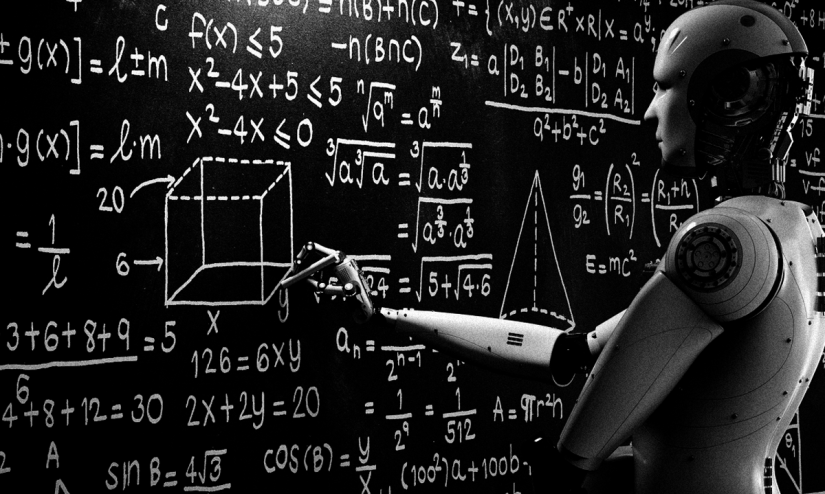
AI Math: Why OpenAI and Astra Matter Now
The pressure around AI math is simple. Companies want models that feel smart, fast, and useful, while users want answers that hold up when the stakes are real. That gap is why every new claim from OpenAI, Astra, or any other AI product gets picked apart so aggressively now. People are not just asking whether the demo works. They are asking whether the system can stay reliable when the task gets messy, expensive, or boring. That is the real test, and it is getting harder, not easier.
Look, the hype cycle has moved on. What matters now is whether these tools can do hard work without turning into expensive noise. Can they help you make better decisions, or are they just very polished guesswork machines?
- AI math is not about vanity benchmarks. It is about reliability under pressure.
- OpenAI and Astra reflect two different bets on how people will use AI.
- The next wave of winners will care more about product design than raw model size.
- Users will keep punishing systems that sound confident and fail quietly.
What AI math really means
People use AI math to talk about model performance, reasoning, cost, latency, and product fit all at once. That mix matters because a model that scores well on a benchmark can still be awkward in the real world. A chatbot that solves a puzzle cleanly may stumble when a user asks for something half-defined, contradictory, or loaded with context.
OpenAI has spent years proving that scale can create dramatic gains, but scale alone does not solve trust. And trust is the bottleneck. A model that saves you five minutes is useful. A model that wastes an hour because it sounds certain while being wrong is a liability.
Benchmarks are like practice drills. Useful? Yes. Enough to judge game day performance? Not even close.
Why OpenAI still sets the pace in AI math
OpenAI still matters because it shapes expectations. When the company improves a model or changes how a product behaves, the rest of the industry moves with it. Competitors, investors, and developers all read those signals closely (sometimes too closely).
But the real story is less about one model release and more about product discipline. OpenAI keeps pushing into tools that blend chat, search, coding, and task completion. That is where the market is heading. People do not want a science project. They want software that fits into their day.
Where the pressure lands
- Accuracy on open-ended tasks.
- Clearer handling of uncertainty.
- Lower cost per useful answer.
- Better control for businesses and developers.
If any one of those slips, the whole pitch weakens. That is why the company’s every move gets treated like a referendum on the field.
What Astra changes in the AI math conversation
Astra matters because it points to a different kind of AI promise. Instead of focusing only on text generation, it pushes toward assistants that can see, listen, and react in a more fluid way. That sounds small on paper. It is not.
The shift is structural. If AI can understand live context, it can move from answering questions to handling more of the workflow around them. Think of it like moving from a calculator to a kitchen prep station. The first does one job well. The second changes how the whole meal gets made.
That is why Astra raises the stakes for AI math. A system that works in conversation is one thing. A system that has to interpret the real world, in real time, is something else entirely.
Where the existential crisis comes from
The existential crisis is not that AI is failing. It is that the easy wins are getting crowded out. Basic text generation is no longer enough to impress anyone who has used these tools for a year. The bar keeps moving.
So companies face a blunt choice. Do they chase bigger models, which are costly and harder to justify? Or do they focus on narrower products that solve specific problems better? Honestly, that second path may be the smarter one.
Users care about whether the tool earns its place. Not whether it sounds futuristic.
How you should judge AI products now
If you are choosing tools for your team, stop asking for broad promises. Ask for proof in the exact jobs you need done. The best way to measure AI math is through repeatable work, not demo theater.
- Test the tool on your own documents, not a vendor sample.
- Measure error rates on the tasks that matter to you.
- Check how often the system says “I do not know.”
- Compare total cost, including review time and rework.
- Look at failure modes, not just best-case outputs.
That checklist sounds plain because it is. Fancy claims do not pay the bills. Results do.
Why the next phase will favor boring wins
The next phase of AI will probably look less dramatic than the last one. More admin help. More workflow automation. More specialized assistants. Fewer grand claims about human-level reasoning that collapse under ordinary use.
That does not make the field less exciting. It makes it more real. The companies that win will be the ones that remove friction without creating new messes. And that is a far tougher job than writing a flashy demo.
So the question is not whether AI keeps advancing. It will. The question is which products earn enough trust to stay in your workflow when the novelty wears off?
The next test for AI math
The next test is simple: can these systems become dependable enough that you stop thinking about the machinery? That is the point where AI stops being a talking point and starts being infrastructure. Until then, every OpenAI move and every Astra-style interface shift will keep exposing the same thing. The market does not want more magic. It wants tools that work on Tuesday afternoon, under pressure, without drama.