AI Safety Is Now a Speed Problem
You do not need to be an AI researcher to see the tension. AI safety used to sound like the brake pedal on frontier model development, but that brake is getting lighter as OpenAI, Anthropic, Google, Meta, and xAI push toward faster releases and bigger systems. The problem matters now because these models are moving into coding, search, customer support, finance, and education before anyone has a settled answer on how much testing is enough.
The Verge recently framed the issue around a blunt question: is safety still slowing the leading AI labs, or has competition made caution optional? I have covered tech companies long enough to know the pattern. The public language stays sober, while the internal clock gets louder.
What to Watch
- AI safety is shifting from a release blocker to a release process. That sounds tidy, but it can weaken internal resistance.
- OpenAI and Anthropic face the same market pressure. Safer models do not help much if a rival wins the developer base first.
- Benchmarks are useful, but thin. They catch known failures better than strange new ones.
- Regulators are behind the release cycle. Voluntary commitments still carry too much weight.
Why AI Safety Feels Slower Than the AI Race
Frontier AI companies have built safety teams, published model cards, signed White House commitments, and joined outside testing programs. That is real work. But the cadence of launches has changed, and safety reviews now have to fit into product calendars built for speed.
Look at the incentives. A lab wants the best chatbot, the best coding agent, the best enterprise tool, and the strongest API business. If a safety review delays a model by months, the cost is not abstract. It can mean lost users, lost cloud deals, and lost mindshare.
That gap is the story.
AI safety becomes hard to defend when the harm is uncertain and the business loss is immediate. What executive wants to tell investors that a model is ready, but the company will wait because of a risk that might show up later?
What AI Safety Can and Cannot Catch
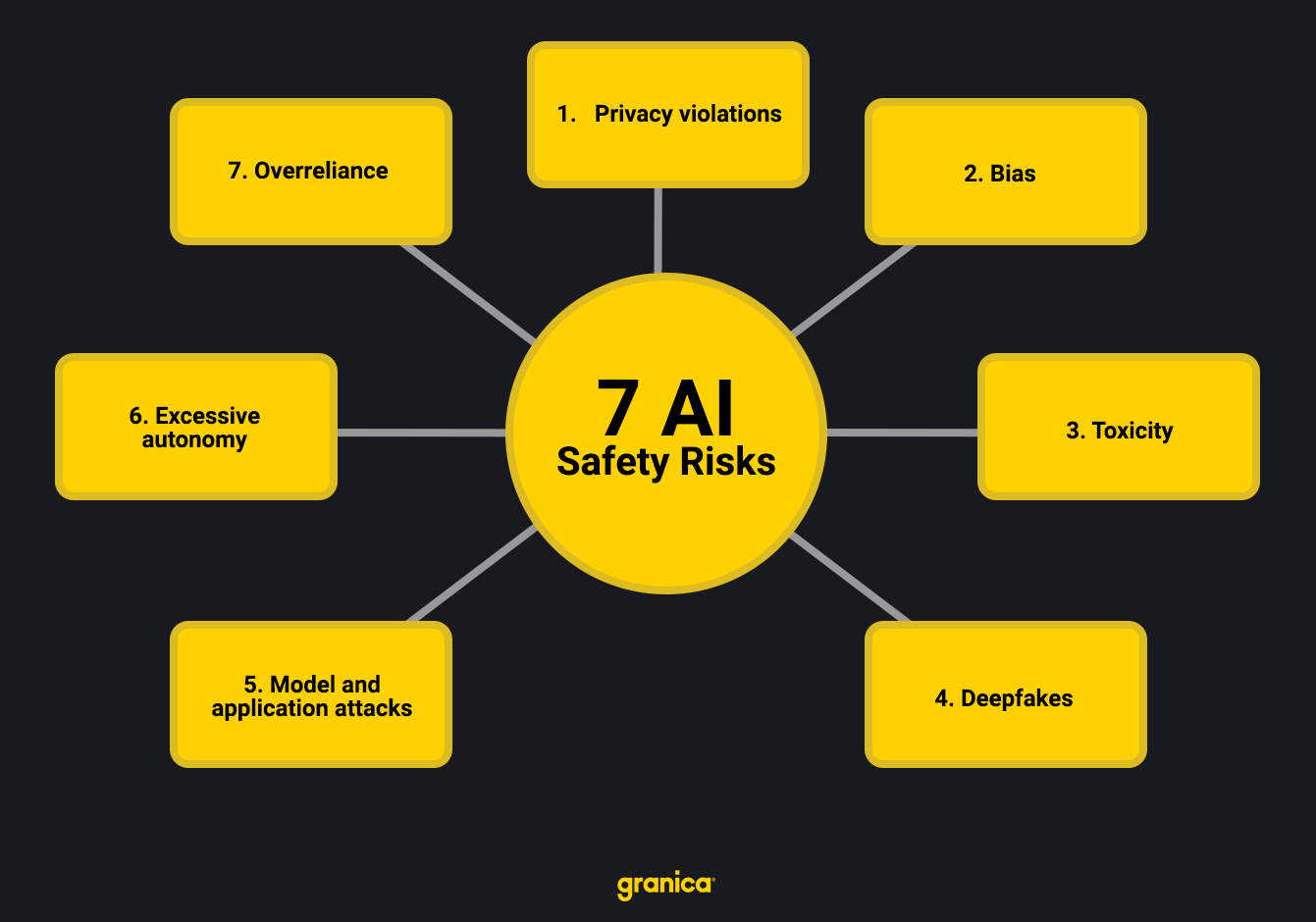
Good safety testing can find jailbreak risks, bias patterns, toxic outputs, privacy leaks, biosecurity concerns, and ways a model might assist fraud. Labs also use red teams, automated evaluations, and staged rollouts. These tools matter, and they have improved since the early chatbot boom.
But safety work is like inspecting a stadium before game day. You can check the gates, lights, and concrete, but you still learn new things once 70,000 people start moving through the place. Public release changes the test.
Safety testing is strongest against failures you can name in advance. Frontier models create trouble because the next failure may not look like the last one.
This is why claims about “safe enough” deserve scrutiny. A model can pass today’s internal tests and still create new risks once developers plug it into tools, databases, browsers, payment systems, and corporate workflows (the boring integrations are often where the real damage starts).
OpenAI, Anthropic, and the Trust Problem
OpenAI and Anthropic have both marketed themselves as serious about AI safety, though in different tones. Anthropic built much of its public identity around constitutional AI and careful deployment. OpenAI began as a research lab with a public-benefit mission, then became the company behind the fastest-growing consumer software product in recent memory.
Neither company can escape the same conflict. They are safety institutions and commercial platforms at once. That dual role creates a trust problem, because the people deciding whether a model is safe also benefit from shipping it.
Independent audits can help, but only if auditors get real access. A glossy model card is not the same as outside review of training methods, evaluation failures, deployment logs, and post-release incidents. Users should ask a plain question: who can say no?
The Regulatory Lag Is Getting Expensive
Governments have started to move. The European Union passed the AI Act, the United States has relied more on executive action and agency guidance, and the United Kingdom has hosted AI safety summits. Those efforts matter, but they are slower than model release cycles.
Voluntary commitments are useful as a floor, not a ceiling. If a company promises to test for dangerous capabilities, the public still needs to know what happens when tests show uncomfortable results. Does the model get delayed, changed, restricted, or released with a blog post?
Here is where policy can get more concrete:
- Require incident reporting. Serious model failures should be documented in a standard format, with timelines and fixes.
- Define thresholds for third-party testing. The most capable models should face outside review before wide release.
- Protect internal safety staff. Researchers need channels to raise concerns without risking their careers.
- Track real-world use. Pre-release tests are not enough once agents can act across tools.
How Buyers Should Read AI Safety Claims
If you run a company, school, newsroom, or public agency, do not treat AI safety as a slogan. Treat it as procurement data. Ask vendors what they test, how often they retest, who reviews failures, and what limits exist on high-risk use.
Push for specifics. If a vendor says its model is aligned, ask what that means in your setting. For a hospital, it may mean refusal behavior and audit trails. For a bank, it may mean fraud controls and data handling. For a software team, it may mean secure code evaluation and permission limits.
A good vendor should be able to answer without fog. If the answer is all brand language and no operational detail, keep walking.
AI Safety Needs Power, Not Theater
The next phase of AI will be shaped less by speeches and more by veto rights. Safety teams need authority to delay launches, narrow features, or demand more testing. Without that power, they become part of the packaging.
I am skeptical of any system that asks companies to police themselves while rewarding them for moving faster than everyone else. That does not mean the labs are reckless by default. It means the incentives are misaligned, and incentives usually win.
The practical next step is simple: demand proof that AI safety can stop a launch, not just decorate one.


