AI Slowdown Fight Hits Washington
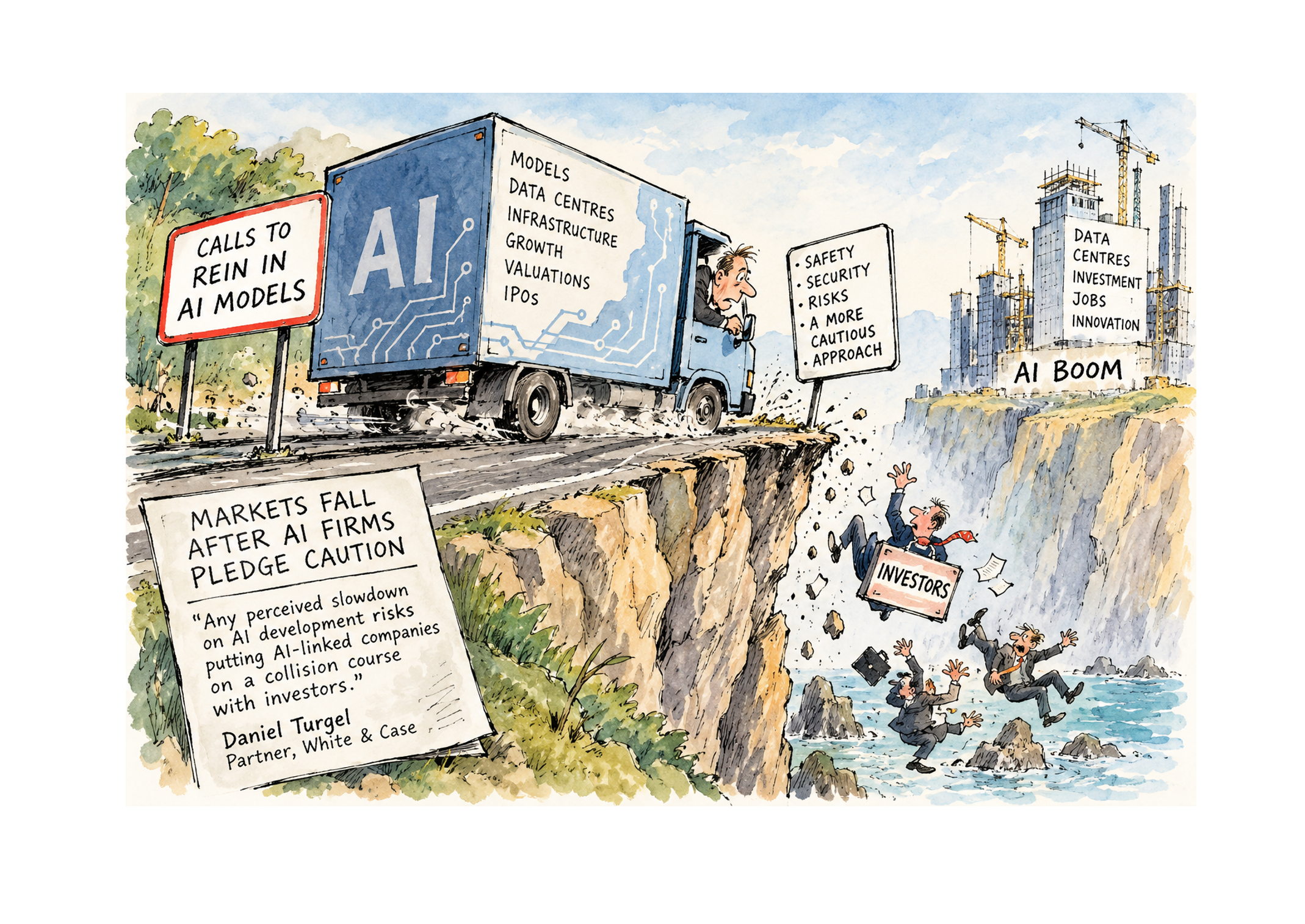
You can feel the tension in the AI slowdown debate because it now affects product roadmaps, hiring plans, national security policy, and the tools your team may use next quarter. According to Wired, some AI leaders are calling for slower development or more caution around advanced systems, while Trump’s team is signaling a different view: if companies want to slow down, they can do it themselves. That split matters. It shapes whether safety rules come from Washington, from labs such as OpenAI, Anthropic, Google DeepMind, and Meta, or from the market after something breaks. I have covered enough tech policy fights to know the pattern. Industry asks for clarity, politicians hear control, and users get stuck sorting out what is safe enough to trust.
What Matters Right Now
- The AI slowdown argument is moving from labs to politics. That changes the incentives for every major AI company.
- Trump’s team appears wary of federal speed limits. The message, as reported by Wired, is that companies can choose restraint without forcing it on rivals.
- Voluntary safety promises are useful, but thin. They work best when paired with audits, incident reporting, and clear liability.
- Businesses should not wait for Washington. Your own AI governance rules need to be stricter than a vendor press release.
Why the AI Slowdown Debate Is So Hard
The basic question sounds simple: should the most powerful AI labs slow down until safety checks catch up? But the answer gets messy fast. A pause may reduce reckless launches, yet it can also reward companies and countries that ignore the pause.
That is the policy knot. AI models are now tied to cloud infrastructure, chips, defense work, search, coding tools, education, and customer service. Slowing one part of the system does not freeze the rest. It is like asking one team in a football league to stop practicing because the playbook has become too aggressive.
And who gets to hold the whistle?
The strongest case for an AI slowdown is not fear of new software. It is fear of deploying powerful systems before anyone can measure, explain, or recall their failures at scale.
Trump’s Team and the AI Slowdown Pushback
Wired’s reporting frames the Trump-side response as a market-first stance. If AI executives believe their systems are risky, they should slow their own companies rather than ask the government to impose broad limits. That argument has political bite because it turns safety rhetoric back on the labs.
Look, there is a fair point buried in the jab. Some AI companies have spent years racing for users, capital, data, and developer mindshare while also warning that advanced AI could pose serious risks. That dual message has always been awkward. You cannot press the accelerator with one foot and ask regulators to install a brake with the other, then act shocked when skeptics raise an eyebrow.
But the government cannot wash its hands either. Advanced AI creates spillover risks, including fraud at scale, cyber abuse, synthetic media, labor disruption, and opaque decision systems in sensitive settings. Markets are bad at pricing harms that land on people who never agreed to take the risk.
What an AI Slowdown Would Actually Mean
A real AI slowdown does not have to mean freezing every chatbot update or banning open research. The useful version is narrower. It targets the highest-risk frontier models and the ways they are tested before public release.
Practical slowdown measures could include:
- Pre-release safety evaluations for frontier models, including cyber, biosecurity, autonomy, and deception tests.
- Third-party audits for systems used in hiring, lending, health, education, law enforcement, or public services.
- Incident reporting when AI systems cause material harm, leak sensitive data, or enable abuse.
- Compute tracking for very large training runs, with privacy and trade-secret protections.
- Clear deployment thresholds that say when a model must be held back, restricted, or redesigned.
None of that is exotic. Aviation, medicine, finance, and food safety all use staged testing because failure can spread beyond the seller and buyer. AI is different in technical form, but not in that basic public-risk logic.
The Weak Spot in Voluntary AI Safety
Voluntary commitments can help early in a fast-moving field. They let companies test safety practices before law catches up. The Biden administration leaned on that model in 2023 with public commitments from leading AI firms, and the UK AI Safety Summit pushed similar pressure into international view.
Still, voluntary rules have a shelf life. They are easiest to honor when money is loose, competition is polite, and public scrutiny is high. Once a rival ships a faster model or signs a fat enterprise contract, restraint starts to look like unilateral disarmament.
One sentence should sit on every AI policy memo: incentives beat vibes.
That is why audits, liability, procurement rules, and disclosure standards matter. They turn safety from brand language into operating cost. Companies understand operating cost.
What Businesses Should Do Before Policy Settles
If you run a company using AI, do not wait for Congress, the White House, or a lab CEO to define your risk tolerance. Build your own floor. Vendor contracts and internal controls will protect you sooner than a national framework will.
Ask sharper vendor questions
- What data was used to train or fine-tune the system?
- Can customer data be used for future training?
- What red-team testing has been done, and by whom?
- How does the vendor handle model failures, harmful outputs, and security reports?
- Can you turn off features that create legal, privacy, or compliance risk?
Set internal rules that people can follow
Start with a short AI use policy. Ban sensitive data in public tools unless a contract protects it. Require human review for legal, medical, financial, HR, and security uses. Keep logs of where AI affects customers or employees (yes, that spreadsheet counts).
Small controls beat grand principles. A procurement checklist, a model inventory, and a review process for high-risk use cases will do more good than a 40-page ethics document nobody reads.
The Real Fight Is Accountability
The AI slowdown dispute is often framed as speed versus progress, but that misses the tougher issue. The real fight is accountability. If a frontier model causes harm, who pays, who explains what happened, and who has the power to stop the next release?
AI companies want room to build. Governments want economic growth and strategic advantage. Users want tools that work without turning their private data, jobs, or public discourse into test material. Those goals can coexist, but only if safety has teeth.
My read after years watching tech executives charm Washington: voluntary restraint will not hold once the revenue race gets ugly. The next useful step is not a theatrical pause. It is enforceable disclosure, independent testing, and consequences for reckless deployment. If AI leaders want trust, they should start by proving they can accept rules they did not write.