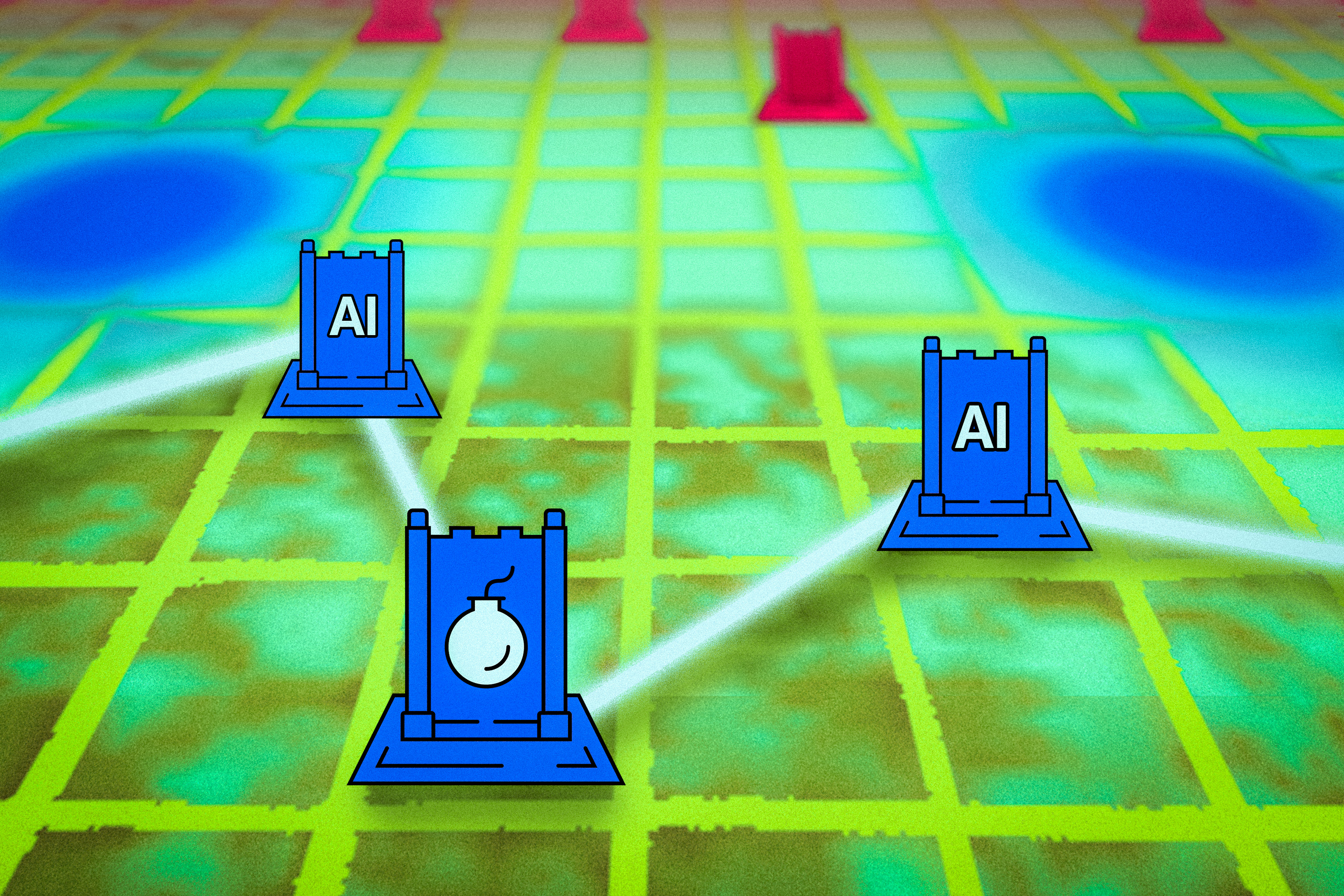
AI Stratego Win Shows Budget Models Can Beat Hidden-Information Games
You can learn a lot about AI from games, but Stratego has always been a nasty test. Chess gives both players the full board. Go does the same. AI Stratego has to deal with hidden pieces, bluffing, memory, risk, and incomplete information, which makes it closer to poker than to a clean puzzle. That is why the Ars Technica report on an AI beating the best Stratego player in history matters now. The surprise is not only the win. It is that the system did it on a tight budget, without the kind of compute bill that usually turns these stories into a Big Tech victory lap. If this result holds up under wider testing, it points to a more useful lesson for machine learning teams. Better structure can beat brute force.
What Stands Out
- Stratego is hard for AI because players cannot see an opponent’s piece ranks until they attack or get attacked.
- The reported win matters because it targets elite human play, not casual online opponents.
- The budget angle is the real story since many modern AI wins rely on huge training runs.
- Hidden-information games connect more directly to business, security, and negotiation problems than chess-style board games do.
Why AI Stratego Is Harder Than Chess
Stratego looks simple at first glance. You move one piece at a time, attack adjacent pieces, and try to capture the flag. Then the trouble starts. You do not know which enemy piece is a marshal, a miner, a scout, a bomb, or the flag until the game exposes that information.
That changes everything. A strong player tracks revealed pieces, infers setups, baits attacks, and sometimes sacrifices a piece to learn what the other side is hiding. A chess engine can search a clear position. An AI Stratego system has to search through many possible worlds at once.
Think of it like coaching a basketball game where every opponent wears the same jersey number until they touch the ball.
That uncertainty punishes lazy AI design. A model cannot win by memorizing openings alone, and it cannot assume the opponent will act honestly. What matters is belief tracking, long-term planning, and the ability to handle false signals. Sound familiar?
What the AI Stratego Result Says About Smaller Models
The Ars Technica article frames the achievement around cost, and that is the part I would watch closely. We have spent the last few years hearing that bigger models, bigger data centers, and bigger energy contracts define progress. Some of that is true. Scale works. But scale is also a blunt instrument.
The most interesting AI wins are no longer the ones that spend the most. They are the ones that spend with precision.
A budget win in Stratego suggests the team found an efficient training recipe. That might include better self-play, stronger game abstractions, smarter sampling, or tighter reward design. In plain English, the system may have learned more from each game instead of burning money on endless trial and error.
That should interest anyone building AI products outside a trillion-dollar company. You may not need the largest model if your problem has structure. You need the right feedback loop, clean evaluation, and enough domain knowledge to stop the model from wandering into junk strategies.
AI Stratego and the Value of Self-Play
Game AI has a long memory. IBM’s Deep Blue beat Garry Kasparov at chess in 1997. DeepMind’s AlphaGo beat Lee Sedol at Go in 2016. Meta and academic researchers later pushed into diplomacy-style negotiation and poker-like uncertainty. Stratego sits in that same family, but it keeps its own bite.
Self-play likely played a central role here, as it has in many top game systems. The idea is simple. The model plays against versions of itself, finds weak spots, and improves through repeated pressure. But in hidden-information games, self-play can go wrong fast. The system may learn habits that exploit itself while failing against human tricks.
One match does not settle the matter.
That is why repeatability matters. Can the system beat different elite players? Can it win across varied starting setups? Does it hold up when humans study its style and target its weaknesses? Those questions separate a strong demo from a durable advance.
What Developers Can Learn From the AI Stratego Win
Look, most teams are not building board-game champions. But the design lessons travel well. If your AI system handles fraud detection, cybersecurity alerts, bidding, logistics, or customer behavior, you face partial information too. You rarely see the full board.
- Model uncertainty directly. Do not force a single guess when the system should track several likely states.
- Use feedback that matches the real goal. A proxy metric can train strange behavior if it rewards the wrong shortcut.
- Test against adaptive opponents. Static benchmarks get stale, especially in security and markets.
- Measure cost per useful gain. A cheaper model that improves fast can beat a larger model that burns cash slowly.
- Keep humans in the loop for edge cases. Elite human play often exposes patterns that automated tests miss.
The cooking analogy fits here. More heat does not make a better dish if the recipe is wrong. You need timing, ingredients, and taste checks. Compute is the stove, not the meal.
Where the Hype Needs a Brake
I have covered enough AI benchmarks to be wary of victory headlines. A famous win can hide narrow testing, favorable conditions, or a model that performs well in one format and stumbles elsewhere. Stratego is no exception. The details matter, including match length, time controls, setup rules, and whether the human player had time to adapt.
There is also a gap between game mastery and real-world judgment. Stratego has fixed rules. Business and politics do not. People change incentives, invent new moves, and break the frame. That does not make the result meaningless. It means you should treat it as evidence of a method, not proof of general intelligence.
Still, this is a sharp signal. Hidden-information AI is moving from lab spectacle toward cheaper, more practical systems. If a low-cost approach can beat elite human intuition in Stratego, it may also help teams build better agents for messy domains where uncertainty is non-negotiable.
The Next Test Is Practical, Not Theatrical
The next step should be open evaluation. Publish match logs where possible. Run the system against multiple top players. Show training costs in plain numbers. Let outside researchers test for brittle play (the ugly stuff is where progress hides).
If the budget claim stands, this AI Stratego result will matter less as a board-game milestone and more as a warning to the industry. The next strong AI system may not come from the team with the biggest cluster. It may come from the team that understands the game better.