Generalist AI Robots Learn Like Toddlers
Robots keep getting sold as miracle workers, but most still fail the first time the room changes. A chair moves. A box shifts. A gripper slips. That is the real problem with generalist AI robots: they need to handle messy, unfamiliar situations without a human rewriting the script every hour. This matters now because companies want machines that can work in warehouses, homes, labs, and factories without a separate model for each job. The old approach, where a robot is trained for one narrow task, keeps hitting a wall. The new pitch is broader learning from broad data, then adapting fast. Think of it like teaching one athlete to play several positions instead of hiring a different player for each spot.
Look, that sounds promising. But it also raises a hard question. Can a robot really learn flexibility the way a child does, or are we dressing up pattern matching in cute language?
What generalist AI robots promise
- One model, many tasks. The idea is to give a robot a wider base of experience so it can pick up new jobs with less retraining.
- Better transfer. Skills learned in one setting should carry into another, even when the scene changes.
- Less hand-tuning. Teams want fewer custom pipelines for every object, room, or tool.
- More useful deployment. A robot that can recover from small surprises is worth far more than one that only works in demos.
That last point is the real prize. A robot that can sort packages is fine. A robot that can keep sorting when the lighting changes and the packages arrive crooked is better. This is where generalist models matter.
Why the toddler comparison fits, and where it breaks
Researchers use child development as a reference because toddlers learn from motion, touch, repetition, and trial. They do not need a separate lesson for every possible spoon, cup, or toy. They build a rough model of the world, then refine it through experience. Generalist AI robots aim for something similar, though the mechanics are far less magical.
The useful part of the toddler analogy is adaptation. The risky part is pretending a robot has human-like understanding. It does not. It has data, weights, and a lot of computation.
And that distinction matters. A child can infer intent, context, and physical cause in ways current robots still cannot match. Robots can get better at generalization, but they remain brittle when the environment becomes chaotic (which, in the real world, happens all the time).
How generalist AI robots are trained
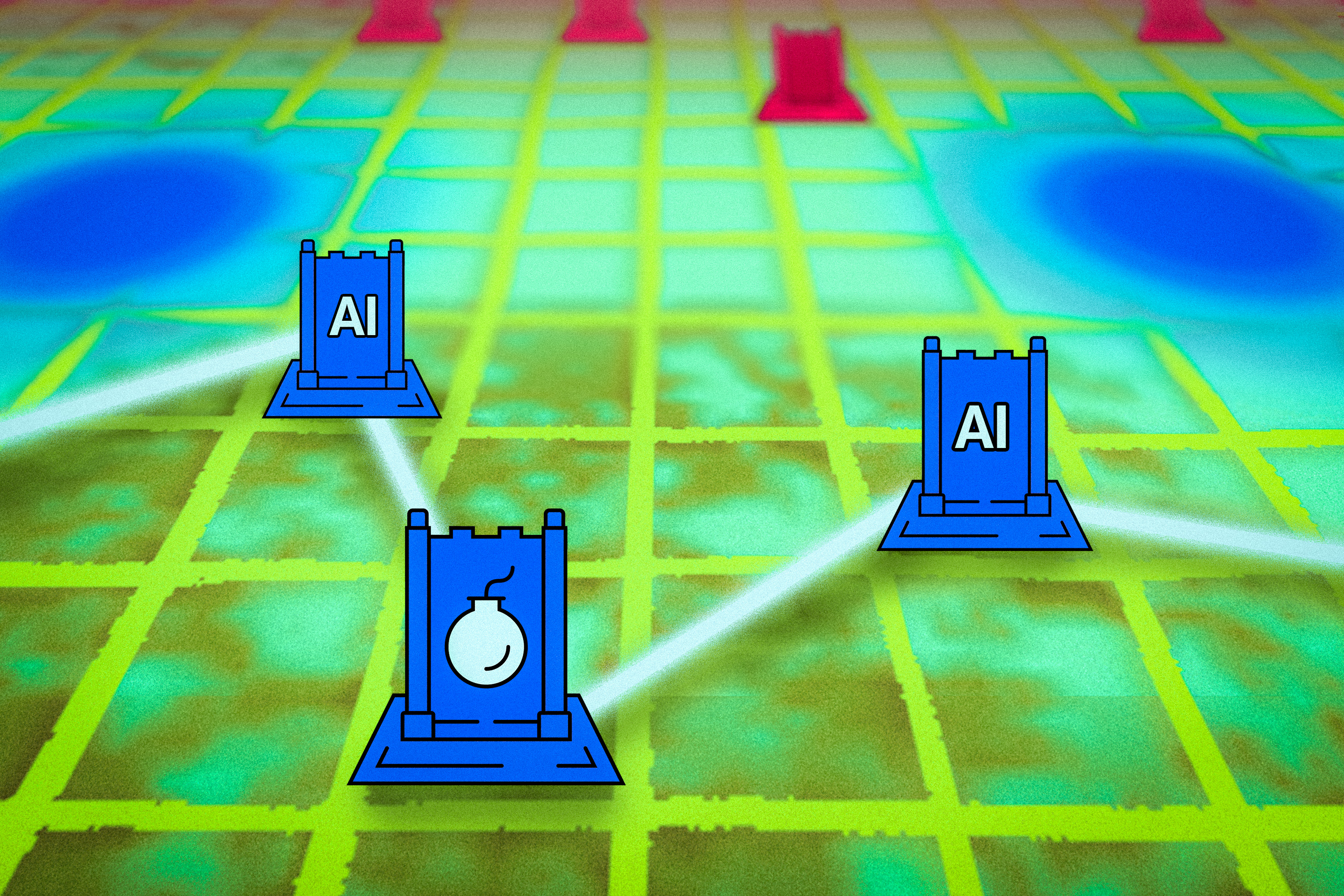
Most of the progress comes from scale. Researchers feed systems huge collections of robot actions, video, simulation traces, and text instructions. The model learns patterns across many tasks instead of memorizing one workflow.
- Collect broad data. That can include pick-and-place tasks, navigation runs, and human demonstrations.
- Train a shared policy. The model learns common structure across different jobs.
- Test transfer. Engineers check whether the robot can adapt to new objects or layouts.
- Close the loop. Failures are used to improve the next round of training.
This is not far from cooking for a busy kitchen. A line cook who knows knife work, heat control, and timing can handle a new dish faster than someone who only knows one recipe. The ingredients change. The fundamentals hold.
What the best systems still struggle with
Generalization looks elegant in a demo. Reality is uglier. Robots still struggle with soft objects, reflective surfaces, awkward lighting, and tasks that require fine motor control. They also fail when the instruction is vague, the object is half hidden, or the scene contains something they did not see during training.
That is why claims about human-level flexibility deserve skepticism. A generalist system can be less brittle than an old narrow model and still be nowhere near a person. The gap is not cosmetic. It is seismic in operational settings.
Three failure modes to watch
- Out-of-distribution scenes. New tools, new layouts, or new materials can expose weak spots fast.
- Long-horizon tasks. A robot may handle one step and then drift off course over a longer sequence.
- Physical edge cases. Slippery, deformable, or fragile objects still trip up many systems.
Here’s the thing. Every robotics pitch sounds smarter when you only watch the first 20 seconds. The real test is hour three, after the environment has changed and the robot has to recover on its own.
Why this matters for business buyers
If you buy automation, you should care less about flashy demos and more about failure recovery. Can the robot keep working when the bin is messy, the light is bad, or the product mix changes? Can your team re-task it without bringing in a research engineer?
Generalist AI robots are valuable when they reduce the cost of change. That is the core business case. Not perfection. Not sci-fi autonomy. Lower downtime, faster adaptation, and fewer one-off integrations.
Expect the first real wins in places with repetitive tasks and moderate variability, such as logistics, inspection, and lab handling. The hardest environments, like homes and ad hoc repair work, will lag. Human spaces are stubborn.
What to watch next
Pay attention to three signals. First, whether models improve on new tasks without full retraining. Second, whether they can recover from mistakes. Third, whether the hardware keeps up with the software. A brilliant model on a weak arm is still a weak system.
Will generalist AI robots ever learn like clever toddlers? Maybe in a narrow sense. But the more useful question is simpler. Can they become dependable enough that you trust them with real work, on a bad day, in a real room?
That is the test that will decide who wins this market.