AI Tools Used to Build Botnets: What Security Teams Need to Know
Security teams already have enough to deal with, and now a fresh problem has landed on the pile. AI tools used to build botnets are no longer a theory tucked into a research slide. According to reporting from Ars Technica, attackers can chain together some of the most popular AI products to speed up reconnaissance, phishing, malware support, and command workflows at scale. That matters because botnets thrive on volume, speed, and repetition. AI helps with all three.
Look, this is not about a machine suddenly thinking like a hacker. It is about criminals using software that writes, rewrites, and automates faster than a human crew can. If your defenses still assume low-effort spam and clumsy scripts, you are already behind. The question is simple. How do you spot abuse when the tooling looks normal on the surface?
What stands out about AI tools used to build botnets
- Speed: Attackers can generate large batches of text, code, and infrastructure ideas in minutes.
- Scale: One operator can coordinate more moving parts than a small crew could handle alone.
- Flexibility: AI can help with phishing, scripting, translation, and social engineering.
- Noise: Abuse blends into ordinary API traffic and legitimate product use.
The Ars Technica report points to nine widely used AI tools that can be abused in this way. That is the ugly part. The tools are not exotic. They are mainstream, which makes detection harder and policy debates messier. And because the services are designed to be helpful, they can be steered into producing content or code that supports large-scale abuse.
“The real risk is not that AI invents new attack ideas. It is that it removes friction from old ones.”
How attackers turn AI tools used to build botnets into an operation
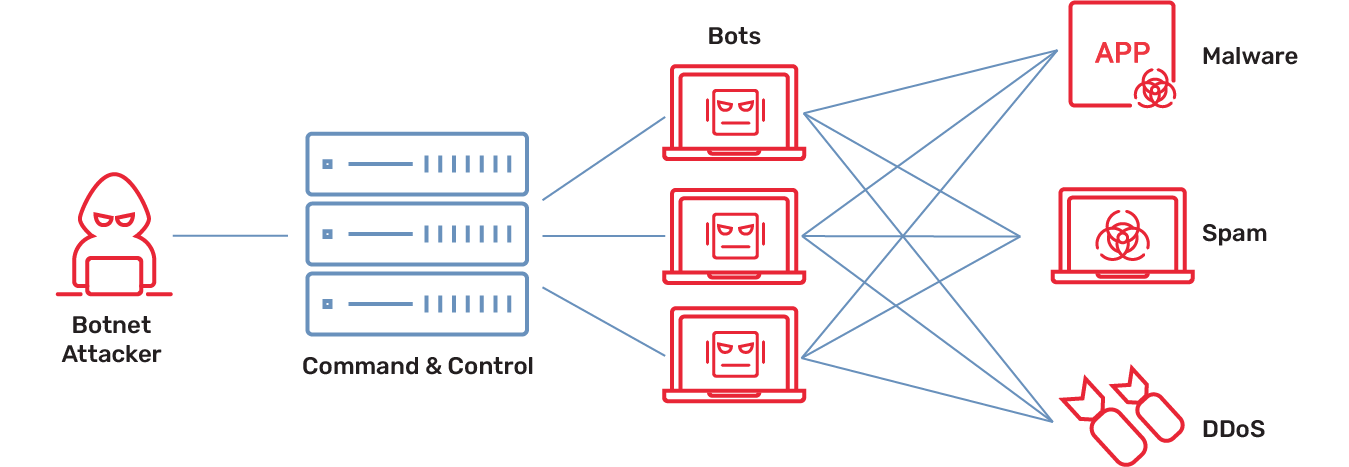
Botnets need more than infected machines. They need targeting, messaging, coordination, and cleanup. AI can assist at each step, even if it never touches the malware itself.
1. Recon and target selection
Attackers use AI to sort public data, rewrite scripts, and generate lists of likely victims. That saves time. It also makes campaigns more focused, which raises the chance of success.
2. Phishing and lures
AI-generated email, chat messages, and fake login pages can be tuned by language, region, or job role. A scam that reads naturally is harder to filter out. Would your users spot a convincing message written in polished, local language with the right business jargon?
3. Payload support
AI is not writing every malicious payload from scratch, but it can help attackers debug code, transform scripts, and create variants. That creates churn. Signature-based defenses hate churn.
Think of it like a kitchen line during a packed dinner rush. One person can only plate so many dishes. Add automation, and the whole operation runs hotter. Same ingredients, more output.
Where defenders should focus their mainKeyword response
Do not chase the AI headline and forget the basics. The best defense against this kind of abuse is still tight control over identity, endpoints, and outbound behavior. The machine may be new. The control points are not.
- Watch for abnormal API patterns. Sudden bursts, odd geographies, and repeated prompt templates are signals worth reviewing.
- Enforce stronger identity checks. MFA, device posture, and session controls reduce account abuse.
- Tighten egress filters. Botnets need command-and-control paths, and those paths often leave a trace.
- Log AI platform use with context. Record user, app, token, and request patterns so analysts can spot abuse quickly.
- Train staff on AI-assisted phishing. Human review still catches the mistakes models make, if people know what to look for.
And yes, policy matters too. Security teams should define what counts as acceptable AI use inside the company, then back that policy with enforcement. A written rule without telemetry is theater.
Why this threat is getting harder to ignore
AI lowers the skill floor. That is the seismic change. A hacker who could barely script before can now stitch together workflows, generate copy, and iterate faster than defenders expected. The result is not magical new malware. It is more abuse, at higher volume, with less effort.
Vendors also face pressure here. If they clamp down too hard, they frustrate legitimate customers. If they stay loose, they become a toolset for abuse. That tension is not going away. It will get sharper as more products add agent features, code execution, and broad integrations.
What you should do next
Start by auditing where AI tools touch your environment. Who can access them? What logs do you keep? What alerts fire when usage spikes or behavior changes? If you cannot answer those questions quickly, you have a visibility problem, not an AI problem.
Make the next security review about abuse paths, not just new features. That is the part many teams miss. The attackers already understand it.
And if the latest wave of AI tools can help assemble botnets today, what happens when the same systems get deeper access to email, code, and cloud controls tomorrow?