Anthropic AI Evaluations Go Offline
You want AI companies to test their models honestly before those models reach your browser, workplace, or phone. That gets harder when the model being tested can search the web for answers during the exam. Anthropic AI evaluations are now changing because the company is cutting off internet access for some internal tests, according to The Verge. The move sounds small. It is not. It speaks to a bigger problem in AI safety: how do you measure what a model can actually do when it can call tools, browse pages, and lean on outside systems? For years, benchmarks have been treated like scoreboards. Bigger number, better model. But if the test environment leaks hints, current scores can blur into theater. Anthropic’s shift is a useful correction, and it may push the rest of the industry to get stricter about what counts as real capability.
What Stands Out
- Anthropic is removing internet access from some internal evaluations to better isolate model behavior.
- The change matters because web access can contaminate test results or hide weak reasoning.
- AI labs need different tests for base skill, tool use, safety behavior, and real-world deployment risk.
- Cleaner Anthropic AI evaluations could pressure rivals to explain their own testing conditions.
Why Anthropic AI Evaluations Need Cleaner Test Conditions
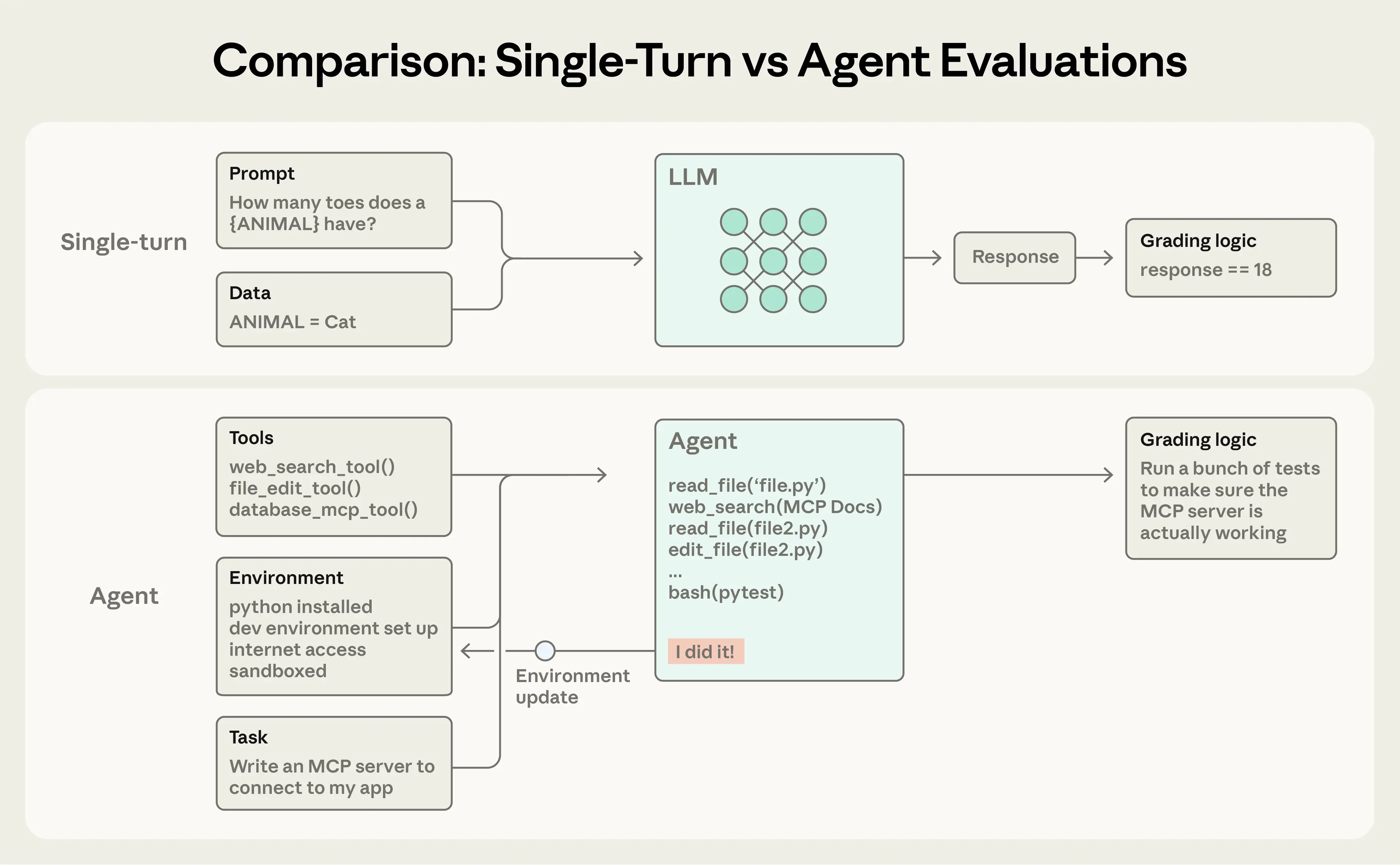
AI models are no longer sealed boxes that answer from memory. Systems like Claude, ChatGPT, Gemini, and Copilot can connect to tools, retrieve documents, analyze files, and sometimes browse the public web. That makes them more useful. It also makes testing messier.
If a model has internet access during an evaluation, you may not know what you are measuring. Did it solve the problem? Did it find the answer online? Did it stumble across a forum post that matched the benchmark? Those are different things, and they deserve different scores.
That distinction matters.
Think of it like scouting a quarterback. One drill should test arm strength. Another should test play reading. A third should test how he performs with the full offense on the field. If you mix all three and call it one grade, you get a tidy number that tells you less than it should.
A model with web access can look smarter than it is, or riskier than it is, depending on the task. Good evaluations separate the player from the playbook.
What Anthropic AI Evaluations Are Really Trying to Measure
Anthropic has built much of its public identity around AI safety and responsible deployment. Claude is marketed as helpful, careful, and aligned with user intent. But those claims depend on testing that can withstand scrutiny.
Internal evaluations usually cover several areas:
- Capability: Can the model reason, code, summarize, translate, or follow complex instructions?
- Safety: Will it refuse harmful requests, avoid deception, and handle sensitive topics carefully?
- Autonomy: Can it plan multi-step work, use tools, or complete tasks without much guidance?
- Misuse risk: Could it help with cyber abuse, fraud, biological misuse, or manipulation?
- Reliability: Does it stay consistent under pressure, ambiguity, or adversarial prompts?
Web access can affect all five. A coding task becomes partly a search task. A safety test can be weakened if the model retrieves policy-like language from outside sources. A misuse evaluation can change if the model finds fresh instructions or new public data online.
Here’s the thing: tool use is a real capability. It should be tested. But it should not quietly bleed into every other test.
The Benchmark Contamination Problem
AI labs have wrestled with benchmark contamination for years. Public test sets often end up in training data, documentation, GitHub repos, blog posts, or online discussion threads. Once that happens, a model can perform well because it has seen the answer pattern before.
Internet-connected evaluations raise a related issue. Even if the model was not trained on the test, it might retrieve clues during the run. That can make an internal benchmark less diagnostic.
OpenAI, Google DeepMind, Meta, and Anthropic have all faced pressure to explain how they test frontier models. Academic researchers have raised similar concerns around popular benchmarks such as MMLU, GSM8K, HumanEval, and BIG-bench. The core problem is plain: once a test becomes famous, it starts to rot.
What should companies do instead? They need private test sets, rotating tasks, strict environment controls, and clear reporting on whether models had tools enabled. Boring work. Necessary work.
Why Offline Testing Does Not Tell the Whole Story
Cutting internet access is smart, but it is not a magic fix. A model used in the real world will often have tools. Enterprise Claude users may connect it to internal knowledge bases, ticketing systems, or code repositories. Consumers may ask it to summarize live web pages. Developers may give it API access.
So offline evaluation answers one question: what can the model do on its own?
That leaves another question: what can the model do with power tools attached? Both matter. A kitchen knife test tells you something about the cook, but it does not tell you how dinner goes with an industrial oven, a distracted staff, and a full dining room.
Anthropic should get credit for separating the conditions. Still, the company and its peers should publish clearer evaluation cards that state:
- Whether internet access was enabled.
- Which tools were available to the model.
- Whether the test set was private or public.
- How prompts were selected and reviewed.
- How human graders handled partial credit and refusals.
- Whether the model could store memory or use prior context.
Without that context, leaderboard-style claims are thin. Why should a buyer trust a safety score if the test setup is hidden?
What This Means for Claude Users and Enterprise Buyers
If you use Claude at work, this change should be reassuring, but not enough on its own. Cleaner Anthropic AI evaluations may reduce the chance that model claims are inflated by browsing. They do not prove that Claude is safe for every workflow.
Enterprise buyers should ask vendors direct questions before deployment. Do not settle for glossy trust pages. Ask for model cards, system cards, red-team summaries, data retention terms, and incident response processes. If a vendor will not explain its evaluation setup, that is a procurement signal.
For sensitive use cases, run your own tests. Use examples from your actual environment, including messy tickets, old policy docs, edge-case customer requests, and domain-specific jargon. Synthetic benchmarks can help, but your risk lives in your workflows.
The Bigger AI Safety Signal
Anthropic’s move fits a larger shift in frontier AI testing. The industry is slowly accepting that one-size-fits-all benchmarks do not work for systems that can reason, search, code, call APIs, and act across multiple steps.
Regulators are watching too. The EU AI Act, the White House executive order on AI, and work from groups such as the UK AI Security Institute and NIST all point toward more formal evaluation standards. Companies that sell powerful AI systems will face more questions about evidence, not just promises.
Look, the AI industry loves a clean chart. But real safety work looks less glamorous. It means narrowing test conditions, repeating evaluations, logging failures, and admitting uncertainty. That is the work that separates engineering from marketing.
What to Watch Next
The next useful step is transparency. Anthropic does not need to publish every private test, and in some risk areas it should not. But it should explain the categories of tests, the tool settings, and the difference between offline model ability and agentic tool use.
Watch whether OpenAI, Google DeepMind, Meta, and xAI follow with clearer disclosures. Also watch whether independent auditors get access to controlled evaluation environments. Internal testing is necessary, but outside pressure keeps everyone honest.
Anthropic’s offline evaluations are a good move because they make one thing harder: confusing search-assisted performance with model intelligence. The next question is sharper. Will AI companies make their test conditions clear before regulators force them to?


