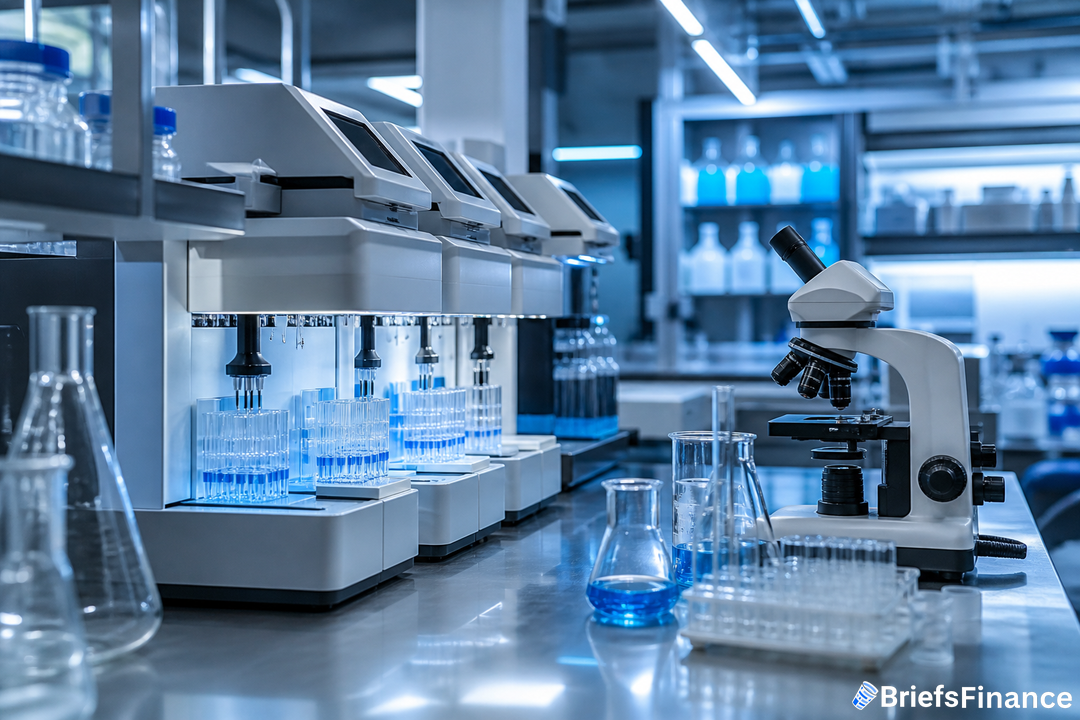
Anthropic Biology Lab Raises the Stakes for AI Safety
If you track AI safety, the Anthropic biology lab story should get your attention. TechCrunch reports that Anthropic is operating a lab that conducts biology experiments, a move that pushes the company beyond model evals and into wet-lab territory. That matters because biology is one of the highest-risk areas for advanced AI systems. A chatbot that drafts code is one thing. A model that can help plan, troubleshoot, or optimize biological experiments is another. The gap between advice and action gets smaller when a company can test ideas against real lab work.
This is not a sci-fi panic button. It is a governance test. Anthropic has built its brand on AI safety, constitutional AI, and careful deployment. Now the company appears to be testing where AI systems meet physical science, and the public should ask a blunt question. Who watches the lab that is meant to watch the model?
Why This Matters
- TechCrunch reports that Anthropic is operating a biology lab that conducts experiments.
- The move could help Anthropic test whether AI models can assist with real biological workflows.
- Biology raises higher safety stakes than many software-only use cases.
- The hard question is not whether the lab is useful. It is how its work is governed.
- Regulators, customers, and researchers will want more clarity on access controls, biosafety, and publication rules.
What the Anthropic Biology Lab Signals
The Anthropic biology lab points to a wider shift in AI research. Leading labs are no longer content to test models only with benchmarks, red-team prompts, and synthetic tasks. They want to know how systems behave in messy settings where instructions are incomplete, tools break, and human experts make judgment calls.
That is sensible from a research standpoint. Benchmarks can tell you whether a model answers a question correctly, but they do not show whether it can help a researcher pick protocols, interpret failed runs, or propose the next experiment. In biology, those details matter.
AI safety gets much harder once a model can influence real-world experimental work, even if a human remains in the loop.
I have covered enough platform shifts to be wary of tidy explanations. Companies often frame new labs as safety investments, and sometimes that is true. But infrastructure has a way of changing incentives. Once you build a lab, you want to use it.
Why AI Companies Want Wet-Lab Feedback
Software benchmarks are cheap, fast, and repeatable. Biology is not. Experiments can fail for dull reasons, such as reagent quality, timing, contamination, or a protocol that leaves out the one step every trained scientist knows by habit.
That makes wet-lab feedback valuable. If an AI model suggests an experiment, a lab can test whether the suggestion survives contact with reality. Think of it like a football team moving from chalkboard plays to full-speed practice. The whiteboard version may look clean. The real version exposes the missed block.
For Anthropic, biology work could support several goals:
- Safety evaluations: Test whether models can provide risky biological assistance and where safeguards fail.
- Domain reliability: Measure whether AI systems can help trained scientists without inventing steps or overstating confidence.
- Tool-use research: Study how models interact with lab software, databases, and human review processes.
- Policy evidence: Give policymakers data on what frontier models can and cannot do in bioscience settings.
That tension is the story.
The Safety Case for an Anthropic Biology Lab
The best argument for the Anthropic biology lab is straightforward. You cannot manage risks you refuse to measure. If advanced models can assist with biology, then serious AI labs need evidence about capabilities, limits, and misuse paths.
Outside testing groups can do some of that work, but frontier AI companies have direct access to model internals, deployment systems, and safety filters. They can run controlled evaluations before a model reaches customers. That matters if the question is whether a system can help plan synthesis, optimize growth conditions, or troubleshoot protocols in ways that raise biosafety concerns.
Still, the safety case depends on details. A lab that runs narrow evaluations under strict oversight is different from a lab used to accelerate biotech product work. One is a guardrail. The other is a business line with safety language around it.
The Oversight Questions Anthropic Should Answer
Anthropic does not need to publish sensitive experimental details to build trust. In fact, it should not publish anything that would lower barriers to misuse. But it can explain the governance model around the work without giving away dangerous methods.
Here are the questions that matter most:
- Scope: What kinds of biology experiments are allowed, and which are banned?
- Biosafety level: What containment standards apply to the lab?
- Review: Who approves experiments before they begin?
- Access: Which employees can use lab systems, and how are actions logged?
- Model limits: Are AI systems allowed to suggest protocols, choose materials, or control instruments?
- External checks: Does an independent biosafety or biosecurity board review the program?
- Disclosure: What will Anthropic report to regulators, customers, and the research community?
Those answers would not settle every concern. They would, however, separate a serious safety program from a vague reassurance. And vague reassurance is not enough for biology.
Where Regulators Fit
AI regulation has mostly focused on privacy, copyright, labor, and model transparency. Biosecurity sits in a different lane, with agencies and norms built around labs, pathogens, DNA synthesis, and institutional biosafety committees. The Anthropic case shows why those lanes are starting to merge.
In the United States, groups such as the National Science Advisory Board for Biosecurity have long shaped debates about dual-use research. The Centers for Disease Control and Prevention and the National Institutes of Health also influence lab safety rules and funding expectations. AI companies that step into biology will face pressure to meet standards from both tech policy and life science oversight.
The policy gap is obvious. A model can be trained in one place, deployed through an API in another, and tested in a lab somewhere else. Which regulator has the full picture? Right now, the answer is often unclear.
What Customers and Researchers Should Watch
If you buy AI tools for pharma, biotech, healthcare, or academic research, do not treat this as inside-baseball news. A company running its own biology lab may gain better evidence about model performance, but it also creates fresh questions about conflicts, safety thresholds, and liability.
Before you adopt biology-facing AI systems, ask vendors for plain answers. What evaluations were run? What failure modes appeared? Were domain experts involved? Were dangerous capabilities tested by an independent group? If the answers sound polished but thin, push harder.
Researchers should also watch how publication norms change. AI labs may sit on results because they are security-sensitive, commercially useful, or both. That may be responsible in some cases, but it also reduces outside scrutiny. Trust cannot rest on press statements alone.
The Next Test Is Transparency
The Anthropic biology lab may turn out to be a careful safety project. It may also become a template for how frontier AI companies move into experimental science. Either way, Anthropic has put itself in a position where its safety claims need more than branding.
Look, I would rather see a major AI lab test biological risks under controlled conditions than pretend the issue is theoretical. But control is the key word. If AI companies are going to build labs that touch biology, they should publish governance standards before public trust gets spent for them.
The practical next step is simple. Anthropic should release a biosafety and biosecurity framework for the lab, with enough detail for outside experts to judge whether the guardrails match the risk.