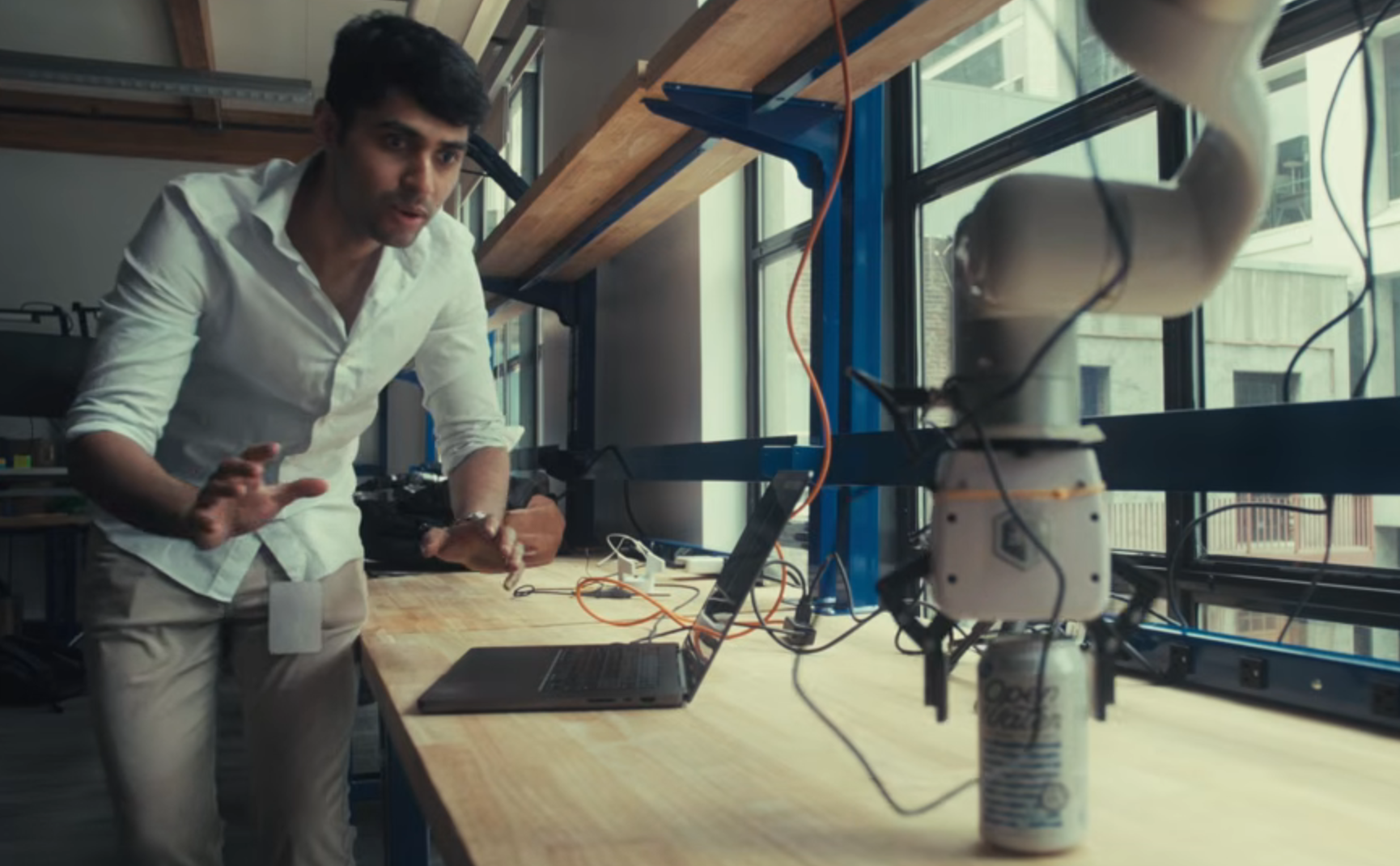
Anthropic Hardware Standard for AI Agents
AI agents are getting closer to the physical world, and that raises a hard question: who controls the device when the model makes a bad call? That is the core issue behind the Anthropic hardware standard, a new attempt to define how AI systems should interact with machines outside the screen. It matters now because vendors want agents that can move robots, trigger tools, and manage devices without a messy tangle of one-off integrations. If the plumbing is sloppy, the risk is obvious. A model that can type, click, and act in the real world can also misfire in ways that software-only tools never could. Anthropic is trying to put guardrails around that problem before the hype outruns the hardware.
- The goal is to standardize how AI agents send commands to physical systems.
- The risk is clear. Poor controls can turn a useful agent into a liability.
- The payoff is simpler integration for robots, lab gear, industrial tools, and other devices.
- The real test is adoption. A standard only matters if vendors actually implement it.
Why the Anthropic hardware standard matters
Most AI agent talk still lives in software. Models summarize, search, write, and automate browser tasks. But once you let an agent operate real equipment, you are no longer dealing with a harmless autocomplete system. You are dealing with a control layer, and control layers need discipline.
The Anthropic hardware standard tries to define that discipline. If a robot arm, lab instrument, or consumer device can understand a common control model, developers do not need to build a custom bridge for every vendor. That is the practical appeal. And yes, it is the kind of boring infrastructure work that gets ignored until everything breaks.
Standards are not glamorous. They are the difference between a tool that scales and a demo that stays trapped in a lab.
How the Anthropic hardware standard could work
The broad idea is simple. AI agents need a defined way to request actions, check state, and respect limits. Think of it like the rules of a kitchen. A chef can still cook creatively, but the oven, stove, and knives all have known functions and boundaries. Without that, dinner gets weird fast.
For physical systems, those boundaries matter even more. A strong standard would usually need to cover command formatting, permission checks, device status, error handling, and fail-safe behavior. It may also need identity and authentication layers so a model cannot issue a command just because it can generate the right text.
- Command layer. The agent says what it wants to do.
- Policy layer. The device or controller decides whether the action is allowed.
- Feedback layer. The system reports whether the action succeeded, failed, or needs human review.
- Safety layer. The system stops dangerous or ambiguous actions before they execute.
That structure is not novel by itself. Industrial automation and robotics have used versions of it for years. The change is that Anthropic is trying to make it easier for AI agents, especially LLM-driven ones, to plug into that stack without bespoke glue everywhere.
What problem does the Anthropic hardware standard solve?
The obvious problem is fragmentation. Right now, every device maker wants its own interface, its own SDK, and its own policy rules. That slows down development and raises the chance of errors. If an agent can talk to one machine but not another, the promise of general-purpose automation gets stuck in the mud.
There is also a trust problem. If a company wants to deploy AI into a warehouse, a clinic, or a factory, it needs clear rules for what the system can touch. Who approves a motion command? Who records the action? What happens when sensor data conflicts with the model’s plan? Those are not edge cases. They are the job.
Without a shared standard, every deployment becomes a custom safety case.
Where the hard parts are hiding
Here’s the thing. A standard can make integration easier, but it cannot make physics negotiable. Real devices have latency, wear, calibration drift, and failure modes that software agents do not naturally understand. A model can sound certain while being completely wrong. That is not a minor bug.
The toughest issues are likely to be permissioning and recovery. If an agent loses context mid-task, does it pause, retry, or escalate to a human? If a command lands in the wrong state, how does the system unwind the action safely? Those questions sound dull. They are anything but.
Anthropic will also need broad buy-in from hardware makers. A standard that stays inside one ecosystem is just an internal API with nicer branding. For this to matter, robot builders, industrial vendors, and device makers have to see a clear incentive to sign on.
What vendors will care about
- Lower integration cost, because fewer custom adapters mean less engineering time.
- Better auditability, because logged actions make troubleshooting easier.
- Cleaner safety boundaries, because vendors can define what an agent may and may not do.
- Faster adoption, because customers prefer systems that speak a common language.
Who stands to benefit first?
Early winners will likely be organizations that already live with structured control systems. Industrial robotics is the obvious one. Lab automation is another. These environments already care about permissions, state, and repeatability, which makes them a better fit than consumer gadgets.
Could this spread to home devices later? Sure, but the bar is higher. Consumers forgive a slow app. They do not forgive a smart system that turns on the wrong appliance at the wrong time. That gap is why enterprise and industrial settings will probably move first.
For AI teams, the attraction is speed. For hardware teams, the attraction is fewer support headaches. For everyone else, the attraction is a little less chaos. That is the selling point, plain and simple.
What to watch next
Watch for three things. First, see whether Anthropic publishes the technical details clearly enough for outside developers to evaluate. Second, look for third-party hardware partners. A standard without partners is dead on arrival. Third, pay attention to safety language. If the rules are vague, adoption will stall.
The deeper question is whether this becomes a real cross-industry interface or just another AI-era proposal that gets nods and no deployments. The hardware world does not move on vibes. It moves on reliability, cost, and proof.
And that is where this story gets interesting. If AI agents are going to touch the physical world, they need more than better prompts. They need rules that survive contact with machines. Who is willing to build those rules with Anthropic?
What comes after the standard?
If the Anthropic hardware standard lands well, the next phase will be dull in the best way. Toolmakers will implement it. Developers will test it. Teams will find the rough edges. Then the standard will either harden into something useful or fade into another slide-deck promise.
That outcome depends less on the headline than on adoption. The companies that ship physical systems should ask one blunt question now: does this standard reduce risk enough to be worth changing the stack?