Anthropic Mythos and Fable Restrictions Lifted
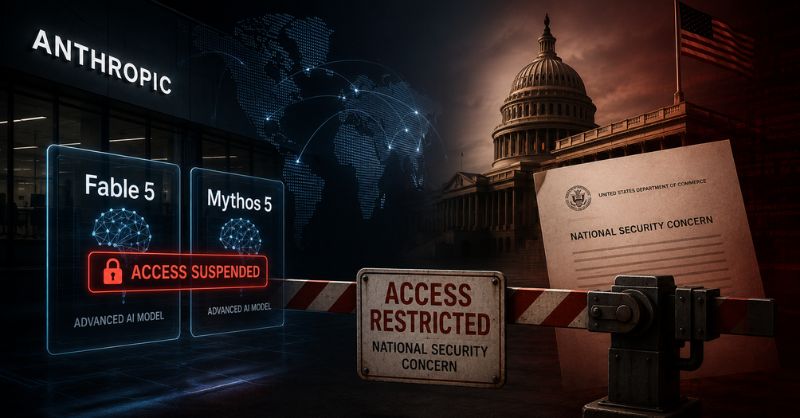
The Trump administration’s move to drop restrictions on Anthropic’s Mythos and Fable models matters because policy can shape who gets to build, sell, and deploy frontier AI. If you follow Anthropic Mythos and Fable restrictions, this is not a small paperwork fix. It changes the rules around access, compliance, and the pace at which these models can reach users and partners.
For companies building on top of Claude-family systems, any shift in federal limits can alter product plans fast. For regulators, it raises a harder question. Are we relaxing guardrails because the risk has fallen, or because the politics have changed?
Look, AI policy often moves like airport security after a scare. It gets tight, then loose, then tight again, with the people inside the system left to sort out the delay. That is the setting here, and it is why this decision deserves attention.
What changed with Anthropic Mythos and Fable restrictions
- Restrictions were removed from the Anthropic Mythos and Fable models.
- The change could ease deployment and distribution for teams that use or integrate these systems.
- It signals a softer federal stance on at least some advanced AI controls.
- It may also reshape how Anthropic negotiates with government buyers and enterprise customers.
Why this matters for Anthropic Mythos and Fable restrictions
The big issue is not just access. It is predictability. When rules change by administration, vendors have to treat policy as a moving target, and that can slow contracts, certifications, and security reviews. How do you plan a multi-year AI rollout if the legal floor keeps shifting under you?
Anthropic has spent years trying to position itself as the careful player in a market that often rewards speed over restraint. That stance only works if buyers trust that its systems will stay within accepted bounds. Dropping restrictions may help sales in the short term, but it can also invite new scrutiny from lawmakers who already think AI firms move too fast.
Policy swings create their own risk. A model that is allowed today can become a political liability tomorrow, and enterprise teams hate that kind of uncertainty.
How companies should read the signal
If you run product, legal, or procurement at a company touching frontier AI, treat this as a reminder to revisit your vendor risk checklist. Do not assume that today’s clearance means tomorrow’s stability. It rarely does.
- Review deployment terms. Check whether your contracts tie service levels or model access to government policy changes.
- Audit internal use cases. Make sure sensitive workflows still meet your own governance rules, not just the vendor’s.
- Map fallback options. If access changes again, you need a second path for testing and production.
- Track agency guidance. Federal policy often shifts through guidance before it shows up in formal enforcement.
What buyers should ask now
Ask your vendor whether the removal of restrictions changes hosting, export, logging, or usage terms. Ask whether model behavior, safety filters, or rate limits changed too. And ask who absorbs the cost if the policy pendulum swings back.
The answer matters because AI procurement is starting to look less like buying software and more like buying a regulated utility. You do not want surprise outages in a system that sits inside customer support, coding, or compliance. That is a bad bet.
What this says about the AI policy fight
Anthropic Mythos and Fable restrictions are now part of a larger fight over who sets the boundary lines for advanced AI. The White House, Congress, state attorneys general, and federal agencies all want a say. Add vendors that are spending heavily on lobbying, and you get a policy mess with no clean center.
There is a deeper problem too. If the rules depend on which party holds power, then companies will optimize for politics as much as safety. That is not a healthy way to govern frontier systems. It is closer to zoning by headline than by principle.
Anthropic may welcome the relief. Investors probably do too. But the real test is whether this eases access without weakening the pressure on safety work, evaluation, and transparency. If it does not, the change is just a short-term win dressed up as policy progress.
What to watch next
Watch for whether other model providers push for the same treatment. Watch for pushback from lawmakers who think the administration cut too far, too fast. And watch for whether Anthropic uses the opening to expand enterprise deals, federal partnerships, or model access in tightly controlled sectors.
One question hangs over all of it. If restrictions can disappear this quickly, what stops the next administration from snapping them back into place?
That is the real story now, not just the models themselves.