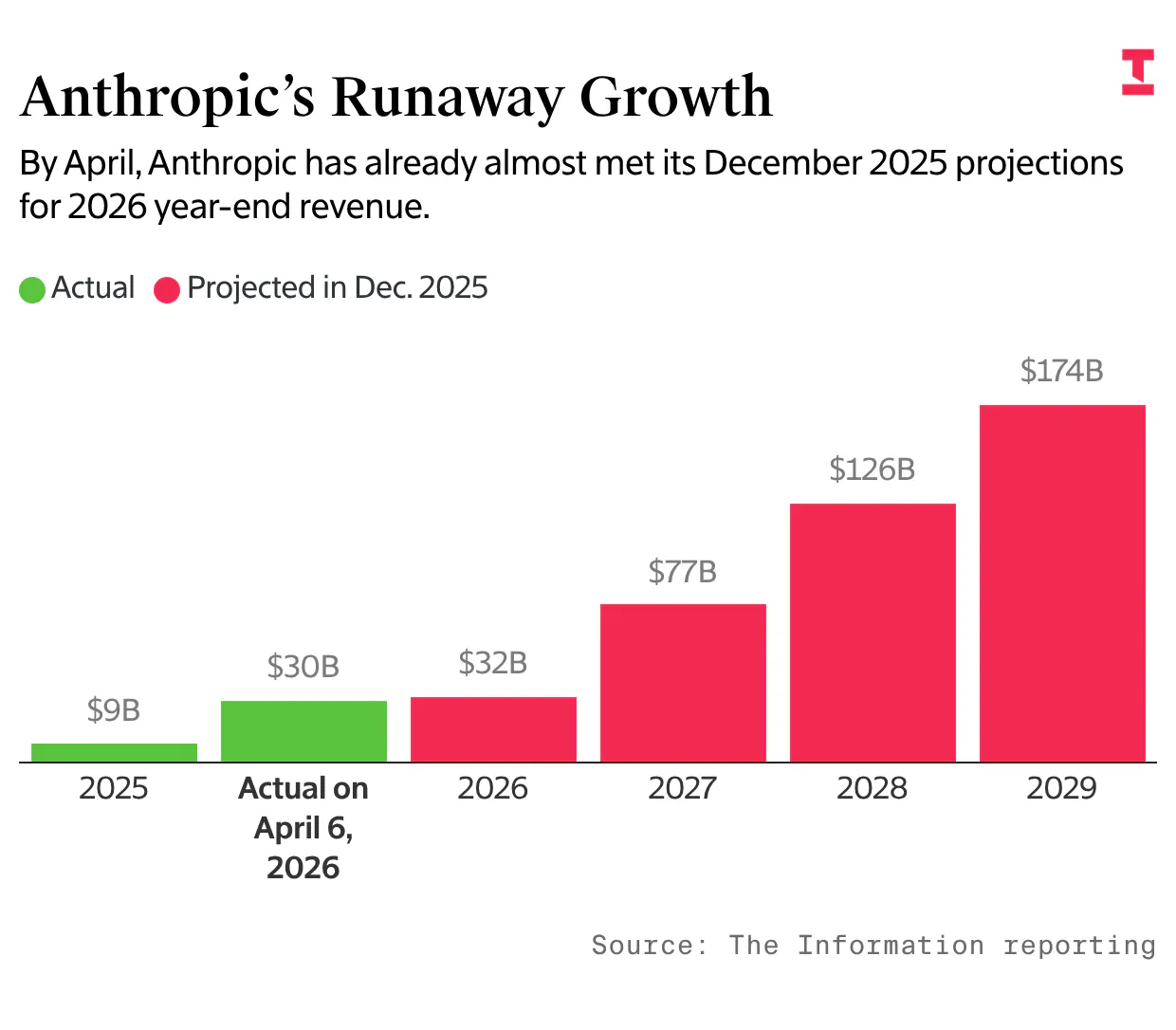
Anthropic Revenue Surge: What $6.5B Annualized Means
Anthropic revenue is moving fast enough to make even skeptical investors look twice. The company’s annualized run rate has climbed to $6.5 billion, according to TechCrunch, and that matters because it shows real customer spending, not just AI hype cycles. You can build a lot of noise around a product launch. You cannot fake recurring revenue at this scale for long. So the question is simple: is this a durable business, or a sprint powered by a narrow wave of enterprise demand?
There is a bigger point here. The AI market has spent two years arguing about model quality, safety, and valuation. But the buyers have quietly shifted the conversation toward budgets, workflow fit, and control. Anthropic sits right in the middle of that shift. If you sell AI tools, invest in them, or use them inside your company, this number deserves your attention.
What stands out in the Anthropic revenue surge
- Scale arrived fast. A $6.5 billion annualized rate puts Anthropic in rare company for a private AI software business.
- Enterprise demand is doing the heavy lifting. The money is likely tied to paid API use and business accounts, not consumer buzz.
- The market is still concentrated. A few big customers can move the needle early, which cuts both ways.
- Competition is not slowing down. OpenAI, Google, and Microsoft are all pressing hard on price, distribution, and product depth.
Why the Anthropic revenue surge matters now
Annualized revenue is not the same as booked revenue for a full year, but it is still a useful signal. It shows the current pace of customer spending and demand. For Anthropic, that pace suggests the company has crossed from experimental adoption into serious business use.
That is seismic. The AI sector used to reward demos and model benchmarks. Now it rewards distribution, reliability, and contract size. If your product lands in core workflows, revenue can move like a freight train. If it does not, growth stalls.
Revenue at this scale tells you that buyers are no longer testing AI in a side project. They are putting it into the budget.
Look, that changes the game for every vendor in the stack. A tool that helps with coding, support, document work, or internal search can become a line item fast if it saves time and reduces risk. Anthropic has clearly found something buyers are willing to pay for.
How Anthropic gets to this number
The simplest answer is enterprise usage. Anthropic has leaned hard into Claude for developers and businesses, and that fits where the money is. Companies do not pay this kind of money for novelty. They pay because the tool slots into work they already do.
Think of it like restaurant service. A flashy menu can draw attention, but repeat revenue comes from the dishes people order every week. Anthropic appears to have built a menu that fits real demand, especially where teams want strong text generation, coding help, and policy-aware deployment.
Three likely revenue engines
- API consumption. Developers and platforms pay for usage at scale, which can grow quickly if a product takes off.
- Enterprise seats and contracts. Larger buyers want admin controls, compliance features, and predictable procurement terms.
- Partner distribution. Cloud and software partnerships can push Claude into more workflows without a consumer marketing blitz.
That mix is powerful, but it has a catch. Usage-based revenue can swing if customers optimize spend or switch providers. That is why recurring contracts and sticky workflows matter so much.
What this means for AI buyers
If you run a company, the Anthropic revenue surge is a signal to get more disciplined. Your team probably has pilots running already. The next step is to identify where AI is saving time, where it is creating risk, and where it is just generating pretty output.
Ask three questions. Does this tool save labor in a measurable way? Does it reduce errors or speed up delivery? Can you keep data and compliance under control? If the answer is yes, you may be looking at a real system, not a toy.
- Track usage by team, not just by vendor.
- Measure output quality against human baselines.
- Check whether the vendor offers admin, audit, and security controls.
- Watch token or seat costs before they quietly balloon.
And be honest about switching costs. If your workflows depend on a specific model’s behavior, moving later can be painful. That is exactly how vendors win leverage. They become infrastructure before the procurement team notices.
Can Anthropic keep this pace?
That is the real test, and the answer is still open. Revenue can rise quickly when a company catches a wave, but staying there takes distribution, product breadth, and trust. It also takes pricing power, which is never guaranteed in AI.
The competitive pressure is brutal. OpenAI has brand momentum. Google has reach. Microsoft has enterprise distribution. Anthropic has to keep proving that Claude is the better fit for serious work, not just a strong alternative.
One more wrinkle matters here: customers want both capability and control. They want strong model performance, but they also want predictable behavior, fewer surprises, and clear policy boundaries. That tension is not going away. If anything, it is becoming the market.
The next number to watch in the Anthropic revenue surge
Revenue is the headline, but retention is the story. Are customers expanding usage after the first deployment? Are they standardizing on Claude across teams? Are smaller buyers turning into larger contracts? Those are the tells that separate a hot quarter from a durable company.
My bet? The next phase will be less about raw model drama and more about boring operational proof. That is where the winners will separate from the loudest voices. Watch the renewals, the contract mix, and the product depth. That will tell you more than any demo ever could.
So here’s the question that matters now. Is Anthropic becoming the default AI layer for serious business work, or is this just the high-water mark before the market tightens?