Apple Intelligence Chatbot Extensions in iOS 27
You are already dealing with a messy AI stack on your phone. Siri handles one thing. ChatGPT may handle another. Google, Perplexity, and other assistants sit in separate apps, each with its own strengths and limits. That split matters because mobile AI works best when it feels built into the system, not bolted on after the fact. New reporting suggests Apple Intelligence chatbot extensions could arrive with iOS 27, letting Apple plug more outside AI services into its own assistant layer. If that happens, Apple would move closer to becoming the traffic cop for mobile AI instead of trying to win every model battle itself. And yes, that is a bigger shift than it may sound at first glance.
What stands out
- Apple is reportedly exploring third-party chatbot support inside Apple Intelligence for iOS 27.
- That could expand beyond the current ChatGPT integration and give users more choice.
- It may also help Apple cover gaps in Siri and on-device AI without building every feature itself.
- Developers and AI companies would gain a new route to iPhone users, but Apple would still control the gate.
What are Apple Intelligence chatbot extensions?
Based on The Verge’s report, Apple is working toward a system where outside AI chatbots can connect to Apple Intelligence as extensions. Think of it like a plug-in layer for generative AI on the iPhone, iPad, and possibly the Mac. Instead of sending a request only to Apple’s own systems or to ChatGPT, the software could route certain tasks to other approved services.
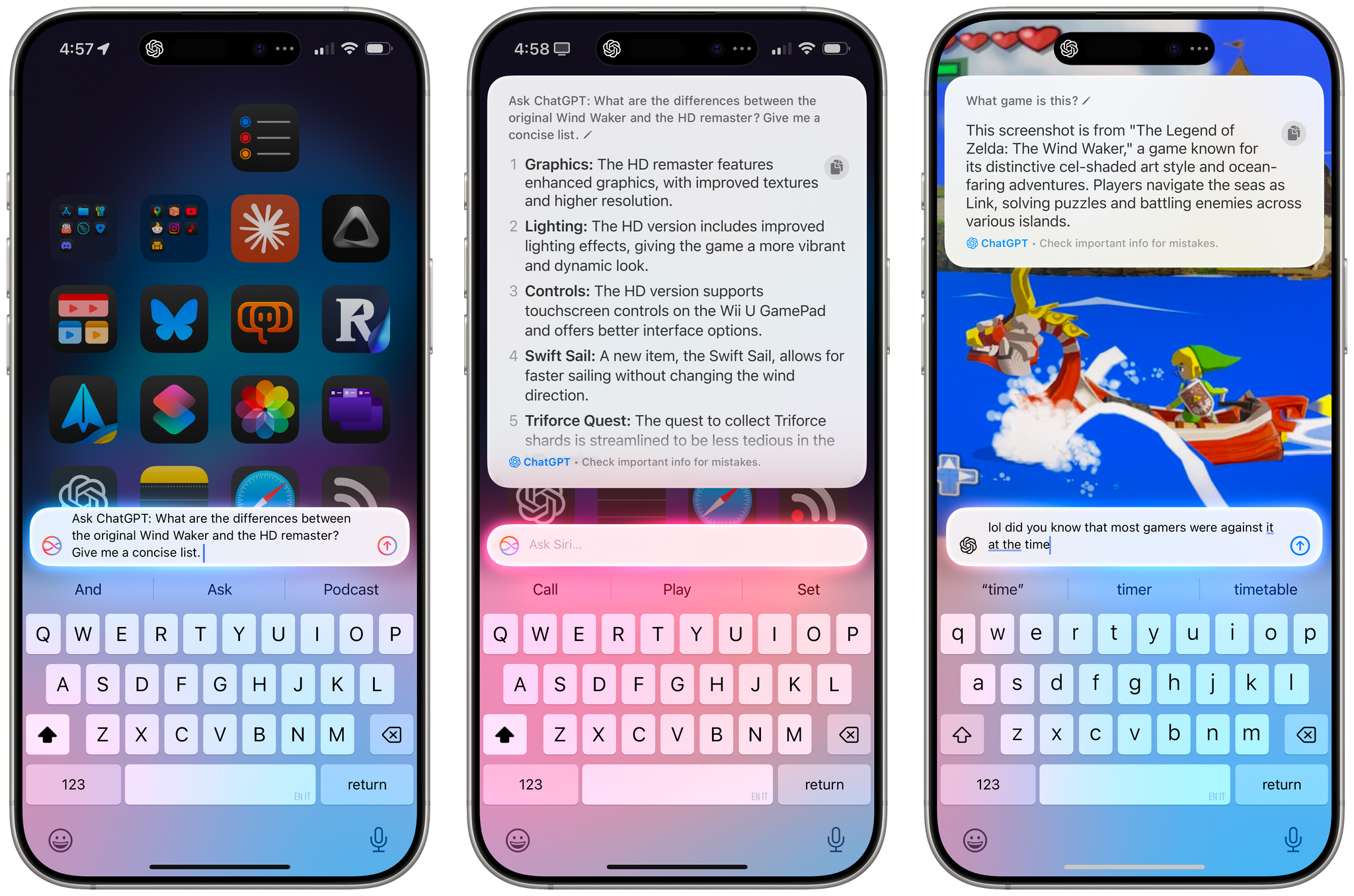
That matters because Apple has already shown this model in miniature. Its current ChatGPT integration lets Siri hand off requests when Apple’s tools are not enough. A broader extension model would take that handoff idea and turn it into a platform feature.
Apple does not need to beat every AI model. It needs to own the place where users choose one.
Why Apple Intelligence chatbot extensions matter for iPhone users
User choice is the obvious benefit. Some people trust OpenAI for writing help. Others may prefer Google Gemini for web-connected answers, or Perplexity for research-style responses. If Apple adds several options, your phone could feel less like a locked lane and more like a switchboard.
But the real issue is reliability. Apple has faced steady criticism for moving slower than rivals on AI features, especially around Siri. Bringing in third parties gives Apple a pressure valve. If its in-house models lag in one area, another provider can fill the gap.
Short version, Apple buys time.
There is also a practical upside for privacy and control. Apple will likely present these extensions with explicit permissions, clear handoff prompts, and tight system rules. That fits its usual playbook. It is a bit like a stadium letting in outside food vendors while still controlling every entrance, camera, and cash register.
How Apple Intelligence chatbot extensions could work
Apple has not announced the feature, so any mechanics are still informed speculation. Still, the likely shape is fairly easy to sketch out if you watch how Apple builds platforms.
- User asks Siri or writes a prompt in a system text field.
- Apple Intelligence checks whether the task fits local processing, Apple’s cloud tools, or a partner model.
- If needed, the system offers a handoff to a third-party chatbot.
- The outside model returns an answer inside Apple’s interface, not inside a separate app.
Would users be able to set a default provider for certain tasks? That is one of the big questions. Apple could allow category-based defaults for writing, coding, search, or document analysis. Or it could keep a tighter grip and ask permission each time. Honestly, Apple usually starts narrow.
A deeper version of Apple Intelligence chatbot extensions might also tie into app intents, screen context, and personal data permissions. That is where things get interesting, and risky. The more context an extension gets, the more useful it becomes. The same fact raises the stakes for privacy, compliance, and trust.
Why Apple may need this strategy
Look, Apple is not operating from a position of obvious AI dominance. OpenAI, Google, Anthropic, and others are moving faster in core model development. Apple still has hardware power, distribution, and a giant installed base, but those strengths do not automatically produce the best chatbot.
So what is the smart move? Become the operating layer that manages access to many models. Microsoft has done versions of this in enterprise software. Amazon has done it in cloud services. Apple could do it on consumer devices, with tighter design and stricter controls.
And there is money on the table. If Apple turns AI access into a platform layer, it can shape discovery, defaults, revenue sharing, and user behavior. That is not a side benefit. It is the point.
What this means for Siri, developers, and AI rivals
Siri gets cover, but also pressure
If Siri can route hard questions to stronger third-party models, the user experience improves. Great. But it also highlights Siri’s own weak spots. Every successful handoff is useful in the moment, yet it quietly advertises that Apple’s assistant still needs help.
Developers may get a new AI distribution channel
For AI companies, iOS-level access is a big prize. The App Store is already crowded, and user acquisition is expensive. Being surfaced through Apple Intelligence could put a model in front of millions of users at the exact moment they need help.
That said, Apple rarely opens a door without setting the width. Expect strict policies, review rules, and heavy limits on branding, data use, and interface behavior.
Rivals could benefit, then get boxed in
Google, OpenAI, Anthropic, and Perplexity might all want a place inside the iPhone’s AI layer. But joining Apple’s system means playing by Apple’s terms. Access is valuable. Dependence is dangerous.
The biggest questions Apple Intelligence chatbot extensions raise
- Which providers get in? Apple will likely start with a small shortlist.
- How much user data can extensions see? This will shape trust more than marketing will.
- Will Apple charge for placement or premium access? That could reshape AI economics on mobile.
- Can users switch defaults easily? Choice matters only if it is real.
- Will this roll out globally? AI regulation differs across regions, especially in the EU.
Those questions are not window dressing. They define whether this becomes a useful system feature or a controlled demo with limited reach.
What to watch before iOS 27 arrives
The Verge report points to iOS 27, which gives Apple time. A lot can change by then. Model quality will shift. Regulation will tighten. And Apple’s own AI roadmap could improve enough to reduce how much outside help it needs.
Still, a few signals will matter over the next year or two:
- Any expansion of the existing ChatGPT handoff in Apple Intelligence.
- Developer APIs that hint at third-party AI routing or extension hooks.
- Apple language around privacy controls for external models.
- New partnerships with major AI providers.
- Siri updates that focus on orchestration rather than raw intelligence.
That last point is easy to miss. Apple may decide the future assistant is less a genius brain and more a dispatcher. Strange? Maybe. Effective? Very possibly.
My read on where this goes next
I have covered enough platform battles to know this pattern. The company that controls distribution often beats the company with the flashiest feature. Apple sees the same thing. If it cannot lead every AI benchmark, it can still control the front door on devices people use all day.
Apple Intelligence chatbot extensions fit that strategy almost too neatly. They would let Apple look flexible, keep users inside its own interface, and turn competing AI models into ingredients instead of destinations.
So do not focus only on which chatbot shows up first. Watch who owns the user relationship when the answer appears on screen. That is where the real fight sits, and iOS 27 could make it impossible to ignore.