Baseten’s $1.5B Raise and the AI Inference Race
AI infrastructure keeps getting more expensive, and AI inference is where the bill lands. Training models still grabs the headlines, but the real grind happens when those models answer millions of live requests. That is why Baseten’s reported push for a $1.5 billion raise matters now. If this round closes, it would signal that investors still see massive room in the layer that turns model output into a business service.
Look, this is not a small tweak to a hot market. It is a bet that inference spend will keep climbing as companies move from demos to production systems, and that the platforms serving those requests can still grow fast enough to justify huge checks. Can every AI startup really build this stack on its own? Not if latency, cost, and reliability start biting. That is where vendors like Baseten try to win.
What stands out about AI inference
- Inference is the operating cost of AI products, not the research bill.
- Big model usage turns compute into a recurring expense that can grow fast.
- Customers care about latency, uptime, and predictable pricing.
- The market is moving from model demos to production traffic.
- Infrastructure vendors are now competing on speed, tooling, and deployment control.
Why AI inference is getting so much capital
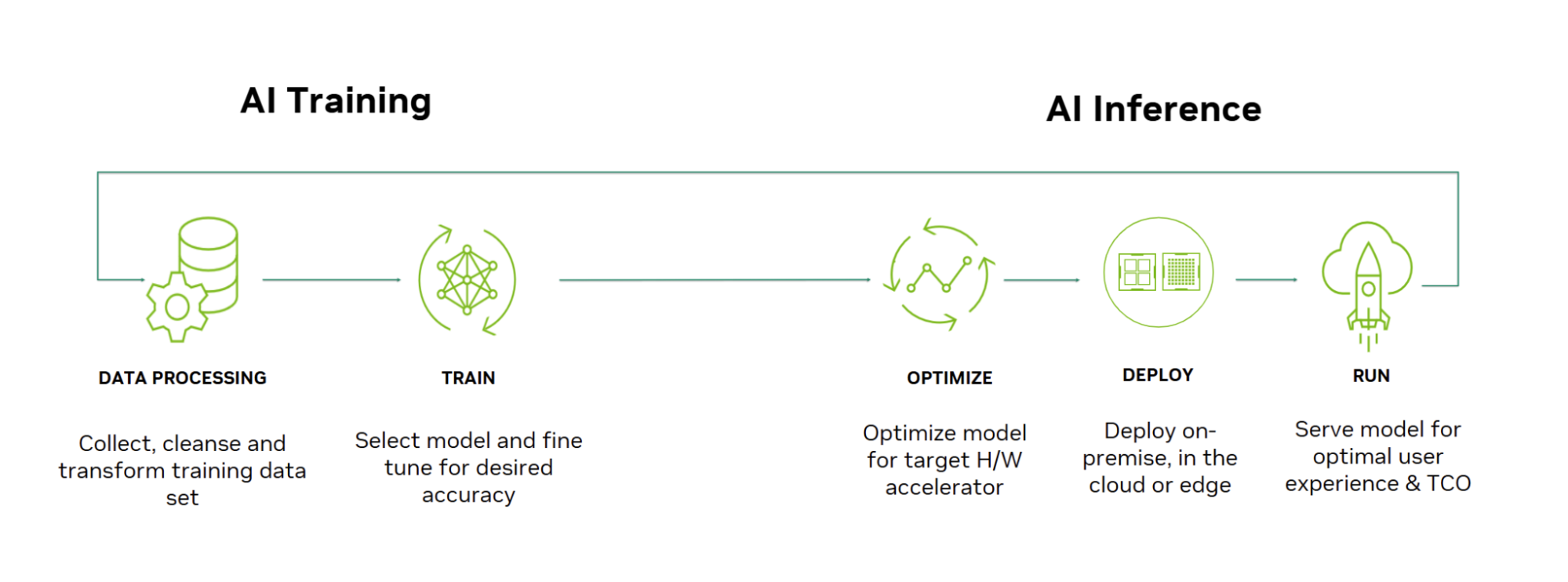
Training a frontier model can cost a fortune, but inference can become the bigger long-term business. Every user query, agent action, summary, or image generation has to be served in real time. That makes AI inference a little like airport baggage handling. Nobody notices it when it works, and everybody complains when it slows down.
Investors know this. They have seen the same pattern in cloud and database software, where the companies that own the runtime often collect durable revenue. Baseten sits in that lane. Its pitch is that teams should not spend months stitching together GPU scheduling, scaling, model routing, and deployment plumbing when they could buy a specialized layer instead.
“The big money in AI is shifting from building models to running them at scale.”
What a mega round tells you about the market
A reported $1.5 billion raise months after a prior mega round says two things. First, capital is still chasing infrastructure bets with clear revenue paths. Second, the market expects demand for production AI to stay nasty and expensive for a while, even as model prices fall in some areas.
That tension matters. If model providers lower prices, do infrastructure vendors get squeezed? Sometimes yes. But demand often expands faster than prices fall. More companies ship more AI features, and more end users push more traffic through the stack. The result is a bigger pie, even if one slice gets thinner.
Where Baseten could benefit
- Companies need faster deployment for custom and open-source models.
- Teams want better cost control across GPUs and workloads.
- Enterprise buyers want observability and governance around production systems.
- Developers want less ops work and fewer brittle homegrown tools.
AI inference is becoming a product race
Early AI infrastructure buyers cared about raw access. Now they care about control. They want to tune throughput, manage model versions, and avoid ugly cost spikes. That changes the sales pitch. A vendor cannot just say it is fast. It has to prove it can keep a service stable when traffic jumps, a model misbehaves, or a customer needs a new deployment path by Friday.
That pressure is good for the strongest platforms and rough on the weak ones. The space is crowded with cloud providers, open-source tooling, and specialist startups. But the vendors that can lower latency while keeping economics sane will keep getting attention. And if they can do that with enough reliability for enterprise buyers, they may get something even better than hype. Renewal revenue.
What to watch next for AI inference startups
Baseten’s reported fundraise will not settle the market story. It will sharpen it. Watch three things: customer mix, unit economics, and whether companies keep consolidating around fewer infrastructure vendors. The easiest sell is still the same one every infrastructure company makes. Cut friction. Save time. Reduce cost. But the buyers now ask harder questions.
What does one inference request really cost? How does performance change under load? What happens when usage spikes tenfold?
Those are the questions that matter now. Not the glossy demo. Not the pitch deck promise. If AI inference keeps absorbing more of the budget, the winners will be the ones that make the bill smaller without making the product feel slower. That is the next fight, and it is already underway.
Where this market goes from here
Baseten’s reported raise is a sign that infrastructure is still the market’s center of gravity. The next wave will not be won by whoever says “AI” the loudest. It will go to the companies that can keep real workloads cheap, stable, and easy to ship. That is a harder job. It is also the one that matters most.
Watch the next funding round, the next pricing change, and the next quarter of enterprise adoption. That is where the real story will show up.