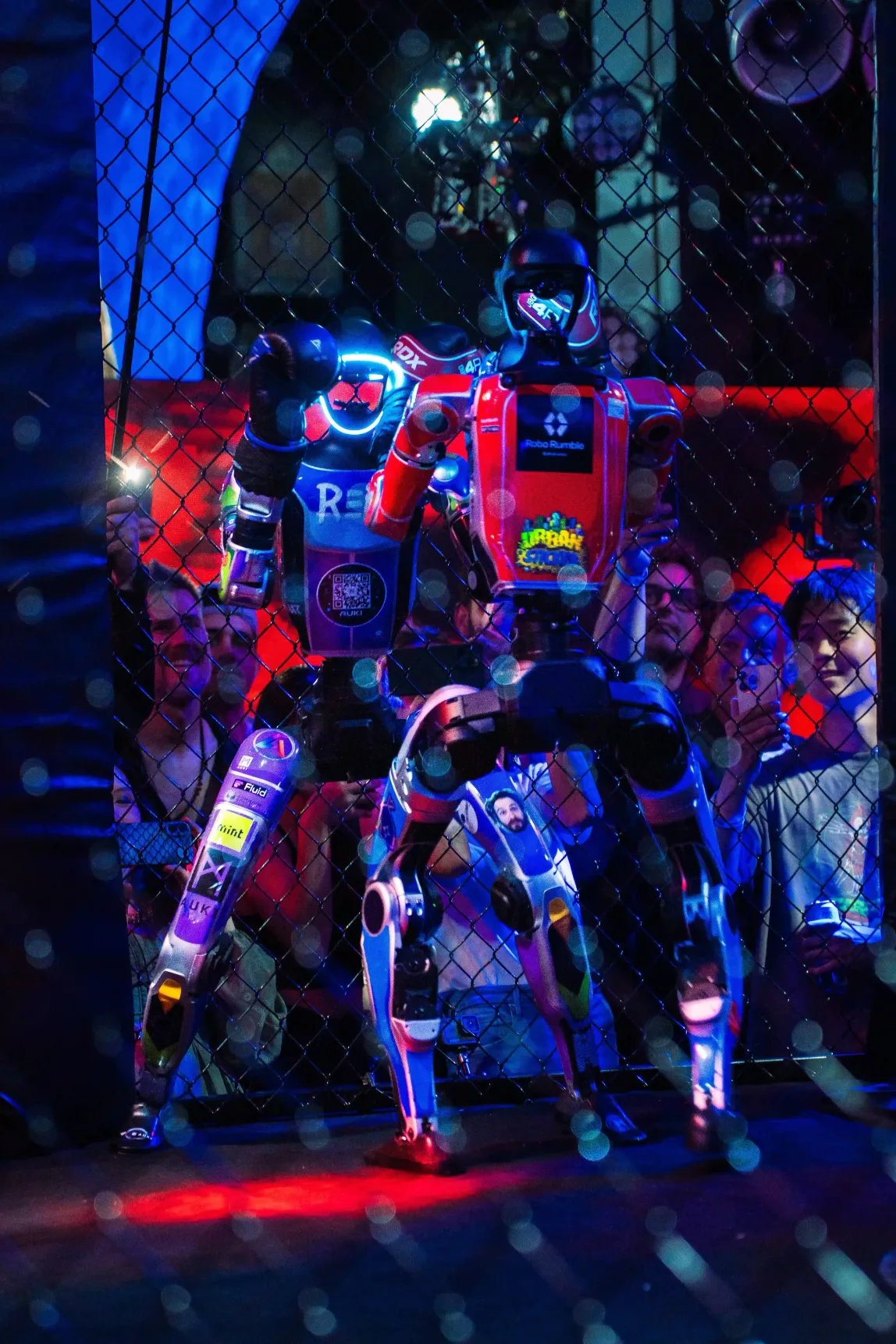
California Stops REK’s Robot Fighting Bet
You can sell a lot of strange ideas in tech if you wrap them in spectacle. But REK robot fighting hit a hard limit in California, where regulators shut down the company behind a plan to stage human versus robot combat. The Verge reported that state officials moved against REK after concerns around safety, permits, and the basic premise of putting people in the ring with machines. That matters now because humanoid robots, AI control systems, and combat-sport branding are starting to collide. The pitch is easy to share online. The risk is harder to package. And for once, regulators did not wait for a viral injury clip before stepping in.
What Stands Out
- California officials shut down REK before its robot fighting concept could become a public event.
- The case shows how fast AI hardware startups can run into labor, safety, and event rules.
- Human versus robot combat makes for strong marketing, but it raises ugly liability questions.
- Regulators appear more willing to act early when robotics companies blur entertainment and physical risk.
Why California Shut Down REK Robot Fighting
According to The Verge, California intervened after REK promoted a fighting robot business built around humans battling machines. That is not a normal robotics demo. It looks more like a combat sport, a stunt show, and a product test happening at the same time.
That mix creates a regulatory mess. If a person gets hurt, is it a workplace injury, an athletic injury, or a product defect? Who approved the venue? Who certified the machine? Those are not paperwork questions. They decide who pays when steel meets bone.
Robot combat may look like entertainment, but regulators tend to see a simpler question first: who is exposed to physical harm, and who is responsible for it?
Look, I have covered enough robotics launches to know the pattern. The demo is choreographed. The hype video is tight. The machine looks more capable than it is, until a sensor fails, a joint locks, or a human moves off-script.
That is where REK robot fighting was always going to face scrutiny.
REK Robot Fighting Was Built for Attention
Tech founders know that “robot fights human” travels faster than “robot performs constrained motion in a controlled environment.” REK seemed to understand that. The concept had the shape of a viral product before it had the shape of a safe sport.
But attention is not a safety case.
Think of it like opening a restaurant where the grill is mounted on a go-kart. Maybe someone can make it work once. That does not mean the health department should let you serve dinner.
For robotics companies, the gap between demo and deployment is where risk piles up. A humanoid robot or fighting machine needs clear rules for force limits, emergency stops, operator control, maintenance, medical response, and participant consent. And even consent has limits. You cannot simply ask people to sign away every hazard because the footage might go viral.
The Hard Questions Behind REK Robot Fighting
The REK case is useful because it strips away the polite language that often surrounds AI and robotics. This was not a warehouse automation pilot or a lab benchmark. It was a machine designed, at least in branding terms, to hit people.
Who controls the robot?
If a robot uses remote control, then operator training matters. If it uses AI-assisted movement, model behavior matters too. If it uses both, the responsibility chain gets murky fast.
Was the machine responding to a human controller, scripted routines, sensors, or some blend of control systems? That detail matters because liability follows control. Courts, insurers, and regulators will want a clear answer.
What counts as acceptable force?
Combat sports already regulate gloves, weight classes, medical checks, referees, and stoppages. Robots add another layer. Motors do not fatigue like people. Metal frames do not feel pain. A machine can generate dangerous torque without looking dramatic on camera.
A proper safety review would need to measure impact force, joint speed, failure modes, and shutdown reliability. Not vibes. Measurements.
Was this employment, sport, or stunt work?
This may be the most awkward question. If people were paid to fight or train with robots, state labor rules could apply. If it was promoted as entertainment, event safety rules could apply. If it was presented as sport, athletic commission oversight might enter the picture.
One project can trigger several rulebooks at once.
What Other AI Robotics Startups Should Learn
REK robot fighting is an extreme case, but the lesson reaches beyond one company. Any startup putting AI systems into physical spaces needs to treat compliance as part of product design, not a cleanup job after the teaser drops.
- Define the activity honestly. Do not call a combat event a demo if people can get hit.
- Document control systems. Make clear who or what controls motion at every moment.
- Set hard force limits. Use measured thresholds, tested hardware, and independent review.
- Build shutdown layers. One emergency stop is not enough when humans are close to moving machinery.
- Talk to regulators early. Boring meetings beat public shutdowns.
Honestly, this is not anti-innovation. It is the cost of working with machines that can injure people. Drones, autonomous vehicles, warehouse robots, and surgical robots all learned versions of the same lesson.
Why REK Robot Fighting Matters for AI Regulation
AI policy debates often get stuck on chatbots, copyright, and model bias. Those issues matter. But robots make regulation physical. A bad chatbot answer can harm people in serious ways, but a bad robot movement can break a wrist in half a second.
That changes the political math. Regulators may tolerate messy software launches longer than they tolerate public machines that swing, shove, or chase. Once AI leaves the screen, the margin for “move fast” shrinks.
And here is the thing: the public is fascinated by humanoid robots, but fascination is not the same as trust. Companies like Boston Dynamics spent years showing controlled tests, falls, resets, and operator oversight. Tesla’s Optimus program faces constant scrutiny because people understand what a capable robot could do in a home or factory. REK walked into that nervous moment with a fight concept.
What did anyone expect regulators to do?
The Next Test for Physical AI
California’s action against REK will not kill robot entertainment. BattleBots has existed for years, but those machines fight each other inside protected arenas. The difference is obvious. Spectators are shielded, builders follow event rules, and humans are not the target.
The next wave will be harder to police. AI-controlled machines will appear in gyms, warehouses, theme parks, film sets, and live events. Some will be useful. Some will be theater. A few will be reckless.
The practical move for founders is simple: design the safety case before the stunt. If your product pitch depends on a person standing close to a powerful machine, assume regulators, insurers, and plaintiffs’ lawyers will read every claim you make.
Robot companies can still build wild things. But if the wild thing can hit someone, the grown-ups in the room are going to ask for permits, test data, and a kill switch that works every time.


