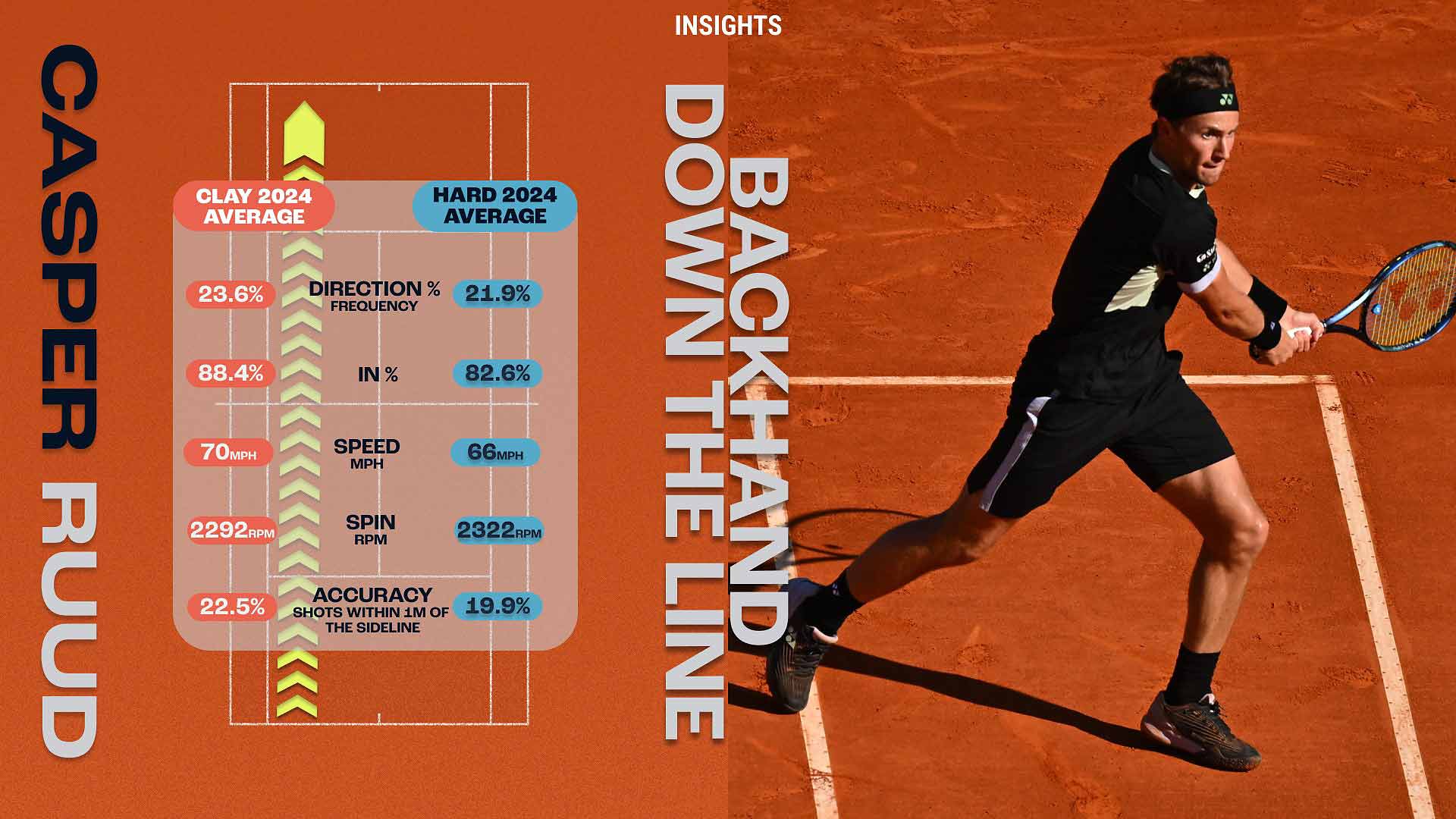
Casper Ruud Stats and Form Guide
You want a quick read on a player before the next match, but most tennis profiles bury the useful stuff. That is where Casper Ruud stats matter. They give you a cleaner view of form, surface strength, ranking trend, and match habits without forcing you to sort through noise. If you follow ATP tennis, bet on matches, or just want smarter context before watching, this matters now because Ruud remains one of the tour’s most scrutinized clay-court names and a steady factor in big draws. The SofaScore player page gives you a snapshot, but the real value comes from reading between the lines. What do the numbers actually suggest about his level, his floor, and the matches where he is most dangerous?
What stands out right away
- Casper Ruud stats point to a player built on consistency, heavy baseline patterns, and strong clay-court results.
- His profile is most useful when you compare surface splits, recent results, and opponent quality together.
- Ruud’s game travels, but clay still gives him the cleanest edge.
- His numbers often reflect control and endurance more than flashy shot-making.
What the Casper Ruud stats page actually tells you
SofaScore’s player page works best as a fast scouting tool. You can track ranking context, match results, tournament history, and basic performance signals in one place.
That sounds simple. It is. But simple is useful when you need a pre-match read in 30 seconds.
For Ruud, the profile usually reinforces a familiar picture. He wins a lot of matches through structure, patience, and point construction. Think of his game like a boxer with a relentless jab rather than a one-punch knockout artist. He keeps pressing until rallies tilt his way.
Ruud’s value is rarely about chaos. It is about repeatable patterns that hold up over long matches.
How to read Casper Ruud stats before a match
Look, one stat never tells the full story. Tennis form is part numbers, part context, and part matchup.
- Check recent results first. A run of wins means more if it came against top-30 opponents than against lower-ranked players in smaller events.
- Review the surface. Ruud is strongly associated with clay, and that reputation exists for a reason. His topspin forehand, court coverage, and patience tend to pay off most on slower courts.
- Scan tournament level. A quarterfinal at a Masters event usually says more than a title in a weaker field.
- Watch for straight-set trends. If he is winning quickly, that can signal confidence. If every match goes long, it may suggest stress points in his level.
And yes, matchup style matters too. A big hitter who rushes him on a fast court can change the picture fast.
Casper Ruud stats by playing style
Baseline control is the engine
Ruud wins with shape, depth, and discipline. He is not usually the guy trying to end every point in three shots. Instead, he builds points with a heavy forehand and asks hard physical questions over two hours or more.
That style helps explain why his stat profile often looks steady rather than explosive. Fewer wild swings. More repeatable output.
Clay remains his best stage
This is the obvious part, but it still matters. On clay, his movement and rally tolerance become a bigger weapon. The slower bounce gives him more time to set up, and his topspin jumps higher, which can push opponents out of comfortable strike zones.
Why does that matter for readers using Casper Ruud stats? Because surface context is non-negotiable. The same player can look top-five dangerous on clay and far more vulnerable indoors or on quicker hard courts.
His margin is part of the plan
Honestly, some viewers underrate players like Ruud because the game can look less dramatic than the tour’s biggest shot-makers. That misses the point. His margin over the net, his rally patience, and his fitness are features, not limitations.
One bad service game can still swing a set.
What SofaScore helps you spot fast
The best use of SofaScore is trend detection. You are not there for poetry. You are there to answer basic questions quickly.
- Is Ruud winning lately?
- Is he doing it on his preferred surface?
- Are the losses coming against elite players or players he should beat?
- Are matches tight, or is he in control?
If you stack those answers, you get a sharper read than ranking alone can give you. Rankings lag. Form speaks louder.
Where the numbers need caution
Here is the thing. Tennis stats pages can flatten important context. A loss is a loss on the page, but not all losses are equal.
If Ruud loses to a top player in a close three-set match, that may say more about his level than an easy win over a struggling opponent. Injury issues, travel, scheduling, and draw difficulty also matter (especially during packed parts of the ATP calendar).
So do not treat the profile as a final verdict. Treat it as the start of your read.
Best ways fans can use Casper Ruud stats
Before watching a match
Check his last five matches, the current surface, and whether he has played long matches in the same week. That gives you a quick picture of sharpness and fatigue.
For fantasy or betting research
Use the profile to identify whether his recent record matches the public narrative. If everyone says he is in poor form but the losses came against top names on less favorable courts, the market may be overreacting.
For player development context
Ruud is a useful case study in how a modern ATP player can build elite results without relying on pure serve power. His path is a reminder that physical base, forehand identity, and point tolerance still matter a lot at the top level.
The smartest read on Ruud is usually the least dramatic one. Check the surface, check the recent opponents, then trust the pattern.
What to watch next in Casper Ruud stats
If you want the clearest signal going forward, focus on three things:
- Hard-court consistency. Can he produce deeper runs away from clay with regularity?
- Wins over top opponents. Big-match results often shape how his season is judged.
- Service hold stability. When that number stays solid, his baseline game gets much harder to crack.
Those markers tell you more than highlight clips ever will. And they give you a practical filter before the next ATP event rolls around.
The real takeaway before his next match
Casper Ruud remains one of the easier top players to read if you respect the context. His profile is strongest when the court slows down, rallies stretch out, and opponents have to hit one extra ball again and again. On faster surfaces, the margins tighten and the matchup questions get louder. Simple enough, right?
So the next time you pull up Casper Ruud stats, do not stop at the win-loss line. Check where the matches happened, who he played, and how the results came together. That is where the useful edge lives, and it is also where the next surprise usually starts.