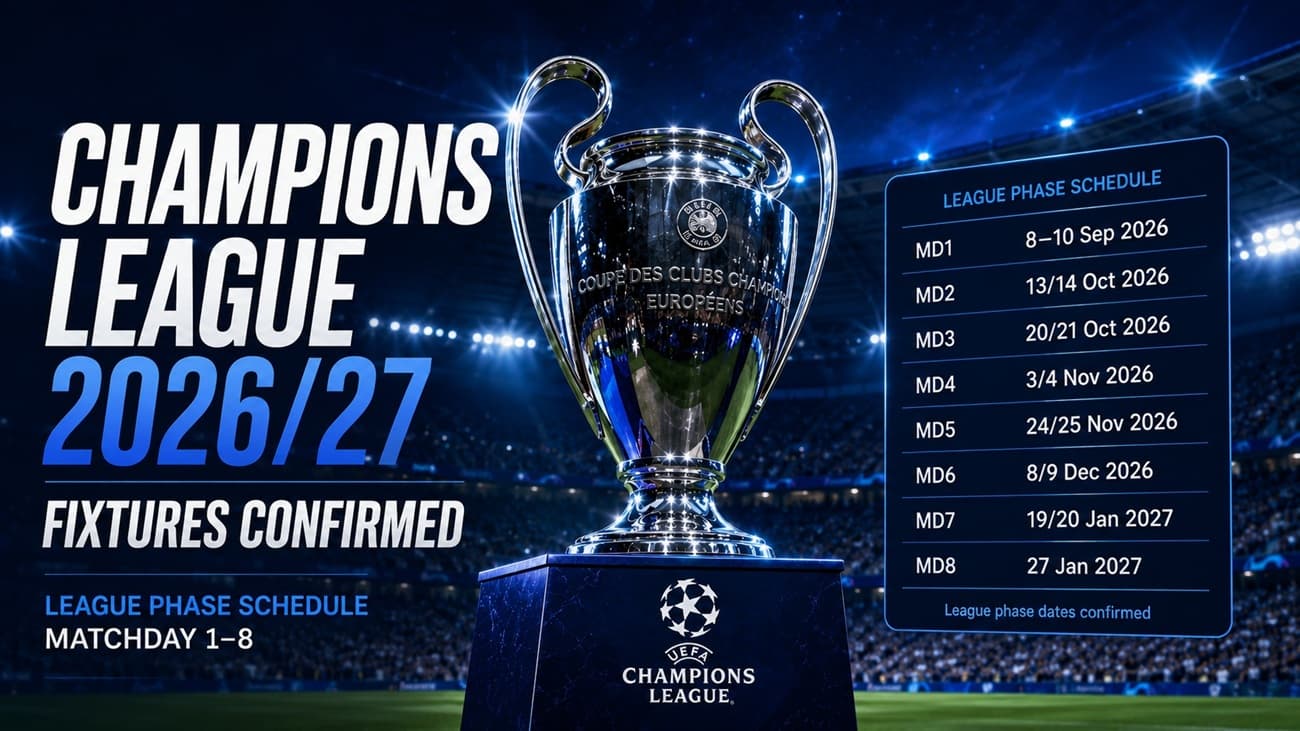
Champions League 2026-27 Schedule: Real Madrid and Barcelona Match Times
The Champions League 2026-27 schedule matters because the calendar is no longer just a list of dates. It shapes travel, recovery, TV planning, and the way clubs manage heavy weeks in Spain and across Europe. For Real Madrid and Barcelona, match times can mean the difference between a manageable night and a brutal turnaround before a league game. Fans feel it too. Kickoff times decide whether you can watch live, stream later, or spend half the evening checking updates on your phone. So if you want to track the season properly, you need more than a fixture list. You need to know how the slots work, why they matter, and where the pressure points are.
- Match times are strategic. They affect recovery, rotation, and travel plans.
- Real Madrid and Barcelona often get premium slots. That usually means bigger TV audiences and tighter turnaround windows.
- The new Champions League format changes rhythm. More teams, more fixtures, more calendar stress.
- Checking official sources matters. Broadcast listings can shift after UEFA releases updates.
- Late kickoffs are not just a fan issue. They can change how clubs prepare for the next match.
What the Champions League 2026-27 schedule means for Spanish giants
The new Champions League format has already changed how clubs and fans think about the competition. More league-phase games means more dates, and more dates means less room for error. For Real Madrid and Barcelona, that often translates into a packed run where Europe sits on top of La Liga, Copa del Rey, and international breaks.
Look at it like a restaurant dinner rush. A team can survive one late booking, but a string of them bends the whole night around the pressure point. That is what these kickoff windows do. They shape the week before the match and the week after it.
UEFA typically staggers kickoff times to spread TV audiences across Europe, and the biggest clubs tend to land in the headline slots. That is good for visibility. It is also a headache for coaching staffs trying to keep players fresh.
The schedule is not neutral. A kickoff time can influence recovery, tactical prep, and even fan turnout. That is especially true for clubs playing every three or four days.
Champions League schedule and match times: what to watch for
Real Madrid and Barcelona supporters should pay attention to three things when the Champions League 2026-27 schedule is released or updated.
- Home versus away timing. A late away kickoff in Central Europe can turn into a long return journey and a shorter recovery window.
- Domestic match spacing. If a Champions League game lands on Wednesday night, the next La Liga match may become awkwardly early or unusually late.
- Broadcast slot changes. TV selections can affect the exact kickoff time, especially in the group or league phase when UEFA and broadcasters coordinate the slate.
And here is the part fans often miss. Match times are not only about convenience. They can help explain why a coach rotates heavily one weekend and sticks with a near-full-strength side the next. You may see a lineup and think it is conservative. It is often calendar math.
Why Real Madrid and Barcelona are watched so closely
These clubs draw global audiences, so their fixtures are routinely placed in premium windows. That gives UEFA and broadcasters the best chance to maximize reach, but it also means the teams are frequently asked to absorb awkward schedules.
For Real Madrid, that can mean a deep run across Europe with little rest between elite opponents. For Barcelona, it can mean a demanding travel pattern layered on top of a league season that already punishes any drop in intensity. Same tournament. Different logistical pain.
How to read the Champions League 2026-27 schedule without guesswork
If you want to track the competition cleanly, use a simple routine. The official UEFA site should be your first stop. Club websites and major broadcasters usually follow with updated kickoff times, TV picks, and venue details.
- Check the official fixture list first.
- Confirm the local kickoff time, not just the time shown in another country.
- Watch for rescheduling after TV selections are made.
- Compare the match with the domestic calendar so you know whether rest days are tight.
Why do people still get caught out by this every season? Because they focus on the opponent and ignore the clock. Bad move. A Tuesday night in Europe can be a completely different burden than a Wednesday evening with the same opponent.
What the schedule tells you about the season ahead
The Champions League 2026-27 schedule is useful before a ball is kicked, because it gives away the real shape of the season. Clusters of difficult fixtures can expose depth issues. A friendlier stretch can buy a coach time. A brutal travel sequence can change how a squad is managed for weeks.
For Real Madrid and Barcelona, the lesson is simple. Do not treat kickoff times as background noise. They are part of the competitive picture, just like injuries and form. Ignore them and you miss half the story.
That is the next useful question: which club handles the timing pressure better when the calendar starts biting?