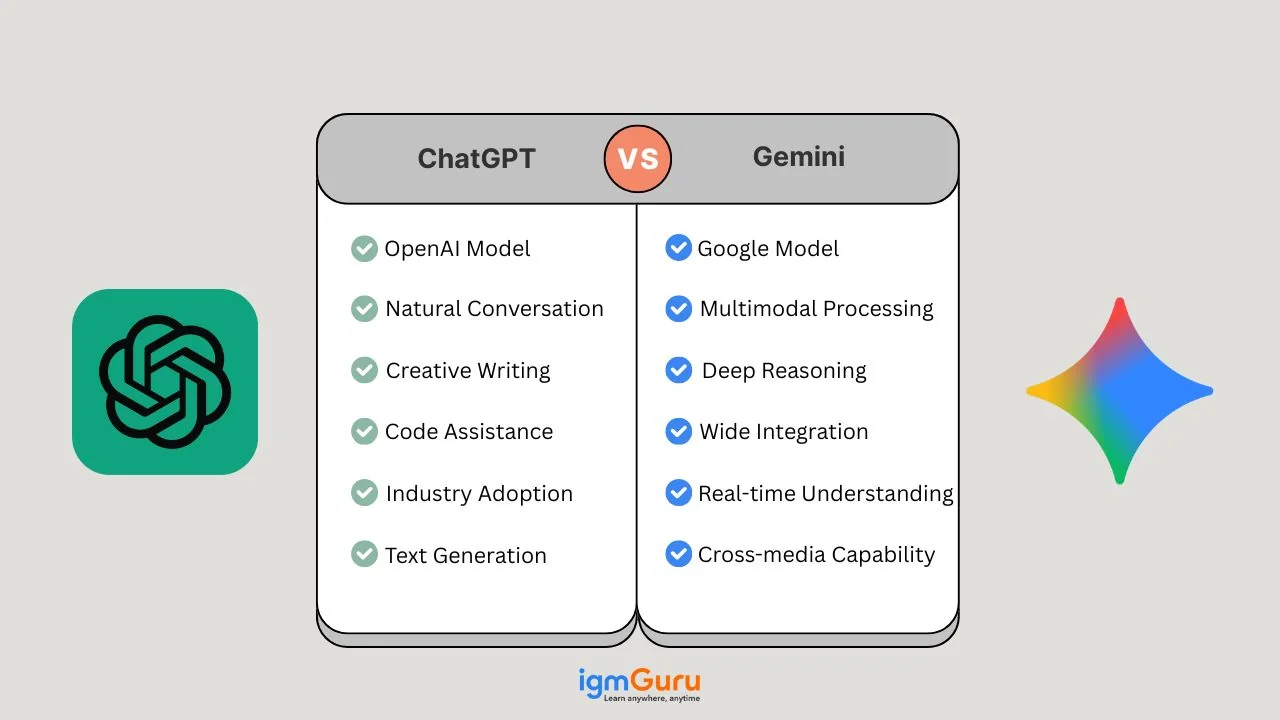
ChatGPT vs Gemini: What 1 Billion Users Really Means
You are probably seeing big user numbers thrown around and wondering what they actually mean for your work. The latest ChatGPT and Gemini chatter is not just a vanity contest. It shapes where product quality improves, where features arrive first, and which assistant becomes the default for your daily tasks. That matters if you use an AI chatbot for writing, search, coding, or research, because scale usually brings faster iteration, more integrations, and more pressure on the platform to behave. But scale can also hide real gaps. A billion users does not mean a tool is better for you. It means the fight is getting louder, and the trade-offs are getting sharper.
What the user race tells you
- Scale drives product speed. Big platforms ship faster when they have more usage data.
- Popularity is not quality. Your best tool depends on your workflow.
- Defaults matter. A preinstalled assistant can win even when another model feels smarter.
- Integration beats novelty. The winner is often the one that fits your apps and habits.
Why mainKeyword matters now
The mainKeyword here is ChatGPT vs Gemini, and the comparison is no longer theoretical. OpenAI and Google are now fighting over distribution, trust, and everyday utility. That means you are choosing between two moving targets, not two fixed products.
Look at the pattern. ChatGPT built its lead as the standalone AI app people opened first. Gemini is tied to Google’s ecosystem, which gives it a deep route into Search, Gmail, Docs, Android, and Chrome. That is a different game. Think of it like two restaurants serving the same dish. One has a famous storefront. The other sits inside the grocery store you already visit every day. Which one you pick depends on your routine, not the menu photo.
“User count is a weak proxy for usefulness. The better question is where the assistant saves you real time.”
ChatGPT vs Gemini for daily work
If you write, summarize, brainstorm, or code, ChatGPT still feels more like a polished general-purpose tool. It has a strong habit of producing clean first drafts and it usually gives you a clearer back-and-forth editing loop. Gemini, on the other hand, often makes more sense if your day already lives inside Google services.
That split matters. A tool that sits next to your documents and email will get used more than a tool that needs a separate tab and a separate habit. And yes, convenience is a feature. A very underrated one.
Where ChatGPT tends to help more
- Drafting emails, memos, and outlines
- Explaining code and debugging simple problems
- Running multi-step prompts with a clean interface
- Acting as a general assistant across many tasks
Where Gemini tends to help more
- Working inside Gmail, Docs, and Google Drive
- Pulling context from Google’s product stack
- Helping users who want fewer app switches
- Serving as a natural fit for Android and Chrome users
What the 1 billion user milestone does not tell you
Big numbers get headlines, but they blur the useful questions. Are those users active every day? Are they paying? Do they trust the answers? Do they stick with the product after the novelty wears off? Those are the questions that separate a hype cycle from a durable business.
One more thing. User totals do not reveal model quality. They do not tell you how often the assistant hallucinates, how well it handles edge cases, or whether it gives you a solid answer when the prompt gets messy. That is the part that matters when you are under deadline.
How to choose between ChatGPT vs Gemini
- Pick ChatGPT if you want a standalone assistant for writing, coding help, and broad experimentation.
- Pick Gemini if your work already runs through Google apps and you want tighter workflow integration.
- Test both on your own tasks. Use the same prompt, same deadline, same output format.
- Watch for friction. The best tool is the one you keep opening, not the one that looks strongest in a demo.
The real test is boring, which is why people skip it. Put both tools in front of the same work. Ask for a client email, a meeting summary, a code fix, and a research brief. Which one gets you to usable output faster?
Honestly, that answer matters more than any launch event. A model can be impressive and still be the wrong fit for your week.
The real contest is distribution
Behind the user count race is a quieter struggle over where AI lives. OpenAI wants ChatGPT to be the place you start. Google wants Gemini to be the layer inside the tools you already use. That is why this rivalry feels so sharp. It is less about one magic model and more about who controls the doorway.
And that is where the market may settle for now. The strongest product is not always the one with the smartest demo. It is the one that sits in your path at the right moment, with enough quality to keep you from switching away.
What to watch next in mainKeyword
If you are tracking ChatGPT vs Gemini, keep your eye on three things. First, how often each product shows up in your existing workflow. Second, how well each one handles real work, not canned prompts. Third, whether the company keeps improving the product without burying the core experience under clutter.
The next turn in this fight will not come from a flashy demo. It will come from the assistant that saves you ten minutes without making you think about it. Which one earns that spot on your screen?