Europe’s AI Transparency Test Is Coming
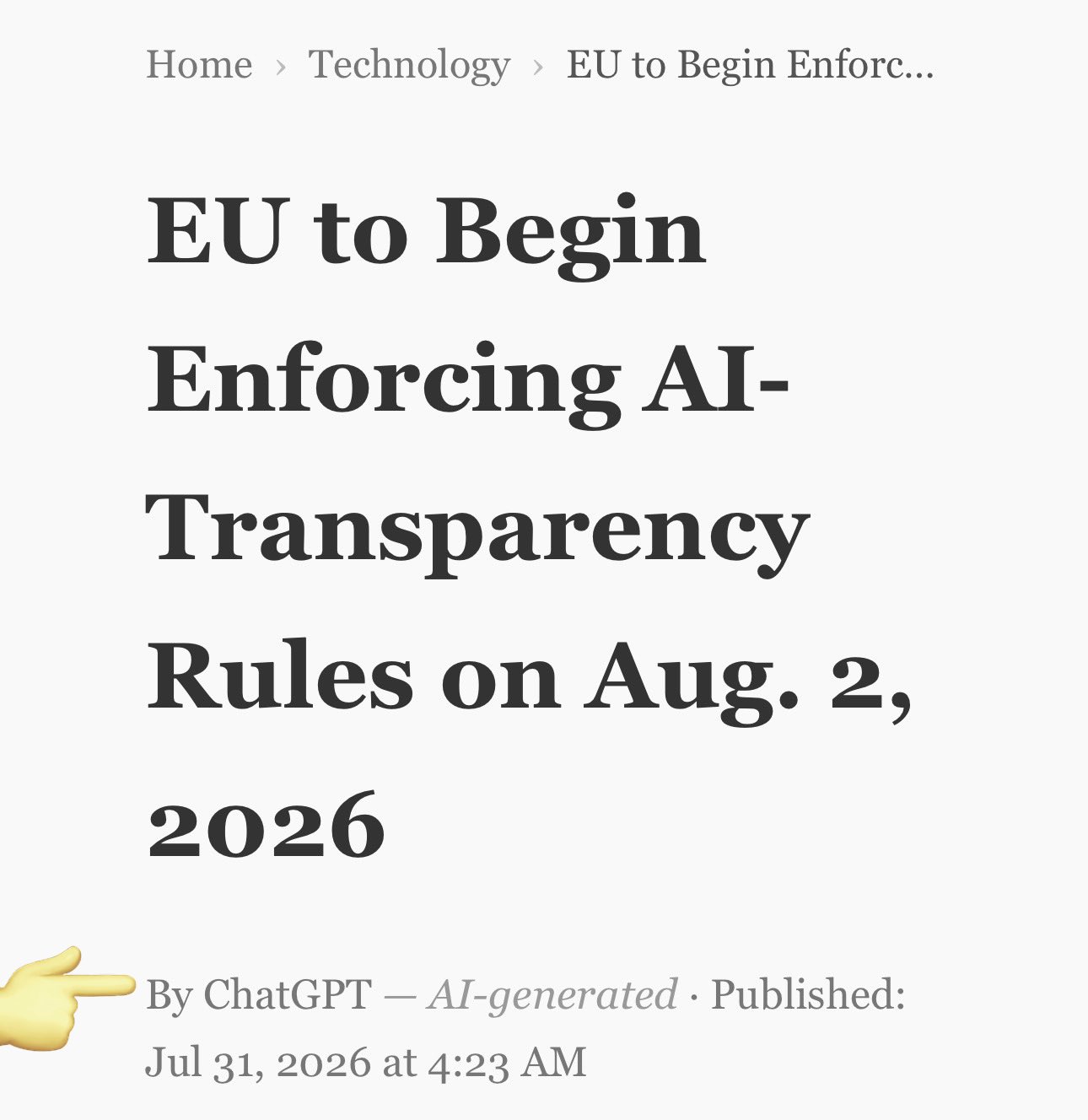
Europe is about to get a clearer view of how far AI has already spread into daily life, and that matters because most people still think of AI as a separate product they choose to use. It is not. The AI transparency rules in Europe will push companies to show where automated systems sit inside apps, platforms, and services you already depend on. That affects search results, chatbots, recommendation engines, workplace software, and support tools. The point is simple. If AI is buried in the stack, people cannot judge what it is doing or where it may fail. And if you live in Europe, this shift may change how you shop, work, travel, and even file complaints. How many of your daily tools are already powered by AI without telling you?
What Europe’s AI transparency rules will expose
- Hidden AI features inside consumer apps and business software.
- Disclosure gaps in services that use generative AI, ranking systems, or automated moderation.
- Accountability pressure on vendors that bundle AI into products without clear labels.
- User rights questions around appeals, explanations, and human review.
- Compliance costs for companies that operate across the EU.
Why the AI transparency rules in Europe matter now
AI has moved from flashy demos into plumbing. It writes email drafts, filters spam, summarizes meetings, ranks candidates, flags fraud, and decides which customer gets a faster response. That makes the technology feel ordinary, which is exactly why transparency matters. Hidden systems are harder to question, and harder to fix when they drift.
Wired’s reporting points to a simple reality. Europeans are already surrounded by AI, even when the label is missing. The new rules will not remove the tech from daily life. They will make its presence harder to hide.
The real test is not whether AI exists in a product. It is whether you can tell what it is doing, who built it, and how you can challenge it when it gets things wrong.
How the rules could change daily experiences
Think of this like a building inspection. A nice lobby does not matter if the wiring is a mess behind the walls. AI can work the same way. A polished interface can sit on top of brittle model outputs, messy training data, or opaque decision logic.
That is why disclosure is more than paperwork. If a shopping app boosts some products with an AI ranking system, you should know. If a bank uses automated fraud filters that block your card, you should know. If a support chatbot is answering first and a human only appears later, that should be visible too.
- Look for labels and notices. They should explain when AI is involved, not bury the detail in legal text.
- Ask what the system can decide. Is it suggesting, sorting, blocking, or approving?
- Check for a human route. Can you reach a person if the automated answer is wrong?
AI transparency rules in Europe and the business pushback
Companies will argue that too much disclosure confuses users or exposes trade secrets. Sometimes that complaint is fair. But secrecy has also been a convenient shield for weak documentation and sloppy governance. If a company cannot explain a system in plain language, should it be deploying that system at scale?
Expect firms to respond the way they always do when regulation gets real. They will add notices, update dashboards, and rewrite policy pages. Some will do the minimum. Others will use the pressure to clean up product design. The split will be obvious fast.
What regulators will have to watch
Rules on paper do not enforce themselves. Regulators will need to focus on a few practical questions:
- Are disclosures visible before use, or buried after the fact?
- Do notices say what the AI does in plain English?
- Can users contest automated decisions quickly?
- Are vendors documenting models, prompts, and human oversight?
That last point matters. A label alone is not enough. A toaster with a warning sticker still burns bread if the thermostat is broken.
What you should watch next
If you use software in Europe, start paying attention to the small print and the interface cues. Does the product admit when AI is involved? Does it offer a way to opt out of automated handling? Does it explain where the human ends and the machine begins?
For business leaders, the next move is blunt. Map every place AI touches your customer flow, employee workflow, and decision pipeline. Then decide what you can explain without hand-waving. The companies that do that early will spend less time scrambling when the rules tighten.
The bigger question is not whether Europe can force disclosure. It can. The real question is whether the rest of the world will keep pretending that AI is a separate feature, instead of the machinery inside almost everything.
mainKeyword: AI transparency rules in Europe