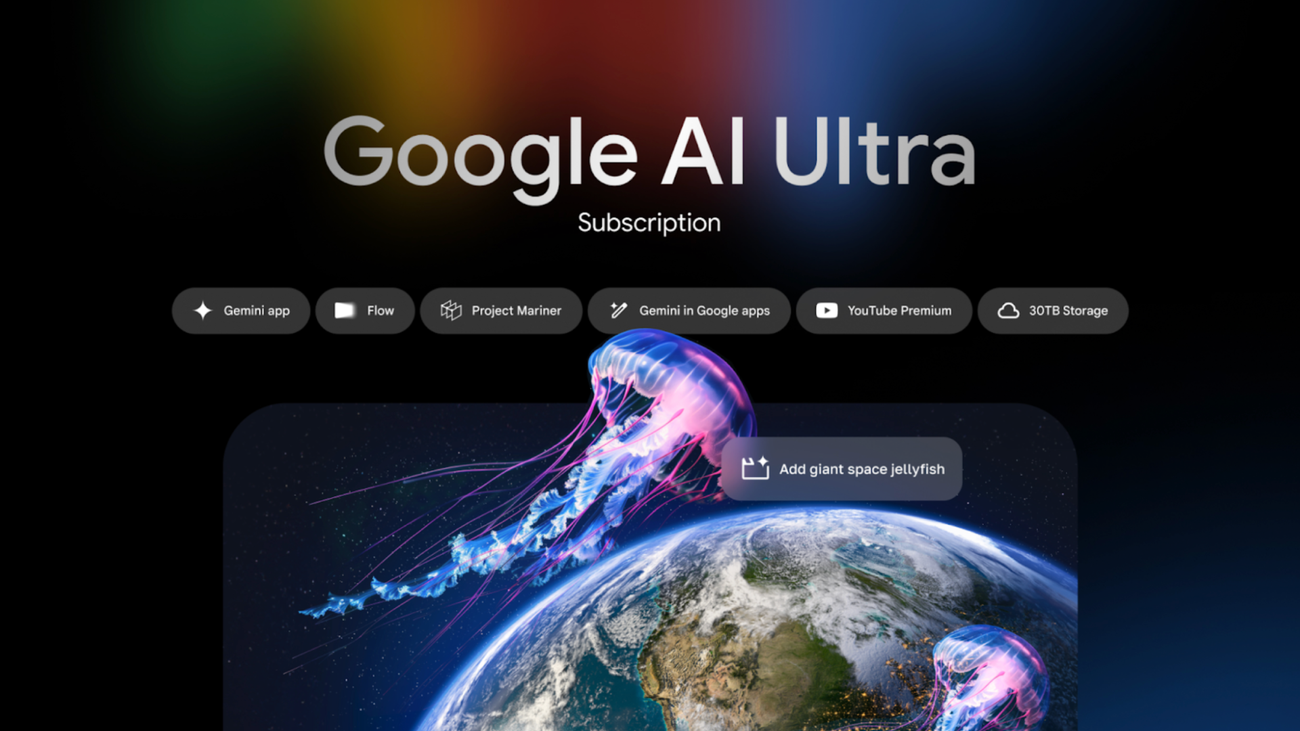
Google AI subscriptions at I/O: what changed
Google keeps adding AI features faster than most people can track them. That creates a simple problem for you. Which plan actually gives you useful tools, and which one mainly exists to push you up to a pricier tier? The latest Google AI subscriptions update at Google I/O matters because Google is turning Gemini into a bigger paid bundle, tied more closely to Search, Workspace, and its broader consumer ecosystem. If you already pay for Google One, or if you use Gemini for work, the new lineup affects what you get and what you may be asked to pay next. And yes, the branding is still messy. But the strategy is easy to read once you strip away the keynote gloss.
What stands out
- Google is making Google AI subscriptions a clearer ladder, from mainstream plans to premium AI access.
- Gemini is no longer a side product. It is becoming a bundle that stretches across Google apps and services.
- The company wants paid AI to feel like a membership, not a one-off chatbot fee.
- For many users, the real question is simple. Will you use these features often enough to justify another monthly bill?
How Google AI subscriptions changed at I/O
Google used I/O to tighten its consumer AI packaging around Gemini and higher-end access tiers. The broad move is familiar by now. Take scattered AI features, group them under one paid umbrella, and make the premium option look like the serious one.
That matters because subscriptions are where AI economics get real. Free demos grab attention. Recurring revenue pays for the compute.
From Thurrott’s reporting, the main shift is that Google updated its AI plans to better organize Gemini access and premium features under a more deliberate subscription structure. The company is trying to reduce confusion between Google One benefits, Gemini branding, and top-tier AI capabilities.
Google’s AI pitch is moving from “try this chatbot” to “pay for an upgraded Google life.”
Honestly, that was inevitable. OpenAI, Microsoft, and Google are all chasing the same end state. They want AI to become a standing line item on your monthly budget.
Why Google AI subscriptions now look more like a bundle business
Google has one giant advantage here. It already owns a stack of daily-use products, from Gmail and Docs to Photos, Search, Android, and Chrome. So it can sell AI as an add-on woven into tools you already open every day.
That is smarter than selling a chatbot in isolation. Think of it like a cable bundle, but for machine help instead of TV channels. You may only care about one feature today, yet the company wants you to stay because the package keeps spreading.
What this bundle approach means for users
- More convenience. You may get AI inside apps you already use, which cuts friction.
- More lock-in. The deeper Gemini sits inside Google services, the harder it is to compare alternatives cleanly.
- More pricing pressure. Once AI is attached to storage, productivity, and device perks, it becomes easier for Google to defend higher monthly fees.
Look, that does not make the offering bad. It makes it strategic.
Who should actually pay for Google AI subscriptions
Most people do not need the top tier. That is the part tech companies rarely say out loud.
If you only use AI occasionally to summarize email, rewrite a paragraph, or ask basic questions, a free tier or entry plan may be enough. But if you spend hours each week in Workspace, generate lots of content, or want earlier access to stronger Gemini tools, a paid plan starts to make sense.
Paid plans make more sense if you are:
- A heavy Gmail, Docs, or Sheets user who will use AI several times a day
- A solo professional paying for speed and convenience
- A creator or analyst who benefits from larger context windows, stronger models, or premium features
- Already deep in Google’s ecosystem and unlikely to switch
You should probably wait if you are:
- Still experimenting with AI tools
- Happy switching between free services
- Mostly interested in novelty features
- Paying for too many overlapping subscriptions already
One blunt test helps. If Gemini saves you less than an hour or two a month, why pay for a premium plan?
Where Google’s pricing story still looks weak
Google is getting better at packaging. It is still not great at making its tiers instantly clear.
That confusion has followed the company for years. Products overlap, names change, and benefits drift across plans. Consumers should not need a flowchart to understand what comes with Google One, Gemini, or a premium AI tier. But here we are.
This is where Google can learn from Apple, oddly enough. Apple often charges plenty, sometimes too much, yet its product ladders are usually easier to parse. Google tends to throw features into the market like a chef adding spices by feel. Sometimes it works. Sometimes dinner gets weird.
Clarity is non-negotiable if Google wants AI subscriptions to stick beyond early adopters.
How this compares with ChatGPT and Microsoft Copilot
Google is not selling AI in a vacuum. Buyers compare subscriptions across major ecosystems, even if the tools are not identical.
ChatGPT
OpenAI still has the cleaner consumer identity. People know what ChatGPT is, and many know what the paid plan is for. That simplicity counts.
Microsoft Copilot
Microsoft’s edge is enterprise placement. If your work already runs through Windows, Microsoft 365, and Teams, Copilot has a natural home. It can feel less like a separate buy and more like an extension of software your company already funds.
Google Gemini
Google’s edge is reach. Billions of people use its services. If Gemini becomes tightly useful inside Search, Gmail, Docs, and Android, Google has a serious opening. But if the plans feel muddled, users may default to whichever AI tool already has mindshare.
And mindshare matters more than many product teams admit.
What to watch next with Google AI subscriptions
The next phase is not about launching more AI demos. It is about proving that paid users get steady value month after month.
Watch for these signals:
- Whether Google keeps folding Gemini deeper into Workspace and Search
- Whether premium features stay exclusive or drift down to cheaper plans
- Whether pricing stabilizes or keeps changing
- Whether users can tell, in plain language, what each subscription does
One sentence matters more than all the keynote polish.
If Google can make Gemini feel useful every day, its subscription push has a real shot. If it feels like a pile of scattered AI extras, people will keep one foot out the door.
The real test for Google
Google I/O made the company’s direction clear. Google AI subscriptions are becoming a bigger commercial engine, not a side experiment. That was the obvious path, and now Google is taking it with less hesitation.
Still, product strategy and customer value are not the same thing. Google now has to prove these plans solve real problems often enough to earn a recurring fee. For power users, the pitch is getting stronger. For everyone else, the smartest move may be to wait, compare, and keep your wallet shut until the benefits feel concrete (and easy to explain to another human in one breath).
That is the standard Google should be judged by next, not the size of the I/O applause.