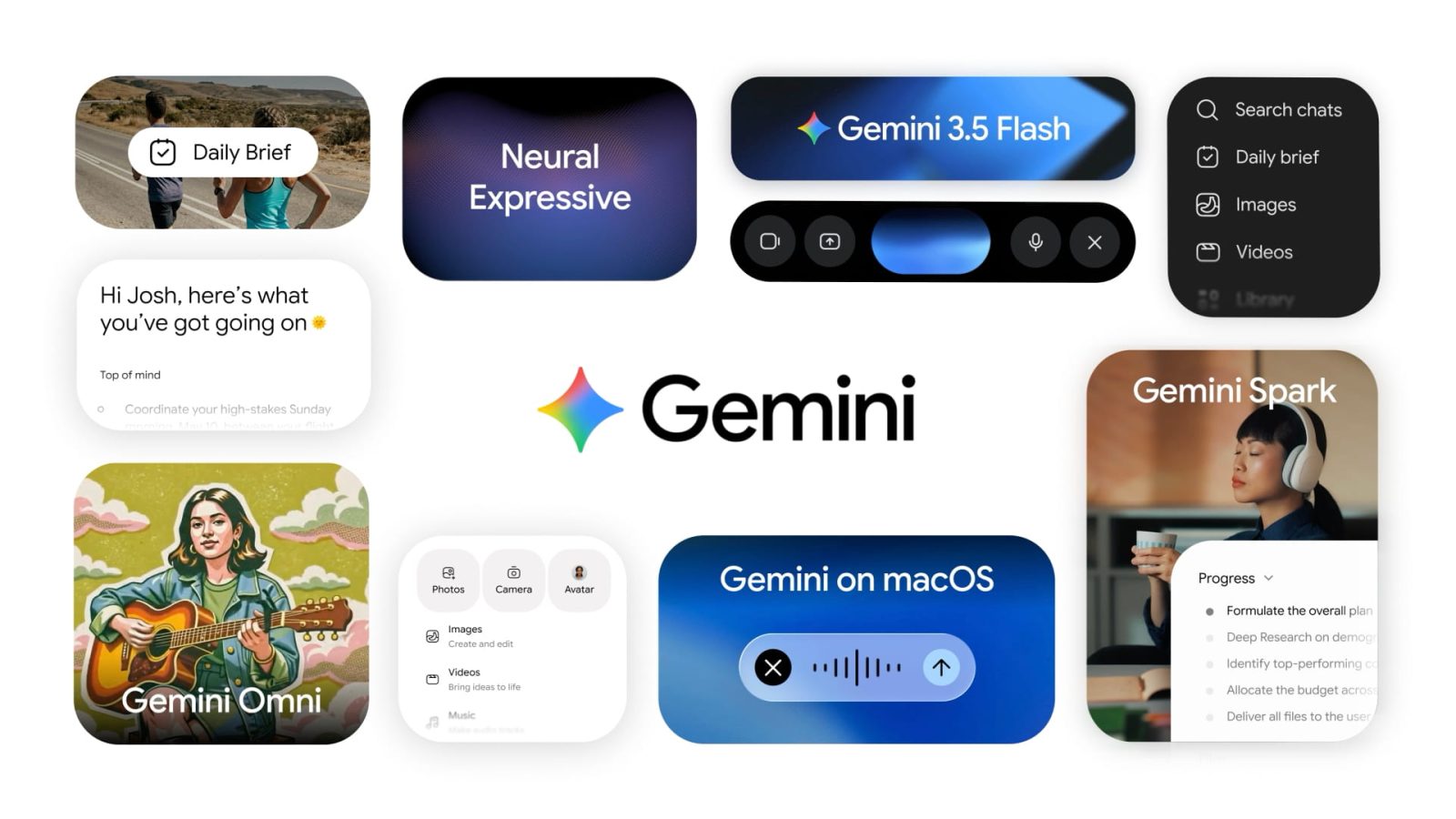
Google Gemini App Update at I/O 2026
If you use AI assistants for real work, you have a simple question: is the Gemini app finally good enough to stand next to ChatGPT and Claude? That matters now because Google is no longer selling Gemini as a side project. At I/O 2026, the company framed the Google Gemini app update as a direct answer to the fast pace set by OpenAI and Anthropic, with new assistant features, tighter integration across Google services, and a stronger pitch for everyday use. The timing is not subtle. Users are picking winners based on speed, reliability, memory, and how well these tools fit into the apps they already use. Google knows it cannot coast on brand power alone. It has to prove Gemini belongs in your daily workflow, not just on a demo stage.
What stands out
- Google is positioning Gemini as a full assistant, not just a chatbot.
- The Gemini app is being tuned to compete more directly with ChatGPT and Claude on utility.
- Google’s edge is distribution, especially through Search, Android, Workspace, and other first-party products.
- The real test is consistency. Flashy features matter less than whether Gemini works well every day.
Why the Google Gemini app update matters
Google has been in an awkward spot for a while. It had the models, the cloud muscle, and huge consumer reach, yet ChatGPT became the default name in AI for many users. Claude, meanwhile, built a reputation for clean writing, thoughtful responses, and solid long-context work.
So what does Google do? It closes the gap at the product layer. That seems to be the point of the Google Gemini app update unveiled at I/O 2026. Google is trying to make Gemini feel less like a collection of model demos and more like a coherent assistant that can reason, respond, and act across your digital life.
For Google, the fight is no longer about who has an LLM. The fight is about who owns the assistant relationship.
That is a different battle, and frankly, it suits Google better.
How Gemini is taking aim at ChatGPT and Claude
1. A stronger assistant pitch
ChatGPT succeeded because it made advanced AI feel simple. Claude gained loyal users by being steady and useful. Google now seems to be borrowing from both playbooks. The Gemini app update puts more weight on practical help, multimodal interaction, and task completion.
Look, this is overdue. Google has spent years building pieces of the future. The hard part was turning those pieces into a product people want to open on purpose.
2. Better use of the Google ecosystem
This is where Gemini can still hit harder than its rivals. OpenAI has momentum. Anthropic has focus. But Google has Gmail, Docs, Android, Maps, Search, YouTube, and a giant installed base. If Gemini can work smoothly across those surfaces, that is not a small edge. It is seismic.
Think of it like a great point guard in basketball. Talent matters, sure, but the real value comes from making everyone else on the floor better. Gemini does not need to beat ChatGPT in every benchmark if it becomes the easiest AI to use inside products you already depend on.
3. Multimodal pressure is now non-negotiable
Users increasingly expect AI tools to handle voice, images, text, and live context in one flow. Google has talked about this for a long time, and I/O 2026 gave it another chance to show Gemini as a more fluid interface for that kind of interaction.
And users will notice.
If Gemini can see what you mean, hear what you want, and connect that request to your files or apps, it starts to feel like an assistant instead of a prompt box. That is the standard now.
Where the Google Gemini app update could still fall short
Here is the thing. Product ambition is not product trust.
Google has a habit of showing a bold AI future, then making users wait for the version that feels stable enough for daily work. That gap has hurt Gemini before. It can hurt again if the I/O 2026 announcements land unevenly, or if the best features stay limited by geography, device, or subscription tier.
There are a few pressure points to watch:
- Reliability. If Gemini gives uneven answers, users will keep a backup tool open.
- Clarity. Google must explain which Gemini features work where, and under what plan.
- Privacy and control. Deeper integration is useful, but only if users trust how data moves across services.
- Speed. People forgive many things. Lag is not one of them.
Honestly, this is where Claude and ChatGPT still have room to punch back. Both have built clearer product identities. Gemini still risks feeling sprawling if Google is not careful.
Google Gemini app update versus ChatGPT and Claude
If you strip away keynote noise, the market is sorting into three different strengths.
- ChatGPT still leads in mainstream mindshare and broad third-party adoption.
- Claude remains strong for writing, reasoning, and users who want a cleaner, calmer tool.
- Gemini has the best chance to win through ecosystem depth and built-in reach.
That means the Google Gemini app update is less about raw novelty and more about fit. Which assistant saves you the most time? Which one can actually finish a task without friction? Which one can plug into your day without needing a dozen extra steps?
That last question matters most.
For many users, the winner will not be the model with the fanciest launch video. It will be the one that feels dependable at 8:30 a.m. on a Tuesday, when you need to summarize an email thread, pull facts from a document, rewrite a note, and move on.
What users should watch next
If you are deciding whether Gemini deserves a place in your workflow, focus on lived experience over event headlines. A smart test is to compare one weekly task across Gemini, ChatGPT, and Claude for a month (same task, same constraints, same tolerance for mistakes).
Watch for these signals:
- Does Gemini keep context well across a multi-step task?
- Does it work cleanly with Google Workspace files and services you already use?
- Does the mobile experience feel natural, especially for voice and visual input?
- Does it save time consistently, or just impress once in a while?
Those are the metrics that matter more than benchmark chest-thumping.
My read on Google’s move
I have covered enough platform wars to know that distribution can erase a lot of early product sins. Microsoft used that trick for decades. Google knows it too. If Gemini becomes the default AI layer across Android and Workspace, millions of users will try it whether they were asking for it or not.
But default does not mean beloved. Ask any browser that shipped preinstalled and still got ignored.
The smarter read is this: Google is finally treating the Gemini app like a frontline product in the AI assistant race, not a science project with branding. That does not guarantee a win. It does mean ChatGPT and Claude now have a more serious rival breathing down their necks.
What this means a few months from now
The I/O 2026 message was clear enough. Google wants Gemini to be the assistant that sits across your phone, your documents, your search habits, and your daily tasks. If it executes, that could make the Google Gemini app update one of the more meaningful product moves in this phase of the AI race.
If it stumbles, users will keep doing what they already do. They will open ChatGPT for broad utility, Claude for focused writing and reasoning, and treat Gemini as another option in a crowded tab bar. So the next question is simple. Can Google turn reach into habit?