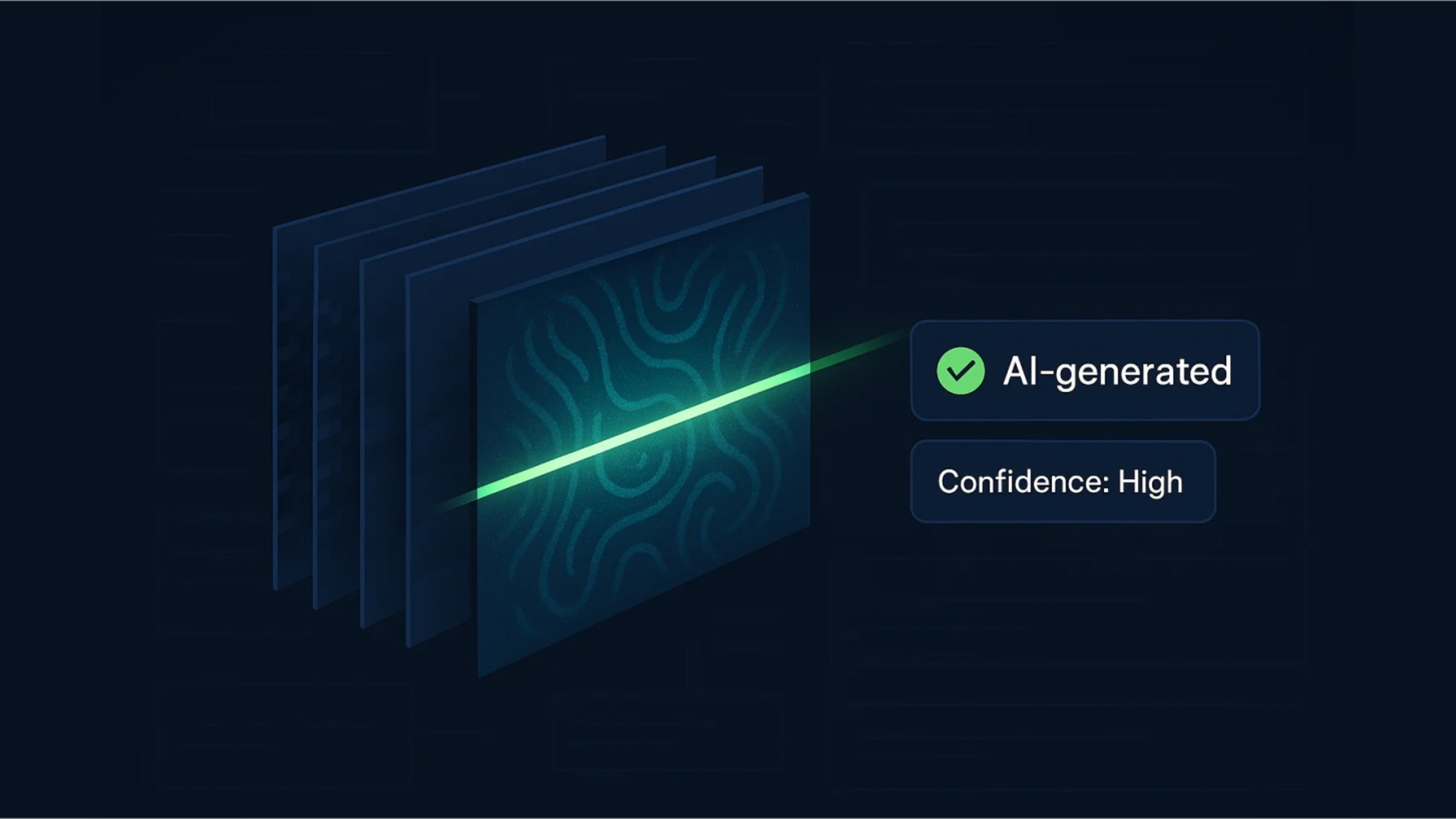
Google SynthID: What AI Watermarking Can and Cannot Prove
You have a trust problem online, even if you never asked for one. AI-generated images, synthetic audio, machine-written answers, and edited videos now move faster than most verification systems can keep up. That is why Google SynthID matters. It gives platforms, publishers, and users a way to identify some AI-generated content without relying only on visible labels or guesswork. Google DeepMind says SynthID can watermark AI-made text, images, audio, and video, then later help detect whether that content came from supported AI systems. That sounds tidy. It is not. Watermarking is useful infrastructure, but it is not a truth machine. The real question is simpler and harder: can Google SynthID make AI content easier to trace without giving people false confidence?
What Stands Out
- Google SynthID uses imperceptible watermarks, so the mark is hidden inside the AI output rather than stamped on top.
- It supports several formats, including text, images, audio, and video, according to Google DeepMind.
- It can help identify AI-generated content, but detection is strongest when content has not been heavily altered.
- Watermarking works best as part of a broader content provenance system, including labels, metadata, platform policy, and human review.
- The tool is a serious step from Google, but it does not solve misinformation by itself.
How Google SynthID Works
Google SynthID embeds a hidden signal into content produced by supported AI models. In images, audio, and video, that signal sits inside the generated media in ways that are designed to survive normal edits. For text, the approach is different. Google has said SynthID can alter the pattern of token choices during generation, creating a statistical signature that a detector can later check.
The clever part is that the watermark should not change the user experience. You should not see a logo in the corner of an image or hear a glitch in an audio clip. The mark is meant to be invisible to people and readable to detection systems.
That is both the selling point and the tension.
If a watermark is invisible, most people will not know it is there unless a platform or tool checks it. If a detector is limited to supported systems, then it does not cover every AI model on the open internet. And if someone edits, crops, paraphrases, compresses, or re-records content enough, detection can become harder.
Watermarking is a signal, not a verdict. Treat it like a smoke alarm. It tells you something may need attention, but it does not investigate the whole fire.
Why Google SynthID Matters for AI Content Trust
The web is flooded with synthetic material, and the old cues are failing. A polished headshot can be fake. A clean article can be machine-written. A short video can be generated, edited, or stitched together from multiple sources. What happens when the average viewer cannot tell the difference?
Google SynthID offers one practical answer: make origin easier to test at the platform level. This is especially relevant for Google because its AI tools touch search, advertising, cloud products, YouTube, Android, and creative apps. If the company adds watermarks across more model outputs, it can raise the floor for provenance across a large chunk of the AI market.
Look, I have covered platform trust systems long enough to be wary of silver bullets. Labels get ignored. Metadata gets stripped. Detection tools break under pressure. But hidden watermarking gives platforms a more durable clue than a caption that says “made with AI.”
Google SynthID for Text, Images, Audio, and Video
Text watermarking
Text is the hardest case. You can crop an image and still have pixels to inspect, but text can be paraphrased in seconds. Google’s text watermarking approach works by nudging token selection while a model writes. The result should read normally, while still leaving a detectable pattern.
That is useful for essays, chatbot responses, product copy, and support articles generated by compatible systems. But a heavy rewrite can weaken the signal. Translation may do the same. So can mixing human and AI-written passages.
Image watermarking
For AI images, SynthID inserts an invisible marker into the image data. Google says the watermark can remain detectable after common changes such as resizing, cropping, or compression. That matters because most images get altered before they travel across social platforms and messaging apps.
Still, “common changes” are not the same as hostile tampering. A determined actor can run content through multiple transformations, screenshots, filters, or regeneration tools. The better analogy is sports officiating. Replay helps, but it does not stop every bad call before it happens.
Audio and video watermarking
Audio and video raise the stakes because synthetic voices and generated clips can cause harm fast. A fake CEO call can trigger a payment. A synthetic public statement can move before fact-checkers wake up. Watermarks can help platforms check whether a clip came from a known AI system, especially if the content is uploaded at scale.
For video, the challenge is messy. Compression, frame edits, screen recordings, overlays, and reposts can all affect detection. That does not make watermarking useless. It means it should feed into risk scoring, moderation queues, and disclosure rules rather than act as the only checkpoint.
Where Google SynthID Falls Short
Here’s the thing: Google SynthID only helps with content from systems that use it. That leaves out models from other companies, open-source tools, older generators, and custom pipelines. The web is not a single kitchen where one chef controls every ingredient.
There are other limits you should keep in mind:
- Detection can be uncertain. A detector may return confidence levels rather than a clean yes or no.
- Editing can weaken signals. Paraphrasing, re-encoding, cropping, and remixing can reduce reliability.
- Bad actors can avoid compliant tools. People who want to deceive may use systems that do not watermark outputs.
- False trust is risky. No watermark does not mean no AI. A watermark does not mean the content is harmful.
- Standards still matter. The industry needs shared rules so provenance does not become a patchwork of private systems.
This is where policy enters the room. The Coalition for Content Provenance and Authenticity, known as C2PA, has pushed content credentials that track origin and edits. Governments are also asking harder questions about AI disclosure. SynthID fits into that wider push, but it is one piece of a larger trust stack.
How Businesses Should Use Google SynthID
If your company uses generative AI, do not wait for regulators or platforms to set every rule. Build your own disclosure workflow now. It will save legal, brand, and customer support pain later.
Start with a simple policy. Decide which AI-generated assets need labels, where you store source files, and who approves high-risk content. High-risk can mean medical, financial, political, legal, or identity-related material.
- Track source tools. Record which model or product created each asset.
- Keep originals. Save unedited outputs so watermark checks have a clean reference point.
- Add visible disclosure when needed. Invisible watermarks are not a substitute for clear user-facing labels.
- Use human review. Watermarks do not check accuracy, bias, copyright exposure, or brand risk.
- Train your team. Writers, designers, marketers, and support staff should know what AI disclosure means in practice.
Honestly, the boring operational work matters more than the headline technology. A company with a clear review trail is in better shape than one that trusts an invisible mark and calls it done.
Google SynthID and the Future of AI Detection
Google SynthID points toward a more accountable AI ecosystem, but the future will depend on adoption. If major AI labs, content platforms, camera makers, editing tools, and publishers support compatible provenance systems, users get better context. If each company builds a closed island, trust remains fractured.
The next test is scale. Can watermarking survive normal internet behavior: screenshots, reposts, edits, memes, compression, and spam? Can detection tools explain confidence in plain language? Can platforms avoid punishing creators when the signal is ambiguous?
Those questions are non-negotiable because AI content is no longer a lab demo. It is in search results, ad campaigns, homework, podcasts, newsrooms, and customer chats. Google SynthID is one of the stronger moves toward traceable synthetic media. But the smart play is to treat it as evidence, then ask for more.
What You Should Do Next
If you publish or approve AI content, create a provenance checklist this week. Track the model, keep the original file, add disclosure where users would reasonably expect it, and verify sensitive claims with human review. Google SynthID may become a useful layer of trust, but your process is still the thing that protects your audience.
And if a platform tells you a watermark alone solves AI deception, ask the obvious question: what happens when the content came from somewhere else?


