Julio Jones Fantasy Stats: What His Career Tells You
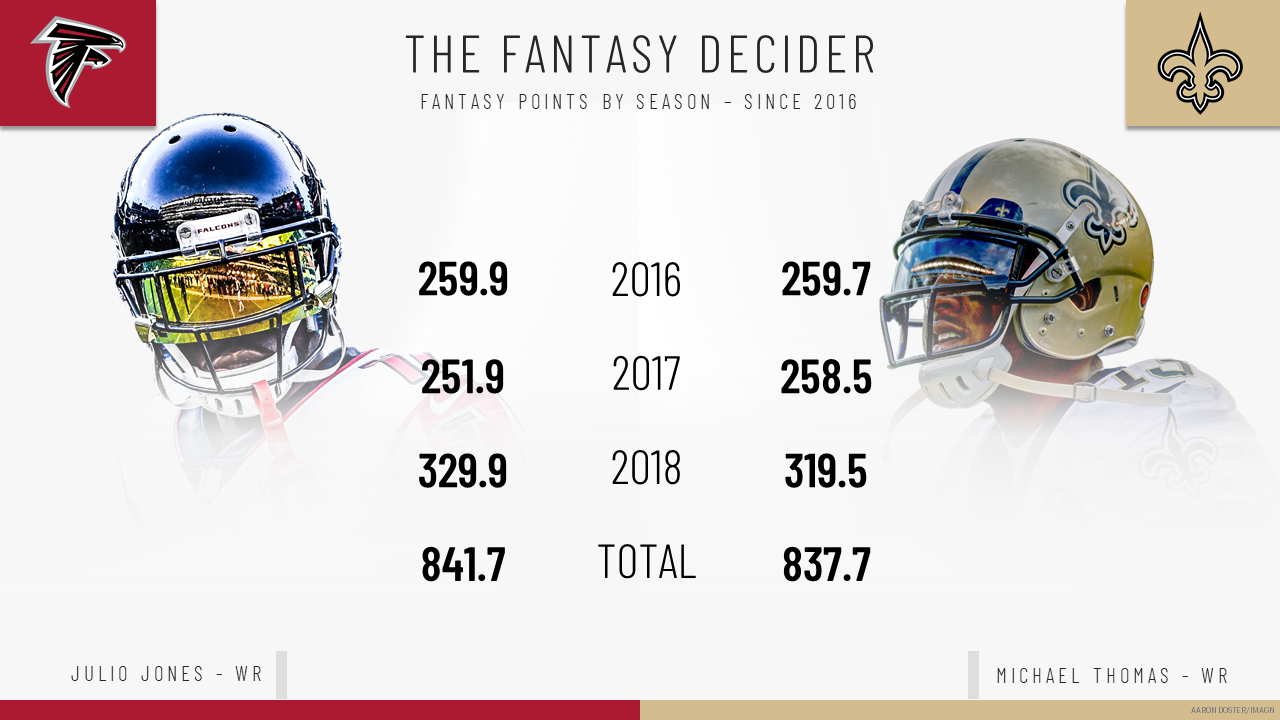
You do not study Julio Jones fantasy stats because you need a history lesson. You study them because they show what elite wide receiver production looks like, how fast fantasy value can fade, and why name value can trap smart managers. Jones was once one of the safest premium picks in fantasy football. Then injuries, changing roles, and aging turned him into a bench stash, then a waiver-wire name. That arc matters now because fantasy managers still face the same problem every draft season. Do you pay for past dominance, or do you price in the player standing in front of you? FantasyPros tracks Jones’ standard-scoring production across his NFL career, and the numbers tell a blunt story. Peak Julio was rare. Late Julio was not a secret cheat code. He was a reminder that wide receivers age on the field before they age on the stat sheet.
What Stands Out
- Julio Jones fantasy stats show an elite prime built on heavy targets, huge yardage, and weekly ceiling.
- His best fantasy seasons came when volume and health lined up, especially during his Atlanta Falcons years.
- Touchdowns were never as steady as his receiving yardage, which made standard scoring more volatile.
- His decline was tied to injuries, reduced snaps, and lower target share, not a sudden loss of reputation.
- Fantasy managers can use his career as a template for evaluating aging wide receivers today.
Julio Jones Fantasy Stats and the Shape of an Elite Prime
Jones entered the NFL in 2011 and quickly became a fantasy force for the Atlanta Falcons. He brought rare size, speed, and route strength, but the fantasy appeal was simpler than that. He earned targets at a monster rate and turned them into chunk gains.
At his peak, Jones was the kind of player who could carry a lineup without needing two touchdowns. In standard scoring, that mattered. A 120-yard game gave you a clean 12 points before end zone luck entered the picture.
Peak Julio was not built on gimmicks. It was built on targets, air yards, and the weekly threat of a 150-yard eruption.
FantasyPros’ career log shows the broader rhythm. Jones’ Atlanta years produced the fantasy resume. His stops with the Tennessee Titans, Tampa Bay Buccaneers, and Philadelphia Eagles were more about role management and health than bankable weekly value.
Why Julio Jones Fantasy Stats Were Better in PPR Than Standard
Here’s the thing. Jones was a yardage king, but he was not always a touchdown machine. That matters in standard scoring, where receptions do not count and touchdowns can swing weekly finishes.
He posted huge reception and yardage totals in his best seasons, but his touchdown totals often lagged behind other top-tier fantasy receivers. That does not mean he was overrated. Far from it. It means his weekly value was sometimes more floor-driven in PPR and half-PPR formats than in standard scoring.
One catch changes nothing in standard scoring.
That scoring gap is like comparing a power hitter in baseball to a high-average doubles machine. Both can help you win, but the scoring system decides which one looks more valuable on a given week.
What standard scoring exposed
- Yardage helped stabilize his value, especially when he cleared 100 yards.
- Low touchdown weeks hurt more because receptions did not soften the miss.
- Big-play ability kept his ceiling alive, even in games with modest catch totals.
- Red-zone usage did not always match his talent, which frustrated fantasy managers for years.
Julio Jones Fantasy Stats by Career Phase
Jones’ fantasy career breaks into three useful phases. Each phase teaches a different lesson about wide receiver evaluation.
The rise: 2011 to 2013
Early Julio was explosive, but not fully bankable every week. He flashed WR1 upside as a rookie, then took a leap in 2012 with strong yardage and touchdown production.
Then came the first major reminder that fantasy football is rude. His 2013 season was cut short by injury after only five games. The per-game production was excellent, but managers who spent an early pick learned the hard way that elite talent does not erase injury risk.
The peak: 2014 to 2019
This is the run people remember. Jones became one of the league’s dominant wideouts, regularly piling up targets and yardage in Atlanta’s passing game. Matt Ryan trusted him everywhere, and the Falcons’ offense often flowed through him.
The 2015 season stands out as the crown jewel. Jones produced massive receiving volume and finished as one of fantasy’s best wide receivers. If you had him that year, you remember the weekly advantage. If you played against him, you probably remember the helpless feeling.
But even during this peak, the touchdown debate followed him. Why did a receiver that dominant sometimes finish with modest scoring totals? Some of it was defensive attention. Some of it was Atlanta’s play distribution near the goal line. And some of it was plain variance, the ugly little gremlin inside every fantasy box score.
The decline: 2020 onward
The decline did not happen in one dramatic snap. It arrived through soft-tissue injuries, missed games, lower snap counts, and changing team contexts. By the time Jones left Atlanta, the fantasy market still respected the name, but the weekly profile had changed.
His Titans tenure never became the A.J. Brown partnership many managers hoped for. Tampa Bay gave him a shot with Tom Brady, but the role was limited. Philadelphia used him as a veteran depth piece. Useful for an NFL roster, yes. Reliable for fantasy? No.
What Fantasy Managers Can Learn From Julio Jones Fantasy Stats
Julio Jones fantasy stats are not just old numbers on a player page. They are a scouting tool for current drafts and waiver decisions. Every season brings a veteran wide receiver with a famous name and a cheaper price. The trap is thinking the discount always creates value.
Ask a colder question. What has to happen for this player to matter again?
- Check target share before name value. A former star with a 12 percent target share is usually a headache.
- Separate real injuries from vague optimism. Repeated hamstring, foot, or knee issues can cap routes and snaps.
- Look at yards per route run. This can show whether the player still earns efficient production when he is on the field.
- Study team context. Quarterback play, pass rate, and red-zone role decide whether a receiver has usable weeks.
- Price the downside. If the player needs perfect health and a teammate injury to matter, do not pay for the old highlight reel.
Look, I covered enough late-career stars to know how seductive the argument sounds. “If he is healthy, he could smash.” Sure. But fantasy football is not paid in nostalgia. You need routes, targets, and scoring chances.
How Julio Jones Compares to Modern Aging Receivers
Jones is a useful comparison point for receivers who age from alpha target earners into role players. The transition can be fast. A receiver may still look dangerous on a few routes, but if he runs 25 routes instead of 38, the weekly math gets tight.
That is the detail many fantasy managers miss. Decline does not always mean a player is washed. Sometimes he is still good in bursts, but not used enough to help your lineup. That is a different problem, and it is harder to spot if you only check box scores.
Signals that matter more than reputation
- Route participation compared with other wide receivers on the team
- Targets per route run, especially over the last five to eight games
- Average depth of target and whether the player still earns downfield looks
- Red-zone target share
- Practice reports that mention rest days, limitations, or recurring soreness
The best fantasy analysts are not sentimental here. They treat aging curves like load-bearing walls in architecture. Ignore one, and the whole structure can crack.
Using the FantasyPros Data the Right Way
The FantasyPros source page is useful because it lays out Jones’ stats through a fantasy lens, with standard scoring selected. That helps you see the difference between real-life greatness and format-specific output.
Do not stop at total points. Totals can hide missed games, role changes, and late-season drop-offs. Per-game scoring gives a cleaner read, and weekly logs show whether a player helped managers consistently or survived on a few spike weeks.
For Julio, the data backs up the eye test. He was a first-round caliber fantasy receiver during his prime, especially when healthy and commanding elite volume. Later, he became a situational veteran whose best-case weeks were hard to predict.
The Practical Read for Fantasy Players
If you are using Julio Jones as a case study, the lesson is simple enough to use on draft day. Draft the role, not the memory. Pay for current volume, not career accomplishments.
That does not mean you should avoid every older receiver. Some veterans remain fantasy starters because they still command targets, win on timing, and play in pass-heavy offenses. But the burden of proof should rise with age, injury history, and declining route share.
Jones’ career deserves respect. His fantasy peak was seismic, and his best seasons helped define what a true WR1 could be. But his later years also show why you need to update your priors faster than your league mates.
The next time a famous receiver falls into the middle rounds, do one thing before you click draft. Check whether the current role matches the old name.