Mark Zuckerberg AI Safety: Meta’s Risky Bet Against Anthropic
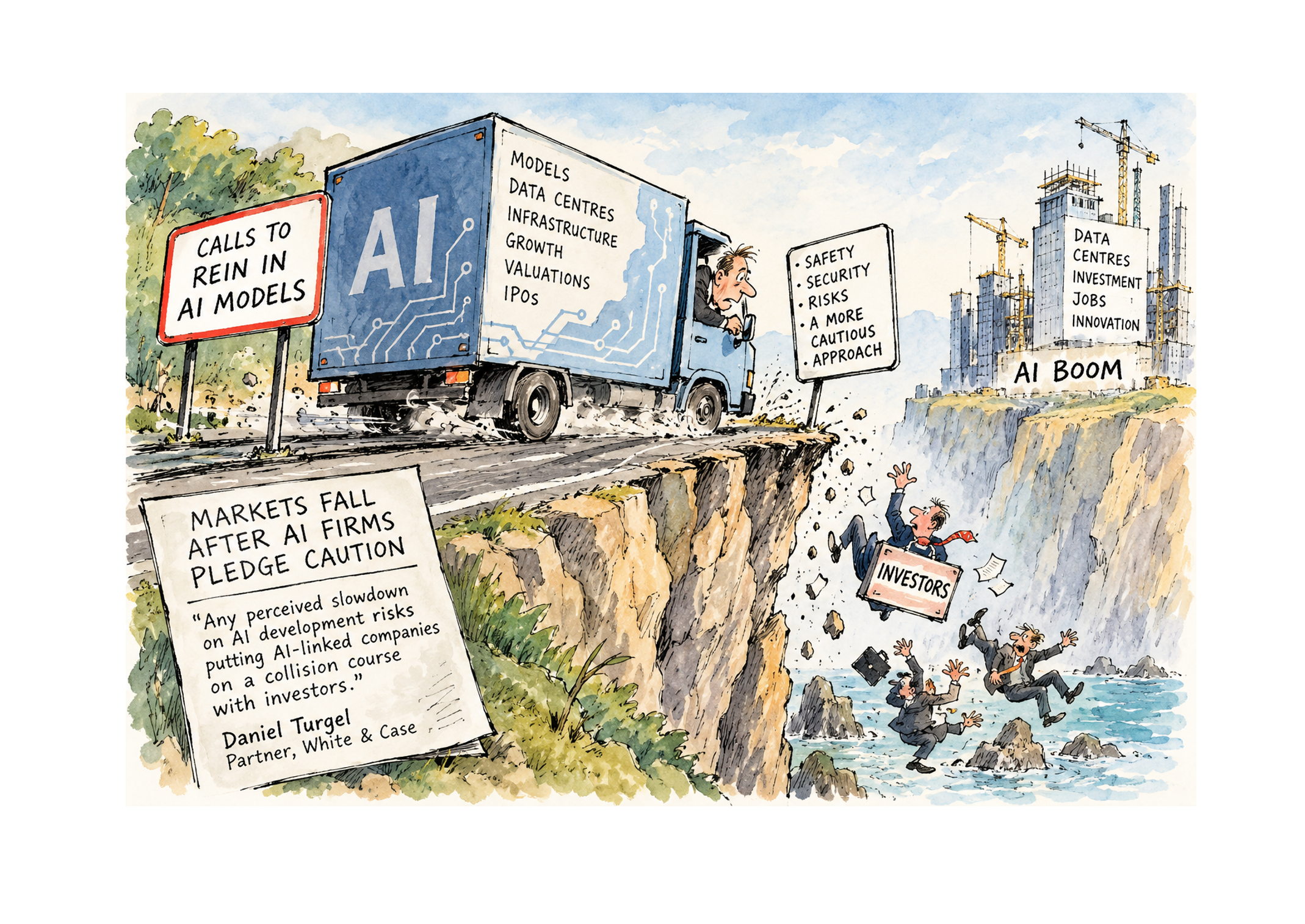
You want useful AI, not a boardroom fight dressed up as safety policy. That is why Mark Zuckerberg AI safety matters now. The New York Times report on Zuckerberg, Anthropic, and AI safety lands at a tense moment for the industry, with Meta pushing hard on powerful AI systems while rivals argue for slower release, tighter controls, and more testing. This is not a clean split between brave builders and nervous critics. It is a fight over who gets to set the rules before artificial intelligence becomes baked into search, social feeds, workplace tools, coding, and consumer hardware. If you run a company, build software, invest in AI, or use these tools every day, the stakes are practical. Which model should you trust? Which vendor can explain its risk controls? And who pays when the system goes sideways?
What matters right now
- Meta and Anthropic represent two very different AI safety instincts. Meta favors wide deployment and, at times, open model releases. Anthropic has built its brand around controlled development and safety research.
- Zuckerberg’s AI strategy is about distribution. Meta owns Facebook, Instagram, WhatsApp, Quest, and a growing AI assistant layer. That reach changes the risk math.
- AI safety is no longer a lab argument. It now affects procurement, regulation, product launches, and public trust.
- Businesses should ask harder vendor questions. Benchmarks are useful, but incident response, red teaming, data controls, and audit rights matter more.
Why Mark Zuckerberg AI safety is suddenly a boardroom issue
For years, Meta treated scale as its superpower. Build the network, feed the machine, optimize the product, and let growth do the talking. AI changes that playbook because the product does not only recommend content. It can answer, persuade, generate code, mimic people, and act across apps.
The Times report places Zuckerberg in direct contrast with Anthropic, a company founded by former OpenAI employees and known for Constitutional AI, Claude, and a more cautious public posture. That contrast is useful because it strips away the vague talk. One side emphasizes access, speed, and product reach. The other side sells restraint as a feature.
Safety cannot be a press strategy.
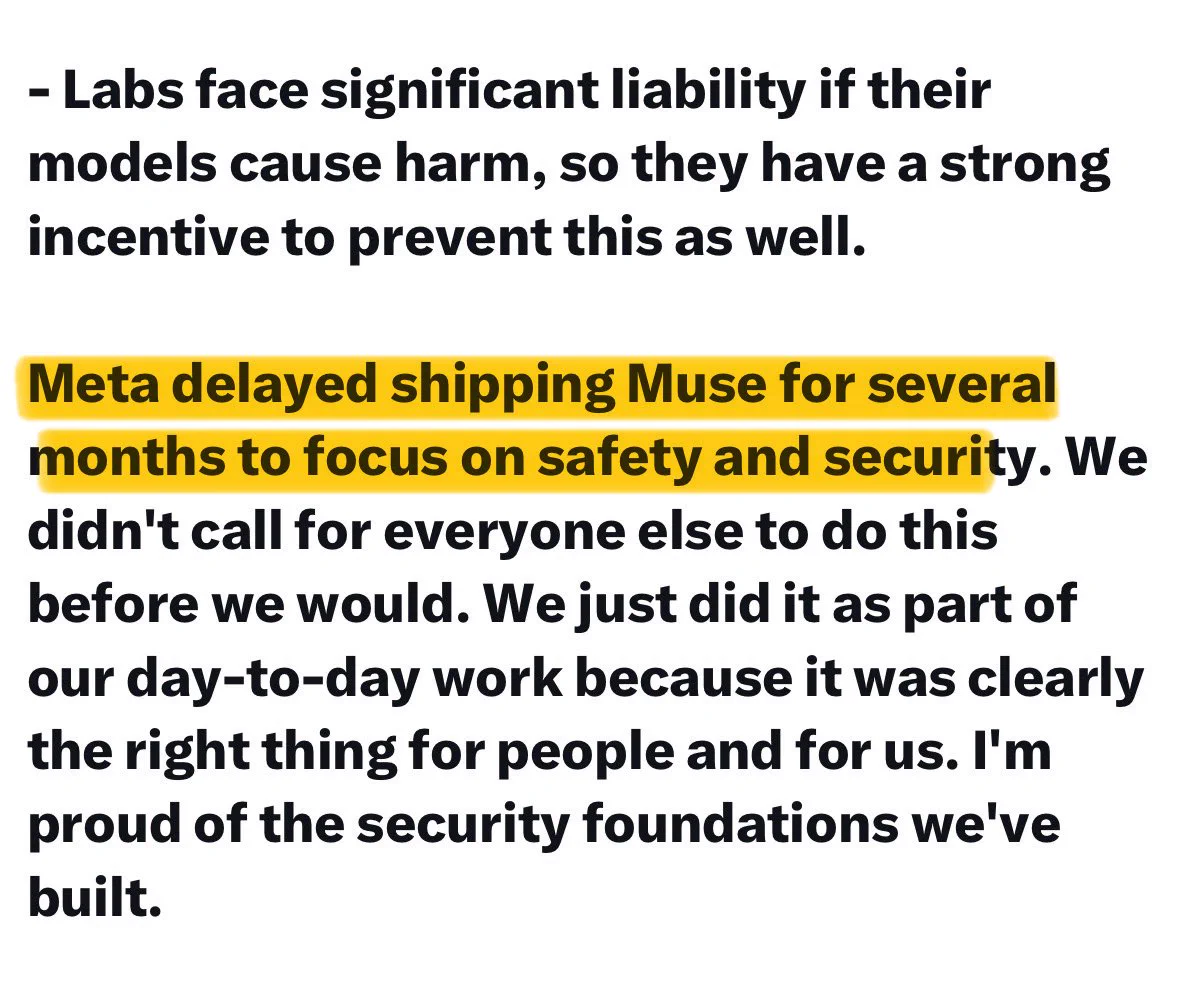
Look, I have covered enough platform cycles to know that every large tech company eventually says it takes safety seriously. The harder question is whether safety has veto power over growth. If the answer is no, then the safety team becomes a seatbelt installed after the crash test.
Meta’s AI advantage is also its AI safety problem
Meta has assets most AI labs would envy. It has billions of users, massive compute investment, top research talent, open model experience through Llama, and consumer products that can place AI in front of people instantly. That is a sports franchise with the stadium, the broadcast rights, and the star players.
But reach creates pressure. A small model bug inside a niche developer tool is one kind of problem. A persuasive AI assistant inside social apps used by teenagers, political groups, small businesses, and creators is something else.
Here is the thing. Meta’s past does not help it here. The company has spent years answering questions about privacy, political manipulation, teen safety, recommendation systems, and misinformation. Even if its AI work is technically strong, trust arrives with baggage.
AI safety should be judged less by what a company says in public and more by what it refuses to ship when the revenue case is strong.
How Anthropic frames the same fight
Anthropic has positioned itself as the adult in the AI room. Claude is marketed around reliability, enterprise controls, and safety methods such as Constitutional AI. The company also publishes research on model behavior, evaluations, and risks from more capable systems.
That does not make Anthropic pure or immune from market pressure. It has major commercial deals, large infrastructure needs, and investors that expect growth. But its brand depends on being seen as more careful than OpenAI, Google, and Meta. That gives it a different incentive structure.
The useful question is not whether Anthropic is morally better. The useful question is whether its slower, more controlled release model produces fewer public harms while still giving customers capable tools. Can it keep that posture when the race gets more expensive?
What Mark Zuckerberg AI safety means for open models
Meta’s Llama strategy has made the company a central player in open-weight AI. Developers, startups, researchers, and governments have used Llama models because they are accessible and adaptable. That has real value. Open systems can reduce dependence on a few closed vendors and help outside researchers test flaws.
Open release also makes control harder. Once model weights spread, a company cannot recall them like a faulty phone charger. Bad actors can fine-tune models, strip guardrails, or connect them to tools that increase harm. That is the tension Meta has never fully escaped.
Open AI is a bit like publishing a powerful kitchen recipe. Most people will cook dinner. A few will try to make poison. The publisher’s responsibility depends on how dangerous the recipe is, how easy it is to misuse, and what safeguards were added before release.
Questions every open model release should answer
- What dangerous capabilities were tested before release?
- Who performed the red-team reviews, internal staff only or outside experts too?
- Can the model help with cyber abuse, fraud, biological protocols, or targeted manipulation?
- What usage restrictions exist, and how are they enforced after download?
- What incident reporting channel exists for researchers and customers?
The regulatory angle Zuckerberg cannot ignore
AI safety is becoming law, not just policy theater. The European Union’s AI Act creates obligations for high-risk AI systems and general-purpose AI models. In the United States, the federal picture remains fragmented, but agencies such as the FTC, NIST, and state attorneys general are watching claims about safety, privacy, and bias.
That matters for Meta because consumer scale invites scrutiny. If an AI assistant gives harmful advice, targets vulnerable users, or mishandles personal data, regulators will not treat it like an academic demo. They will look at design choices, internal warnings, and whether executives pushed launch dates despite known risks.
Companies buying AI tools should read that as a warning too. Vendor claims are not enough. You need contract language that covers data retention, model training use, audit support, breach notice, indemnity, and human review for sensitive workflows.
What businesses should do before choosing a side
You do not need to pick a favorite billionaire or AI lab. You need a risk process that survives vendor drama. The safest move is to evaluate AI systems by use case, not by brand halo.
Start with the task. A customer support summarizer has a different risk profile from an agent that can refund orders, change medical records, or write production code. The more authority you give the model, the more proof you should demand.
- For low-risk tasks: test accuracy, privacy settings, and output logging.
- For customer-facing tools: require escalation paths, tone controls, abuse monitoring, and clear disclosure.
- For regulated work: demand audit trails, access controls, retention limits, and legal review.
- For autonomous agents: set spending caps, permission gates, sandboxing, and human approval for sensitive actions.
Honestly, the best AI buyers I speak with are boring in the right ways. They run pilots, document failures, and say no to flashy demos that cannot pass a basic security review.
Where the Meta and Anthropic fight goes next
The next phase will not be settled by blog posts. It will be settled by incidents, product adoption, enterprise renewals, and regulation. If Meta can ship useful AI at massive scale without repeated safety failures, it will weaken the argument that caution must slow everything down. If Anthropic keeps winning enterprise trust while avoiding major blowups, its careful posture will look less like branding and more like product discipline.
My bet is that the market splits. Consumer AI will reward speed and convenience. Enterprise and government buyers will reward control, documentation, and liability terms. The companies that win both will be rare.
The practical test
Do not judge Mark Zuckerberg AI safety by speeches, rival quotes, or polished demos. Judge it by release decisions, outside audits, model behavior under stress, and how Meta responds when its systems fail. Anthropic deserves the same treatment.
The next useful step is simple. Before you adopt any AI platform, ask the vendor for its latest safety evaluation, red-team summary, data policy, and incident process. If the answer sounds like marketing copy, keep walking.