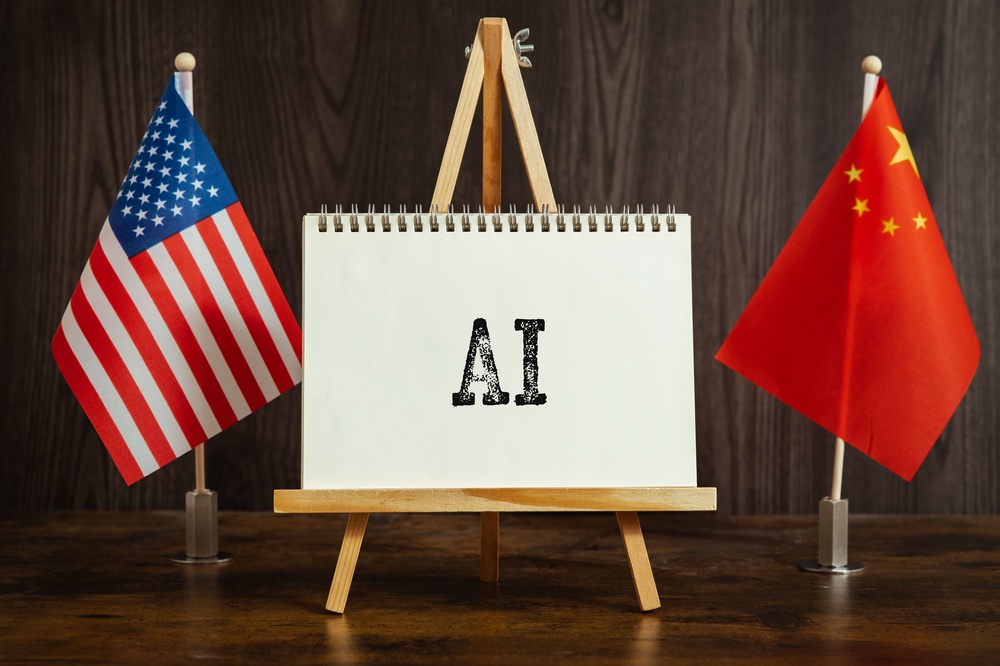
Military AI Intelligence Risks After China Ship Error
Your hardest security problem may not be a hostile ship, a satellite gap, or a missing sensor feed. It may be a confident machine that is wrong. A CNN report on a U.S. military AI system producing false intelligence related to a Chinese ship puts military AI intelligence under a colder light. The issue is not whether the Pentagon should use AI. It already does, and the pressure to process oceans of data is real. The sharper question is how much trust commanders should place in systems that can turn messy signals into polished claims. Bad intelligence has always shaped bad decisions. AI can make that old problem faster, cleaner-looking, and harder to challenge in the moment.
What You Need to Watch
- False AI intelligence can look more certain than human analysis, even when the underlying data is weak.
- Military AI intelligence needs traceable sourcing, not just a final answer on a dashboard.
- Commanders need clear rules for when AI output can support action and when it must be held back.
- The China ship report is a warning about validation, accountability, and escalation risk.
Why Military AI Intelligence Can Fail Fast
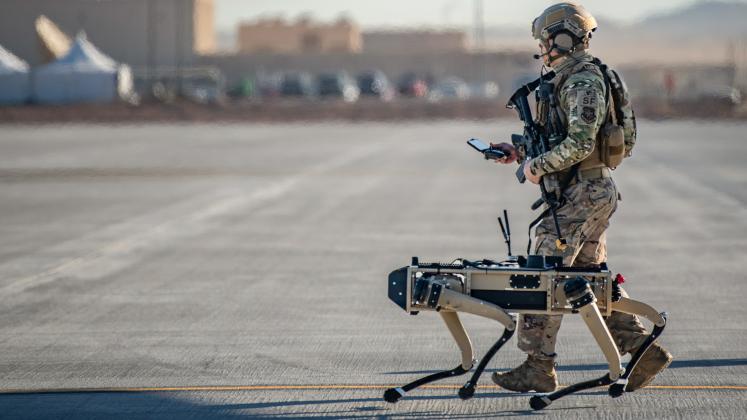
Military AI systems often sit on top of sensor feeds, classified databases, satellite images, radio signals, and human reports. That sounds powerful, and it is. But each input can carry errors, gaps, stale records, or ambiguous signals, which means the final output may reflect a chain of small mistakes rather than one obvious failure.
Look, I have covered defense technology long enough to know that every new system arrives with a sales pitch. AI is no different. It promises speed, pattern detection, and relief for analysts drowning in data, but speed can become a trap if the system cannot show why it reached a claim.
Military AI should be treated like a junior analyst with unusual stamina, not an oracle with a security clearance.
What happens when an AI system flags a ship as suspicious, assigns a high confidence score, and pushes that alert into a tense command chain? A human may still make the call, but the machine has already shaped the room. In a crisis, the first polished answer often gets a head start.
The China Ship Case Shows the Real Risk
According to CNN, the reported incident involved false intelligence tied to a Chinese ship. The public details matter less than the pattern: an AI-enabled system generated information that did not hold up. For a military user, that is not a small glitch, because the output can feed watch floors, briefings, and operational planning.
China is a special stress test for these tools. U.S. forces monitor Chinese naval activity across crowded sea lanes, disputed waters, and areas filled with commercial vessels. A wrong label on one ship can affect posture, surveillance tasking, and diplomatic temperature.
That is a command problem, not a software bug.
The temptation is to blame the model. Sometimes that is fair. But false intelligence can also come from bad training data, weak data fusion, poor user interface design, or a culture that rewards rapid reporting over slow verification. The system is the model, the operators, the workflow, and the pressure around them.
Military AI Intelligence Needs Proof, Not Polish
A dangerous AI product is often the one that looks finished. Clean maps, confidence scores, and automated summaries can hide the messy trail underneath. In intelligence work, polish is not proof.
Commanders and analysts need to see the chain of evidence (even if parts are classified or compartmented). Did the system rely on satellite imagery, signals intelligence, vessel tracking data, prior behavior, or a historical pattern match? Did one weak source dominate the answer?
Questions every AI intelligence alert should answer
- What sources supported the claim?
- Which sources contradicted it?
- How old was the data?
- What assumptions did the model make?
- Has a human analyst checked the output?
- What would change the confidence score?
These are plain questions, but they are often where real governance lives. If a system cannot answer them, it may still be useful for triage. It should not be treated as a basis for escalation.
Why Confidence Scores Can Mislead Commanders
Confidence scores feel precise. A dashboard that says 87 percent can sound more useful than an analyst saying, “I am not sure.” But model confidence is not the same as truth, and it may say more about the model’s internal pattern matching than the real world.
Think of it like a referee in a packed stadium. The whistle may sound sharp, but the call can still be wrong if the angle was bad. AI can blow the whistle with force, yet miss the ship’s identity, intent, or context.
Military users need training that explains what confidence does and does not mean. The right question is not, “How confident is the model?” The better question is, “How strong is the evidence, and what are the costs if this is wrong?”
How to Reduce Military AI Intelligence Errors
No serious defense organization will abandon AI because of one bad report. Nor should it. The goal is to build friction in the right places, especially where an AI output could affect force posture or international signaling.
- Require source traceability. Analysts should be able to inspect the data behind high-impact outputs.
- Separate triage from action. AI can help sort alerts, but action should need human review and corroboration.
- Log every override and acceptance. Audit trails show whether humans are challenging the system or rubber-stamping it.
- Run red-team tests. Teams should try to fool the model with spoofed signals, stale records, and ambiguous vessel behavior.
- Measure false positives in real settings. Lab scores are useful, but operational environments are noisier.
The Pentagon has issued responsible AI principles through the Department of Defense, including ideas such as traceability, reliability, and governability. Those principles sound dry until a false alert enters a live watch floor. Then they become non-negotiable.
Accountability Cannot Be Outsourced to a Model
Here is the thing: accountability gets slippery when AI sits between raw data and human judgment. If an alert is wrong, is the fault in the vendor model, the data pipeline, the analyst, the commander, or the approval process? The answer may be all of them.
That is why military AI intelligence needs named ownership at each stage. Someone must own model approval. Someone must own operational use. Someone must own the decision to accept, reject, or escalate an AI output. Without that, organizations drift into a dangerous habit: blaming “the system” while no human changes the process.
Vendors also need tighter obligations. If a defense contractor sells AI into intelligence workflows, performance claims should be testable under realistic conditions. Marketing decks do not belong in the same category as operational evidence.
What This Means for AI Ethics and Regulation
The ethics debate around military AI often focuses on autonomous weapons. That matters. But intelligence support systems may be just as consequential because they shape what commanders believe before any order is given.
Regulation should not only ask whether AI can pull a trigger. It should ask how AI labels threats, ranks targets, summarizes uncertainty, and presents confidence to humans under stress. Small interface choices can carry strategic weight.
Congress, inspectors general, and defense oversight bodies should press for clear reporting on AI testing, false alert rates, and human review standards. Some details will stay classified, for obvious reasons. Still, democratic oversight cannot work if every failure disappears behind a secrecy wall.
The Next Test Is Trust
The CNN report should not start a panic about military AI. It should start a harder conversation about trust. AI can help the military see patterns faster, but a fast wrong answer near a rival power is not an efficiency gain.
The practical next step is simple: treat every high-impact AI intelligence claim as a lead, not a verdict. If defense leaders can make that habit stick, AI will be useful. If they cannot, the next false ship report may arrive during a crisis, and the margin for correction will be much thinner.