Minnesota Lawyer Suspension Over Fake AI Case Citations
A lawyer got suspended in Minnesota after filing fake AI case citations, and that should make every firm stop and look at its own workflow. The problem is not just one bad brief. It is the growing habit of treating chatbot output like research, then sending it into court without the hard step of checking the source. That shortcut can wreck credibility in minutes. It can also trigger sanctions, client harm, and reputational damage that lingers long after the filing is fixed.
Fake AI case citations are now a real courtroom risk, not a hypothetical ethics lesson. Judges have already seen hallucinated cases, made-up quotes, and citations that look polished but do not exist. How many firms have a clean verification process before a filing goes out the door?
- AI can draft fast, but it does not know whether a case exists.
- Lawyers remain responsible for every citation in a filing.
- Verification should happen before, not after, submission.
- Courts are watching for misuse, and penalties can be severe.
Why fake AI case citations keep happening
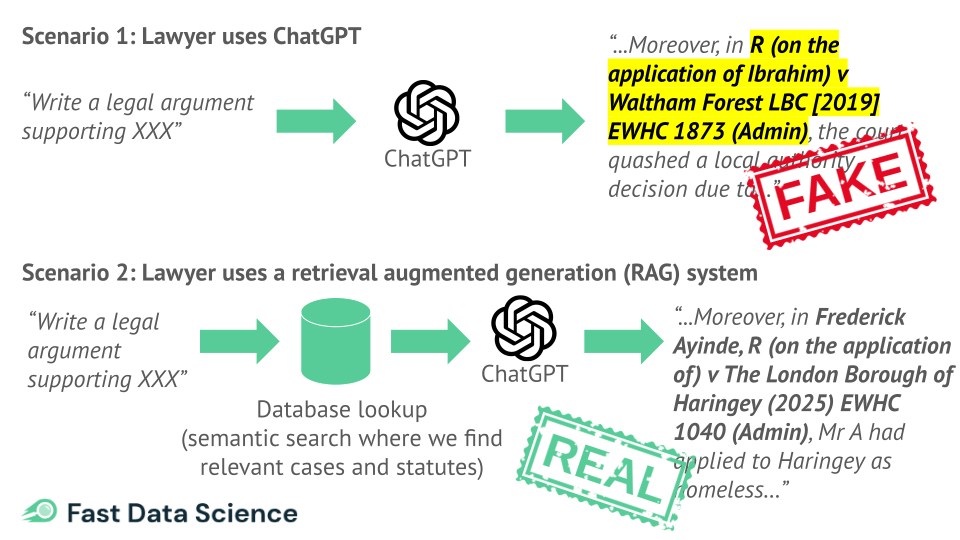
Chatbots are built to predict likely text, not to guarantee legal accuracy. That means they can generate a case name, a holding, and a reporter citation that sounds right and is dead wrong. It is the legal version of reading a recipe with one missing ingredient and pretending the dish will still work.
Look, this is not about banning AI. It is about understanding what it does well. It can summarize, organize, and suggest structure. It cannot replace primary-source research in Westlaw, Lexis, Bloomberg Law, or the actual court record.
“If you did not verify the citation, you did not research it. You guessed.” That is the standard firms should internalize now, because judges already have.
What Minnesota lawyers can learn from the suspension
The Minnesota case shows that discipline can follow when a lawyer files material that cannot be supported. Even if the error starts as sloppy research, the result can still be treated as serious misconduct. Courts care about accuracy, candor, and the duty to the tribunal.
The core lesson is simple. AI output is only a draft until you prove every citation and quotation against a real source.
Build a verification chain
- Check every case name in a legal database.
- Open the opinion and confirm the holding.
- Match every quote to the exact page or paragraph.
- Confirm the jurisdiction, date, and procedural posture.
- Remove any citation you cannot personally verify.
That process sounds basic because it is. And basic is what keeps you out of trouble.
What a safer AI workflow looks like
Firms that want to use AI need a written rule for research and filing. The rule should say who can use AI, which tasks are allowed, and what checking is required before anything reaches a client or court. Without that, each lawyer improvises. That is how mistakes spread.
Use AI for rough drafting, issue spotting, and outline building. Use legal databases for authority. Then compare the final draft against the source text line by line. If a citation looks even slightly off, stop. Do not hope it is fine.
One clean habit helps more than a long policy: no citation leaves the desk unless a human has opened the source document.
Why this matters beyond one case
The real risk is erosion of trust. Courts depend on lawyers to be accurate. Clients depend on lawyers to be careful. Once fake citations start appearing, even honest filings get a closer look.
This is where many AI promises get slippery. Vendors talk about speed. They do not talk enough about accountability. But accountability still sits with the lawyer, not the tool. That will not change just because the software got better.
Here is the thing. A filing packed with fake authority is like a building with a nice facade and weak beams. It may look solid for a minute, then the whole thing sags under pressure.
What should firms do now with fake AI case citations?
Start with a hard rule for verification, then train everyone on it. Junior lawyers, paralegals, and partners all need the same standard. If the firm uses AI for research support, require disclosure inside the workflow and keep an audit trail of source checking.
That is not paranoia. It is basic risk control.
Firms should also test whether their existing review process catches false citations before filing. If it does not, the process is broken. And broken processes do not get fixed by optimism.
AI can still help legal teams move faster, but only if the team treats it like a junior assistant with a bad memory. Would you let a new associate file a brief without checking the cases? Then why let a chatbot do it?
Next step for lawyers and firms
Pull one recent filing and audit every citation against the source material. If you find one error, tighten the workflow immediately. If you find none, do not relax. Test again next week.
The Minnesota suspension is a warning shot. The next one may land in your own docket.