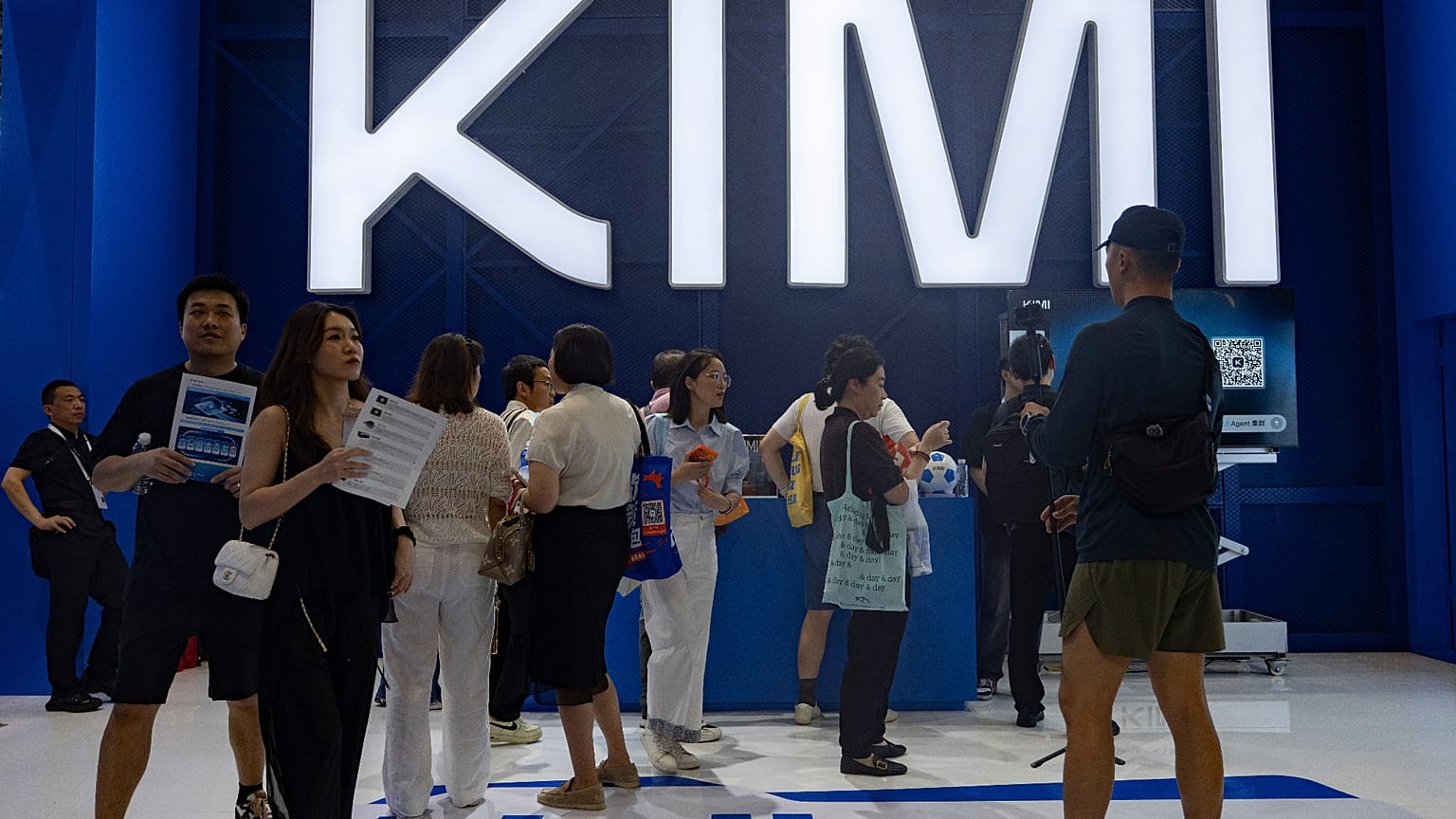
Moonshot AI IPO: What a $50 Billion Valuation Signals
You are watching another AI company move from product hype to public-market math. The reported Moonshot AI IPO matters because it could test how much investors still want large language model companies once the costs, margins, and regulatory risks are out in the open. Bloomberg reported that Moonshot is eyeing an early 2027 listing after its valuation reached about $50 billion, according to people familiar with the matter. That is a huge number for a Chinese AI startup best known for Kimi, its chatbot and long-context model family. But valuation is only the headline. The harder question is whether Moonshot can turn user growth, model quality, and enterprise demand into a business durable enough for public shareholders.
Why this story matters
- A Moonshot AI IPO would be one of the biggest AI listings to watch in Asia, especially if it lands near the reported $50 billion valuation.
- The deal would test investor appetite for foundation model companies that face heavy compute bills and fast-moving rivals.
- Moonshot’s Kimi product gives it consumer visibility, but enterprise revenue will likely drive the IPO story.
- China’s AI rules, chip access, and data policies could shape how global investors price the company.
- The timing points to a broader shift from private AI funding rounds to public-market accountability.
Why the Moonshot AI IPO could reset AI valuations
Private AI valuations have been running hot for years, but the public market is a colder room. Investors can love the story and still punish weak margins, unclear revenue mix, or spending that looks endless.
A $50 billion valuation would put Moonshot in rare company for a startup. It also raises the bar. Public investors will want to know how much revenue comes from subscriptions, API usage, enterprise contracts, advertising, or government-linked deployments, and they will want those lines separated clearly.
Bloomberg reported that Moonshot is considering an early 2027 IPO after its valuation reached about $50 billion, citing people familiar with the matter.
Look, I have covered enough tech IPO cycles to know the pattern. The private market prices belief, while the public market prices proof, and AI firms are now moving from one scoreboard to the other.
What Moonshot AI IPO buyers will ask first
So what should you watch before buying into the story? Start with the unit economics, because model performance alone does not pay the cloud bill.
- Revenue quality: Recurring enterprise contracts matter more than viral chatbot traffic. Consumer attention can fade fast if a rival ships a better model or cuts prices.
- Inference costs: Every answer from a model costs money. If usage rises faster than monetization, growth can make losses worse.
- Model differentiation: Kimi has gained attention for long-context features. The question is whether those features stay distinct as Alibaba, Baidu, Tencent, DeepSeek, and global labs push hard.
- Customer concentration: A few large buyers can make revenue look strong, but they can also create risk if contracts change.
- Chip supply: Access to advanced AI hardware remains a serious issue for Chinese AI firms. Training and serving large models at scale requires steady compute access.
The IPO window is open, but it is not friendly.
Moonshot AI IPO timing: why early 2027 makes sense
An early 2027 listing would give Moonshot time to show more operating data, tighten its revenue story, and prepare for the scrutiny that comes with a prospectus. It may also give the company room to ride a stronger IPO market if interest rates and tech sentiment cooperate.
Timing matters because AI infrastructure spending is under a microscope. Investors have seen Nvidia’s growth, OpenAI’s influence, and the race among Chinese model makers, but they are also asking who captures the value after the chips are bought and the models are trained.
Think of it like a high-end restaurant before opening night. The kitchen may have elite equipment and a famous chef, but the business still depends on table turnover, food costs, repeat customers, and whether diners come back after the first buzz fades.
The China factor in the Moonshot AI IPO
Moonshot’s public-market story will not look exactly like a US AI listing. Chinese AI companies operate under data, content, and security rules that can shape product design and expansion plans.
That does not make the business weak by default. It does mean investors will likely apply a discount, or at least ask tougher questions, around regulation, export controls, cross-border capital access, and the company’s path outside China.
Domestic demand could still be massive. Chinese businesses want AI tools for customer support, coding, search, office workflows, education, finance, and content operations, and a local champion can often move faster with language, distribution, and compliance needs.
How Moonshot stacks up against other AI players
Moonshot is not entering an empty field. In China, it faces large platforms with cash, cloud infrastructure, and enterprise relationships, including Alibaba, Baidu, Tencent, ByteDance, and newer model shops such as DeepSeek and Zhipu AI.
Outside China, the benchmark names are OpenAI, Anthropic, Google DeepMind, Meta, and Mistral. Those companies set expectations for model capability, developer tools, pricing, and safety practices, even when they do not compete in the same market every day.
Moonshot’s edge has been product visibility through Kimi and attention around long-context capabilities. But public investors will want a wider moat than a popular chatbot, since chat interfaces are easy to copy and users switch with little friction.
What a strong Moonshot AI IPO filing should show
If Moonshot moves ahead, the filing will matter more than the rumor. A clean prospectus should give investors enough detail to separate durable business strength from AI froth.
- Clear revenue segments: Consumer subscriptions, enterprise contracts, API access, and partnerships should be broken out where possible.
- Gross margin trend: Investors need to see whether inference costs improve as usage grows.
- Compute commitments: Long-term cloud or hardware obligations can weigh on cash flow.
- Retention data: Enterprise renewal rates and net revenue retention would say more than download numbers.
- Regulatory risk detail: The company should explain how it handles content rules, data security, and model governance.
Honestly, the best AI IPO filings will read less like pitch decks and more like operating manuals. The winners will show where money comes from, where it leaks out, and why customers stay.
Who benefits if the Moonshot AI IPO works
A successful listing would help more than Moonshot. It could give late-stage AI startups a fresh valuation marker and offer venture investors a path to liquidity after years of private funding rounds.
It could also push rivals to share more hard numbers. Once one major AI model company lists, peers may face pressure from employees, investors, and customers to explain their own economics with less spin.
For enterprise buyers, a public Moonshot could be useful. Public companies must disclose more, and that can help customers assess financial stability before they build workflows around a vendor’s model stack.
The next signal to watch
The next real marker is not another valuation leak. Watch for banks being formally hired, draft filing activity, revenue disclosures, and any shift in Moonshot’s sales push toward larger enterprise accounts.
If the Moonshot AI IPO reaches the market at anything close to $50 billion, it will force a blunt question across the AI sector: which model companies are real businesses, and which ones are still running on borrowed excitement?
.jpg)