Nvidia and ServiceNow AI Agent Partnership Explained
Enterprise software buyers keep hearing that AI agents will handle support tickets, route work, and cut busywork. Most of that talk is still ahead of the facts. The Nvidia ServiceNow AI agent partnership matters because it ties a major AI infrastructure provider to a company that already sits inside real business workflows. That changes the conversation from demo-stage novelty to possible deployment at scale. If you manage IT operations, customer service, or internal workflows, this is worth your attention now. Why? Because agents only matter when they can plug into systems, reason over company data, and act with controls in place. That is where many flashy launches fall apart. This deal looks more grounded, but buyers should still keep both eyes open.
What stands out
- Nvidia and ServiceNow are aiming at enterprise AI agents, not consumer chat tools.
- ServiceNow brings workflow access, which is where real business value usually lives.
- Nvidia brings models, computing power, and deployment tooling that can help agents run in production.
- The hard part is not the demo. It is accuracy, permissions, oversight, and return on cost.
Why the Nvidia ServiceNow AI agent partnership matters
Look, plenty of vendors can show an agent answering a question in a polished sandbox. That is the easy bit. The expensive part comes later, when the system has to touch live tickets, internal knowledge bases, employee requests, and approval chains without making a mess.
That is why this pairing gets attention. ServiceNow already owns a serious patch of enterprise workflow territory across IT service management, customer operations, HR, and back-office tasks. Nvidia, meanwhile, has become the default engine room for modern AI infrastructure, from GPUs to model deployment stacks. Put those together and you get a more believable route to agents that can do work, not just talk about it.
AI agents are only useful when they can connect to business systems and take action with guardrails.
And that is the core test here.
What these AI agents are likely designed to do
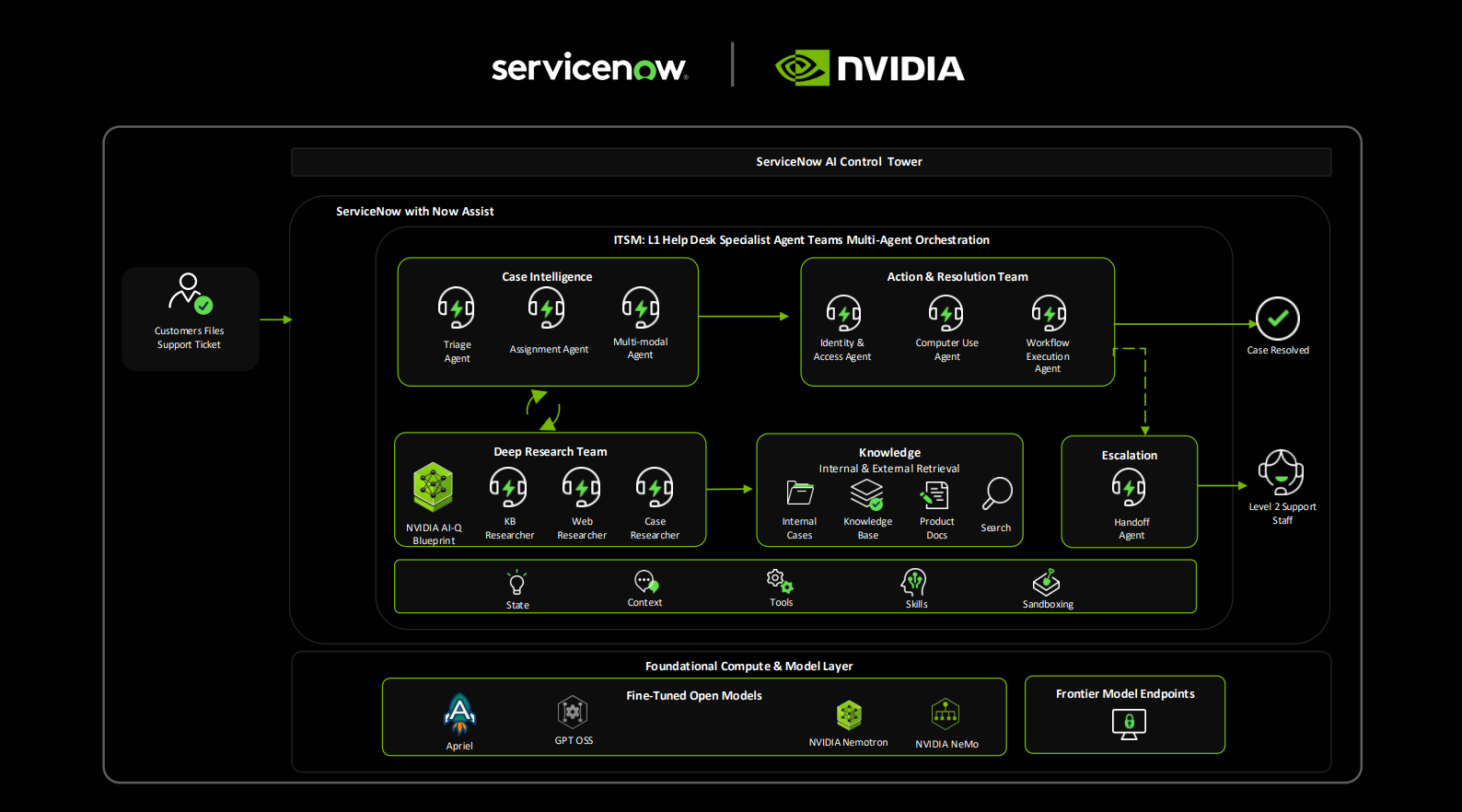
Based on the companies involved and the broader market push, the focus is likely on enterprise task automation. Think triaging incidents, summarizing case histories, pulling data from connected systems, recommending next steps, and in some cases executing approved actions.
That sounds simple. It is not. An agent that reads a ticket and suggests a fix is one thing. An agent that updates records, triggers workflows, or coordinates across tools is another level entirely (and a far riskier one). Buyers should separate assistive features from autonomous action every time a vendor uses the word agent.
Where enterprises may see value first
- IT service management. Agents can classify incidents, suggest resolutions, and route requests faster.
- Customer support. They can summarize account context and draft case responses for human review.
- Employee service workflows. HR and internal operations can use agents to answer policy questions and start standard processes.
- Operations analytics. Agents may spot patterns across tickets, assets, or service bottlenecks.
Honestly, the first wave will probably look more like a strong co-pilot than a fully independent worker. That is fine. In enterprise tech, boring often wins.
How Nvidia changes the ServiceNow AI agent equation
ServiceNow did not need Nvidia for a press release. It needs Nvidia if the goal is to run heavier AI workloads with enterprise-grade speed and reliability. Nvidia’s role likely spans model infrastructure, inference performance, and tools for building or tuning systems that can work on company-specific tasks.
Here is the practical angle. Enterprises want AI systems that can run with lower latency, stronger security controls, and support for private or hybrid environments. Nvidia has spent years building that stack. ServiceNow has spent years building systems of action. It is a bit like pairing a high-end commercial kitchen with a restaurant that already has a full dinner rush every night. The gear matters, but only if there are real orders coming in.
That is the argument in favor of this partnership.
What buyers should question about the Nvidia ServiceNow AI agent rollout
Do not confuse a strong vendor pairing with guaranteed business results. You still need to interrogate the details.
- What level of autonomy is actually included? Many so-called agents still stop at suggestions.
- What systems can the agent access? Value depends on connectors, permissions, and data quality.
- How are actions governed? Approval rules, audit logs, and rollback options are non-negotiable.
- What is the cost per outcome? GPU-heavy AI can get expensive fast if the workflow is noisy.
- How is accuracy measured? Case resolution rate, handling time, escalation rate, and user satisfaction matter more than polished demos.
This is where hype usually hits a wall. A chatbot that saves ten seconds is nice. An agent that misroutes priority incidents is a staffing problem.
Nvidia ServiceNow AI agent use cases that could stick
The strongest use cases are the ones with clear rules, repeatable steps, and measurable outcomes. Enterprises should start there rather than chasing broad autonomous behavior across every department.
1. Incident triage and routing
Service desks deal with huge volumes of repetitive requests. An agent can read incoming tickets, rank urgency, enrich the case with asset or history data, and route it to the right queue. That cuts queue sprawl and improves response time.
2. Knowledge retrieval inside workflows
Many companies already have mountains of internal documentation. The problem is that employees cannot find the right page at the right moment. An agent tied to ServiceNow workflows could surface relevant policy, past fixes, or change records without forcing users to leave the task.
3. Guided action with human approval
This is probably the sweet spot. The agent proposes the next step, fills fields, drafts messages, or prepares a resolution path. Then a human approves the move. That model gives companies speed without handing over the keys too early.
The competitive backdrop
This announcement also fits a bigger trend. Every major enterprise vendor wants to own the layer where AI shifts from answering questions to completing tasks. Microsoft, Salesforce, Google Cloud, Amazon Web Services, and others are all pushing versions of agentic automation tied to their own ecosystems.
So what makes this pairing interesting? ServiceNow has strong workflow footing in the enterprise, and Nvidia has unusual power over the AI supply chain. That does not guarantee dominance, but it does give both companies a better shot than vendors still pitching generic assistants with thin system access.
But market timing matters. If enterprises slow spending or demand harder proof of ROI, partnerships like this will need real deployment numbers, not keynote sparkle.
What to do next if you are evaluating AI agents
If this news lands on your desk and your leadership team wants answers, keep the evaluation simple and tough.
- Pick one workflow with high volume and clear pain points.
- Define success metrics before any pilot starts.
- Limit write access at the beginning.
- Test on messy real data, not curated examples.
- Compare human-only, AI-assisted, and agent-driven results.
That is how you avoid paying for theater.
Where this heads from here
The Nvidia ServiceNow AI agent push makes sense because it targets the place where AI could finally become operational, inside systems that already run everyday work. The upside is real. Faster service, lower manual load, and better use of institutional knowledge. The risk is just as real if vendors overstate autonomy or bury costs.
I have covered enough enterprise tech cycles to know this pattern. The winners are rarely the loudest companies. They are the ones that make new tools fit old, stubborn business processes without blowing them up. If Nvidia and ServiceNow can pull that off, this partnership will matter. If not, it becomes one more polished promise in a crowded market. Which side do you think most AI agents land on next year?