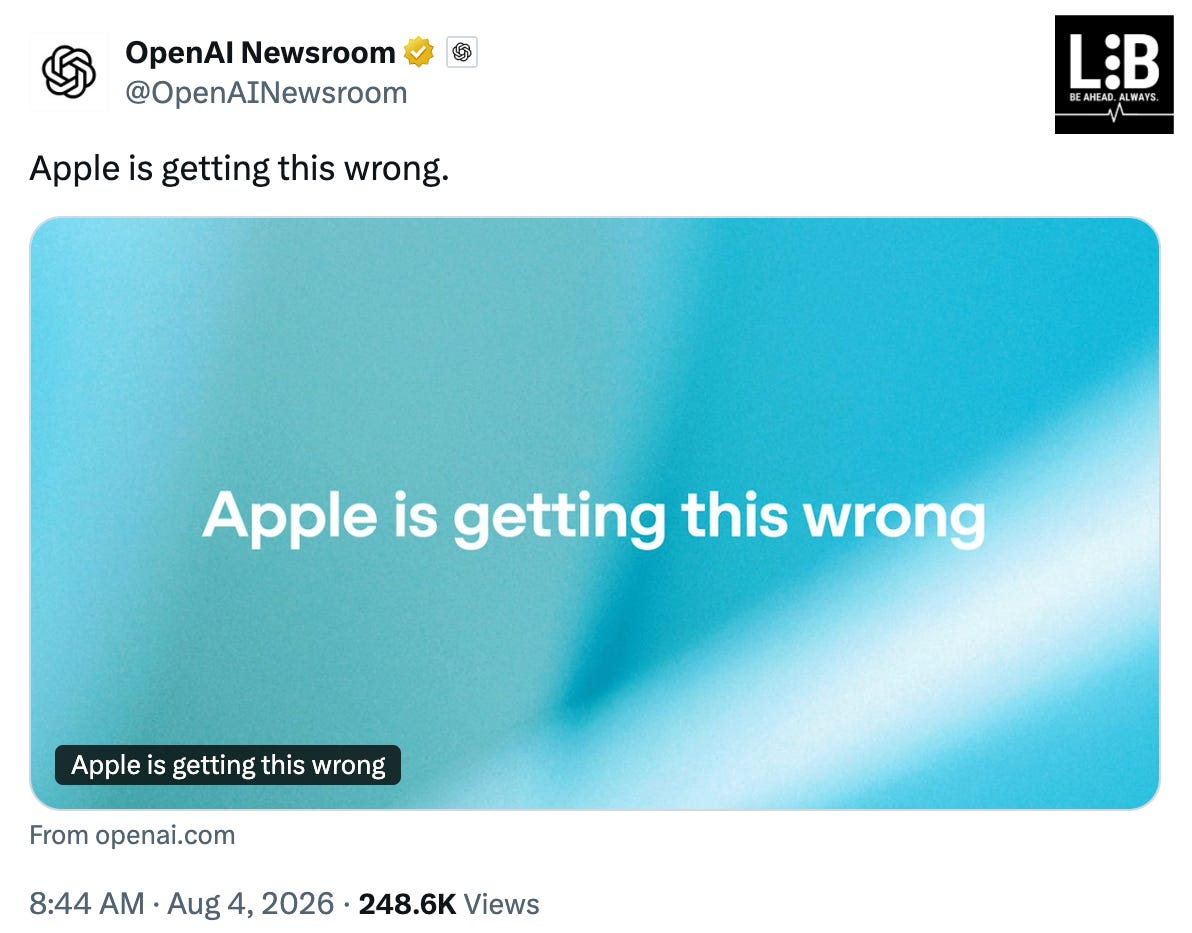
OpenAI Blog Response to Apple Lawsuit Over Messages
Apple and OpenAI are now fighting over Messages, and that matters because the outcome could shape how AI chat tools reach your phone, your contacts, and your daily workflow. The OpenAI blog response to Apple lawsuit Messages dispute is not just legal noise. It touches product design, platform control, and who gets to decide how AI appears inside core apps. If you use an iPhone, this affects the features you see, the defaults you get, and the limits placed on outside AI tools. And if you build for mobile, the stakes are even higher. Who controls the messaging layer controls a lot more than messaging.
- OpenAI is pushing back on Apple’s claims and framing the case as a platform control fight.
- The dispute could affect how AI features are embedded in Messages and similar apps.
- Apple wants tighter control over the user experience. OpenAI wants broader access.
- The real issue is distribution, not just one product feature.
What the OpenAI blog response to Apple lawsuit Messages says
OpenAI’s response is a direct counter to Apple’s legal pressure. The company argues, in plain terms, that the dispute is about access and integration, not some abstract theory of competition. That framing matters. Courts often decide these cases by looking at market power, product boundaries, and whether a platform owner is blocking rivals for business reasons or for user protection.
OpenAI is also trying to keep the story centered on users. That is smart, because platform fights often turn into policy arguments about openness, safety, and choice. But underneath all of that sits a simple business question. Who gets to sit inside the inbox, the chat thread, or the system-level interface?
Platform disputes like this rarely stay limited to one feature. They usually decide who gets access to the user first.
Why this Apple lawsuit matters for AI products
Messages is not a side app. It is one of the most valuable surfaces on a phone because it already has your attention. If Apple limits outside AI tools there, it can slow down distribution in a way that no app-store rule alone can match. That is why the OpenAI blog response to Apple lawsuit Messages story has broader reach than the headline suggests.
Think of it like a kitchen pass in a busy restaurant. The chef does not just cook the food. The chef decides what leaves the kitchen, when it leaves, and how it is plated. Apple wants that control. OpenAI wants a seat at that pass.
What could change for users
- AI helpers may appear later, or in a more limited form.
- Some features may stay locked behind Apple’s own system apps.
- You may see more prompts, permissions, and default settings tuned by Apple.
- Third-party AI tools could face extra friction before they reach Messages.
That friction can look small on paper and feel huge in practice. A single extra tap can kill adoption. A single restriction can stop a product from becoming normal.
Where the legal pressure is coming from
Apple has spent years defending tight control over its ecosystem. That has helped it keep the iPhone polished and predictable, but it also means outside companies have to fight for every inch. OpenAI, for its part, is trying to expand beyond being a chatbot people open in a browser or standalone app. It wants to be part of the system people use every day.
That clash is predictable. Apple treats the device as the center of trust. OpenAI treats the model as the center of utility. Neither side is wrong, exactly. But they are solving different problems.
- Apple prioritizes control, safety, and consistency.
- OpenAI prioritizes reach, integration, and speed.
- The legal system has to decide where platform power ends.
And that is why this is bigger than one court filing. If Apple wins a wide reading, it strengthens the idea that the company can gate AI access inside its apps. If OpenAI wins more room, outside AI firms could gain cleaner paths into messaging, search, and personal assistance.
What this means for the AI market
The market is already crowded with AI chat products, but distribution remains the hard part. Models are getting cheaper to copy and easier to wrap in a new interface. Access to users is harder to copy. That makes platform control seismic.
For startups, this is a warning shot. For incumbents, it is a reminder that owning hardware still matters. For users, it means the next wave of AI may arrive through the apps you already use, or it may be filtered through platform rules you never see.
Honestly, this is where the AI hype machine runs into reality. Features do not matter if you cannot ship them where people already are.
What to watch next in the OpenAI blog response to Apple lawsuit Messages fight
Watch for three things. First, how Apple defines the product boundary around Messages. Second, whether OpenAI keeps emphasizing user benefit over commercial access. Third, whether regulators start treating this as part of the broader platform competition debate.
If the case grows, expect more companies to weigh in. Messaging, assistant features, and default app placement are all hot territory. The next move may come from a court, a regulator, or a product update that changes the facts before anyone gets a final ruling.
The real test is simple. Will Apple let outside AI live inside the places users already trust, or will it keep those rooms locked tight and call that design?
What happens if Apple keeps control
If Apple wins this round, the short-term result will be more friction for outside AI tools. The longer-term result could be a split market where system-level AI favors Apple’s own stack, while third-party products stay on the edges. That would not kill competition. But it would make the race much slower and much more expensive.
And if you are watching this for practical reasons, that is the part that matters. The next great AI feature may not fail because the model is weak. It may fail because the platform owner never lets it breathe.