OpenAI Equity Donation Plan and the U.S. Sovereign Wealth Fund
OpenAI’s reported equity donation plan has a simple surface and a messy core. The company proposed giving 5% of its equity to a U.S. sovereign wealth fund, and that raises a hard question for anyone watching AI policy: who should benefit when private AI firms grow into national infrastructure? If you follow the money in AI, this matters now because capital, control, and public interest are colliding in ways that were easy to ignore two years ago. OpenAI equity donation plan is not just a finance story. It is a governance story, a politics story, and a test of who gets a seat at the table when frontier AI starts looking less like software and more like power.
Look closely and the proposal reads like a trade. OpenAI would be making a visible public gesture while trying to preserve room to operate inside a brittle political climate. But there is a deeper question underneath all that. What does a donation mean when the asset is equity in a company that sits at the center of a global race?
What stands out in the OpenAI equity donation plan
- 5% is not symbolic. Equity at this scale can carry real financial and political weight.
- The recipient matters. A sovereign wealth fund ties the company’s move to national economic strategy.
- Governance is the real issue. Ownership stakes can shape influence even without direct control.
- Public interest will be the argument. Expect debate over whether AI gains should flow back to the public.
- It sets a precedent. Other AI firms may face pressure to make similar concessions.
Why the OpenAI equity donation plan is politically loaded
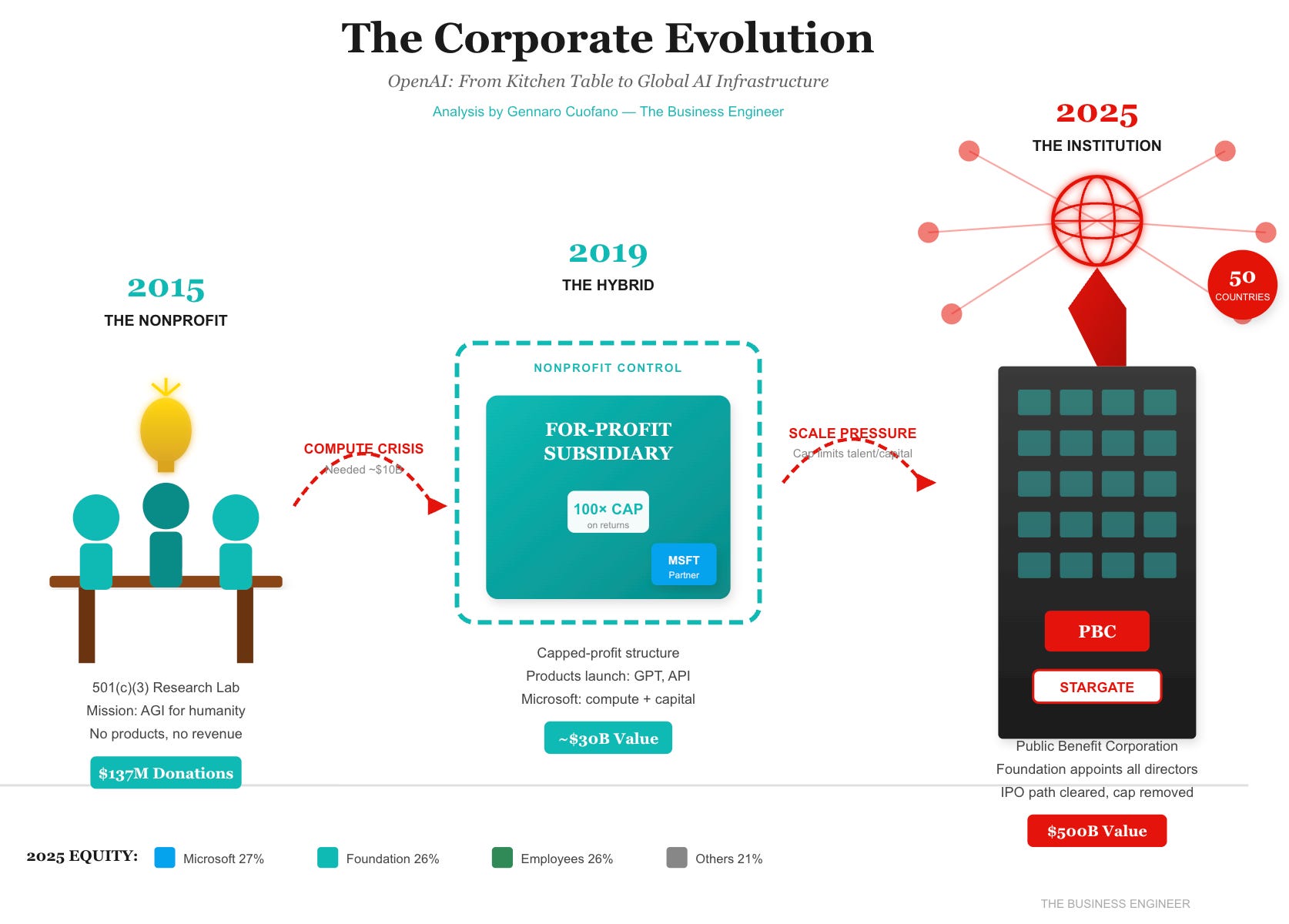
OpenAI has spent years trying to balance its nonprofit roots with a commercial structure that can fund expensive model training. That tension has never been clean, and this proposal puts it under a brighter light. If a company builds systems with national security, labor, and information effects, should it be able to keep all the upside private?
That question is not abstract. Governments already treat AI like strategic infrastructure. Chips, cloud capacity, and model access are all part of a state-level contest, and equity is one more lever in that contest. A sovereign wealth fund is not a charity box. It is a state-backed capital tool, which makes the proposed transfer politically charged from the start.
“If AI becomes critical infrastructure, then the fight over ownership stops being a side issue.”
How a 5% stake could change the conversation
Five percent sounds modest until you put it in the context of a fast-growing private company. Then it starts to look like a meaningful claim on future value. It also creates a public benchmark. Once one AI leader gives up a chunk of equity, critics can ask why others are not doing the same.
And there is a second effect. A stake can bring scrutiny. A fund linked to the U.S. government would almost certainly draw questions about board influence, policy alignment, and whether the company is trying to buy goodwill without giving up real power. That is the classic corporate move, only now the stakes are geopolitical.
OpenAI equity donation plan and the problem of control
Equity does not always mean control, but it does mean leverage. That is where this proposal gets tricky. If the fund receives stock without voting power, the move may look generous while leaving governance untouched. If it receives influence rights, then the debate shifts fast from philanthropy to political control.
Here is the thing. AI governance is not like handing out lunch vouchers. It is more like structural engineering. You can paint the walls any color you want, but if the beams are off, the building leans. Who holds the shares, who votes them, and who can pressure management are the beams here.
Questions that matter more than the headline
- Would the fund get voting rights or only economic exposure?
- Would the equity be newly issued or transferred from existing holders?
- Would there be limits on resale, governance, or future dilution?
- What public purpose would the stake serve beyond symbolism?
Those details decide whether the proposal is a serious governance shift or a polished headline. Without them, you are left with vibes. And vibes do not file regulatory paperwork.
Why this matters for AI in business
For the broader AI market, the move could alter expectations around private gains. Investors like clean upside. Governments want public returns. Employees want liquidity. Users want reliable systems. Those interests already clash, and a sovereign wealth fund adds another player with a long time horizon and political backing.
That can cut two ways. It may reassure regulators that AI profits are not flowing only to a narrow group. But it may also scare investors who worry that state-linked ownership invites pressure on product choices, hiring, or international expansion. The market likes speed. Governments like leverage. That tension is not going away.
What to watch next in the OpenAI equity donation plan
Watch the structure first, not the press release. The fine print will tell you whether this is a one-off gesture or the start of a new model for AI ownership. Also watch how competitors respond. If this proposal sticks, it could become a template for future deals around frontier AI, especially if more governments decide that public equity should follow public impact.
One more thing. If AI firms keep asking the public to trust them with powerful systems, do they also owe the public a share of the upside? That debate is only getting sharper.
A deal, or a signal?
My read is simple. This is less about a single 5% transfer and more about where the AI industry is headed. The company may be trying to shape the terms before someone else does it for them. Smart move. Risky move, too.
If the details show real public benefit and clear governance limits, the proposal could look serious. If not, it will read like a diplomatic gloss over a basic truth. AI money is getting too big to stay private forever. The only question is who forces the hand first.