OpenAI Researcher Miles Wang and the AI Drug Discovery Bet
AI drug discovery is getting another wave of attention, and this one comes with a big price tag. According to TechCrunch, OpenAI researcher Miles Wang is in talks to launch a startup valued at $2 billion, a move that shows how much money still chases the idea that software can speed up biology. If you work in biotech, invest in it, or simply follow AI hype, you should care. The pitch is simple: use models to spot promising molecules faster, cut lab time, and reduce dead ends. The reality is messier. Drug discovery is slow for a reason, and AI still has to prove it can handle the full pipeline, from target selection to wet-lab validation and clinical risk.
What stands out about this AI drug discovery startup
- The valuation is high before a product is public. That signals strong investor appetite, not proof of scientific success.
- The founder profile matters. A researcher with OpenAI ties gets instant credibility with capital markets.
- Drug discovery is a brutal test case. Models must work across chemistry, biology, and regulation.
- The market is crowded. Companies like Isomorphic Labs, Recursion, and Insilico Medicine already set a high bar.
- Execution will matter more than demos. Can the startup produce candidates that survive lab and clinic?
Why the $2 billion number matters in AI drug discovery
A valuation that large tells you investors are still buying the category, even after years of mixed results. They are not just betting on one company. They are betting on the idea that machine learning can make the drug pipeline faster and cheaper than the old model.
That is a hard bet to defend without clinical wins. Plenty of teams can generate interesting molecular suggestions. Far fewer can show that those suggestions become safe, effective drugs. That gap is the whole story.
Drug discovery is not a demo-friendly market. A model that looks smart in a slide deck still has to survive chemistry, biology, and regulatory scrutiny.
How AI drug discovery actually works
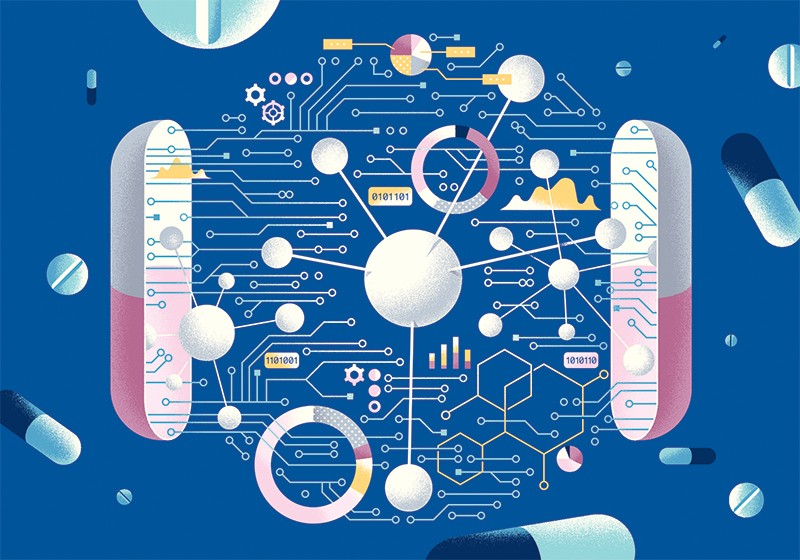
Most AI drug discovery systems try to solve a few specific problems. They predict protein structures, rank candidate molecules, screen for toxicity, or help design better compounds. The best systems can reduce the number of experiments a lab needs to run. That saves time and money.
But the process is more like building a bridge than writing code. You can model the structure on a screen, yet the bridge still has to hold weight in the real world. Why does that matter? Because biology is noisy, and even strong predictions can fail once they meet cells, animals, and human patients.
Where the models help
- Target discovery. Models can flag proteins or pathways that look connected to a disease.
- Molecule design. Generative systems can suggest compounds with desired properties.
- Prioritization. AI can rank which candidates deserve lab time first.
- Safety screening. Early checks can cut obvious failures before expensive tests.
Why this startup story is bigger than one founder
Wang’s reported move is part of a wider talent shift. Researchers with foundation-model experience are drifting into science-heavy startups because biotech offers a direct commercial use case. And investors like that story. It is cleaner than vague enterprise AI and easier to sell than a general-purpose chatbot.
The pitch is tidy.
Still, the field has a credibility problem. Too many companies have promised seismic change and delivered incremental progress. Some have produced useful tools. Few have rewritten the economics of drug development.
What investors and biotech teams should watch
If this startup gets funded at a $2 billion valuation, the real question is not whether it has smart people. It is whether it can build an edge that others cannot copy quickly.
- Data access. Does the company have proprietary lab data, or is it training on the same public sources everyone else uses?
- Wet-lab integration. Can it run experiments fast enough to close the loop between prediction and validation?
- Platform or point solution. Is it trying to do one part of discovery well, or the whole stack?
- Proof points. Has it advanced a program into preclinical or clinical stages?
- Partner quality. Are top pharma companies paying attention, or just watching from the sidelines?
If the answer to those questions is weak, the valuation will look brittle fast. If the answers are strong, the company could become one of the rare AI-biotech names that actually earns its hype.
The real test for AI drug discovery
Here is the thing. AI can improve parts of drug discovery without replacing the messy human work around it. That still matters. Even a small reduction in failed experiments can save real money.
But a startup like this will be judged on outcomes, not ambition. Can it produce drug candidates that move through preclinical testing and into the clinic? Can it beat the long timelines that define biotech? Those are the only questions that count now.
Watch the first disclosed pipeline move closely. If it lands a serious partner or a real development milestone, the market will cheer. If it stays in the realm of polished claims, the valuation will start to look like a very expensive bet on hope.