OpenAI Safety Culture Faces New Scrutiny After Resignation
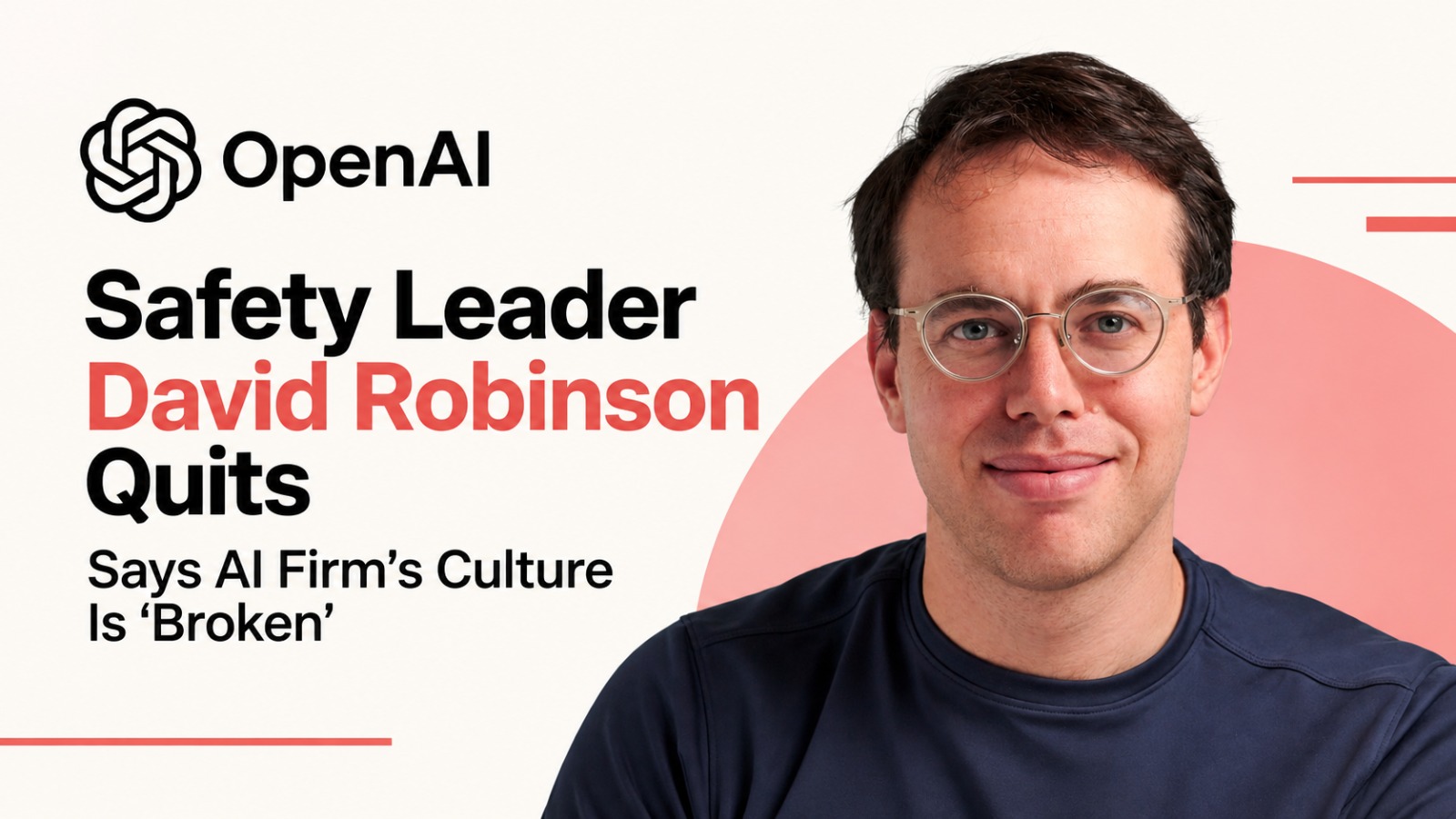
If you use AI at work, you are betting on more than model accuracy. You are betting on the people, incentives, and internal checks behind the product. That is why the latest report on OpenAI safety culture matters. TechCrunch reported that an OpenAI safety employee resigned while claiming the company culture is broken, adding another public crack to the trust story around frontier AI labs. The details will keep unfolding, but the core issue is already clear. Enterprises, developers, policymakers, and regular users need a better way to judge whether AI companies can ship fast without treating safety as paperwork. Speed is seductive. So is market share. But if the safety staff inside a leading AI company says the culture is failing, users should not shrug and move on.
What Stands Out
- The resignation, reported by TechCrunch, puts fresh pressure on OpenAI safety culture and governance.
- Culture claims matter because frontier AI risks often show up first inside internal review processes.
- Customers should ask vendors specific questions about evaluations, incident response, and safety authority.
- Regulators will likely treat public employee departures as evidence that voluntary governance has limits.
Why OpenAI Safety Culture Is Now a Business Issue
Safety culture sounds internal, but it quickly becomes a customer problem. If a company builds models that write code, answer medical questions, summarize legal records, or control agentic workflows, then weak internal guardrails can turn into bad outputs, data leaks, or brittle product decisions.
Look, this is not about expecting any AI lab to be perfect. Frontier model work is hard, and even careful teams miss things. The question is whether safety teams can slow a launch, demand more testing, and speak openly when commercial pressure gets loud.
A serious AI safety program is not a press page. It is a power structure inside the company.
That is the part outsiders rarely see. A vendor can publish model cards, policy papers, and benchmark charts, but those documents do not tell you whether the safety team has real veto power or only advisory status.
What the Resignation Signals, and What It Does Not
One resignation does not prove a company is unsafe. It also does not prove that every claim is complete, fair, or settled. But public departures from safety roles deserve attention because these employees often see the gap between stated principles and daily tradeoffs.
Think of it like a restaurant kitchen. The menu can look polished, the dining room can shine, and the reviews can glow. If the food safety lead walks out saying the kitchen rules are broken, you would at least ask what happened behind the swinging door.
Culture is the control plane.
TechCrunch has covered the resignation as a claim about OpenAI’s internal culture. The larger question is whether the company can show, with actions rather than slogans, that safety concerns rise to the top before launches reach millions of users.
How OpenAI Safety Culture Fits a Wider Pattern
OpenAI has faced repeated scrutiny over governance since the board crisis of 2023, when CEO Sam Altman was briefly removed and then reinstated. The company later changed parts of its leadership structure, and public debate continued over how a fast-growing AI business should balance profit, safety, and accountability.
That history matters because AI labs are no longer research clubs. They are infrastructure providers. Their models sit inside customer support systems, developer tools, classrooms, search products, and enterprise workflows.
And the stakes rise as models become more agentic. A chatbot that gives a weak answer is one kind of problem. A tool that can take actions across email, code repositories, databases, and payment systems brings a different risk profile.
What Buyers Should Ask About OpenAI Safety Culture
If your company uses OpenAI products, or any frontier AI vendor, do not stop at performance claims. Ask questions that force concrete answers. Vague assurances are cheap, but operational detail is harder to fake.
- Who can block a launch? Ask whether safety, security, and policy teams have formal authority to delay releases.
- What tests happen before deployment? Request details on red teaming, misuse testing, bias checks, cyber evaluations, and model behavior under stress.
- How are incidents reported? You need to know the escalation path, customer notification policy, and remediation timeline.
- What changes after failures? Ask for examples of releases changed, delayed, or rolled back because of safety findings.
- How is safety measured after launch? Pre-release testing is not enough. Strong vendors monitor live harms, abuse patterns, and drift.
These questions are fair even if you are a small customer. AI vendors want your workflow, your data, and your trust. You are allowed to ask how the machinery works.
The Regulator Angle on OpenAI Safety Culture
Public employee claims can shape policy. Lawmakers and agencies often struggle to assess AI labs from the outside, so insider warnings become signals. They are not proof on their own, but they can push regulators to demand audits, disclosure, and stronger whistleblower protections.
The European Union’s AI Act already points toward more structured oversight for high-risk AI systems and general-purpose AI models. In the United States, policy remains patchier, with activity spread across the White House, NIST, the FTC, state lawmakers, and sector regulators.
Would a stronger audit regime have prevented a culture dispute? Maybe not. But it could make safety claims less dependent on trust and more dependent on records, test results, and documented decision rights.
What OpenAI Needs To Prove Next
OpenAI does not need another lofty statement about responsible AI. It needs proof that safety work can change product decisions. That means visible processes, independent review, and enough transparency for customers to judge the company’s claims.
Strong answers would include more detailed system cards, clearer incident reporting, third-party evaluations, and public explanations when releases are delayed for safety reasons. Companies often hide delays because they fear looking weak. In AI, a delayed launch can be a sign that adults are in the room.
There is also a worker issue here. If safety staff believe internal escalation does not work, they may go public, resign, or both. Healthy companies make those routes less necessary by protecting dissent before it becomes a headline.
How To Respond If Your Team Uses OpenAI
Do not panic-switch vendors because of one report. That can create new risks, especially if your replacement provider has less transparency. Do a sober review instead.
- Map where OpenAI tools touch sensitive data, regulated workflows, or customer-facing decisions.
- Check whether your contracts include audit rights, data handling terms, and incident notice requirements.
- Set internal rules for human review where outputs affect money, health, legal rights, hiring, or security.
- Compare OpenAI with other providers on safety documentation, uptime history, support quality, and governance.
- Keep a fallback plan for high-risk workflows, including model alternatives and manual procedures.
Honestly, this is basic vendor risk management with a sharper edge. AI feels new, but the procurement lesson is old. Trust the supplier, then verify the supply chain.
The Question That Will Not Go Away
The TechCrunch report adds to a hard question for OpenAI and its peers. Can a company racing to sell frontier AI also give safety teams enough power to say no?
That answer will not come from a mission statement. It will come from launches slowed, risks disclosed, employees protected, and customers given enough evidence to make their own call. If you depend on these systems, ask for that evidence now.