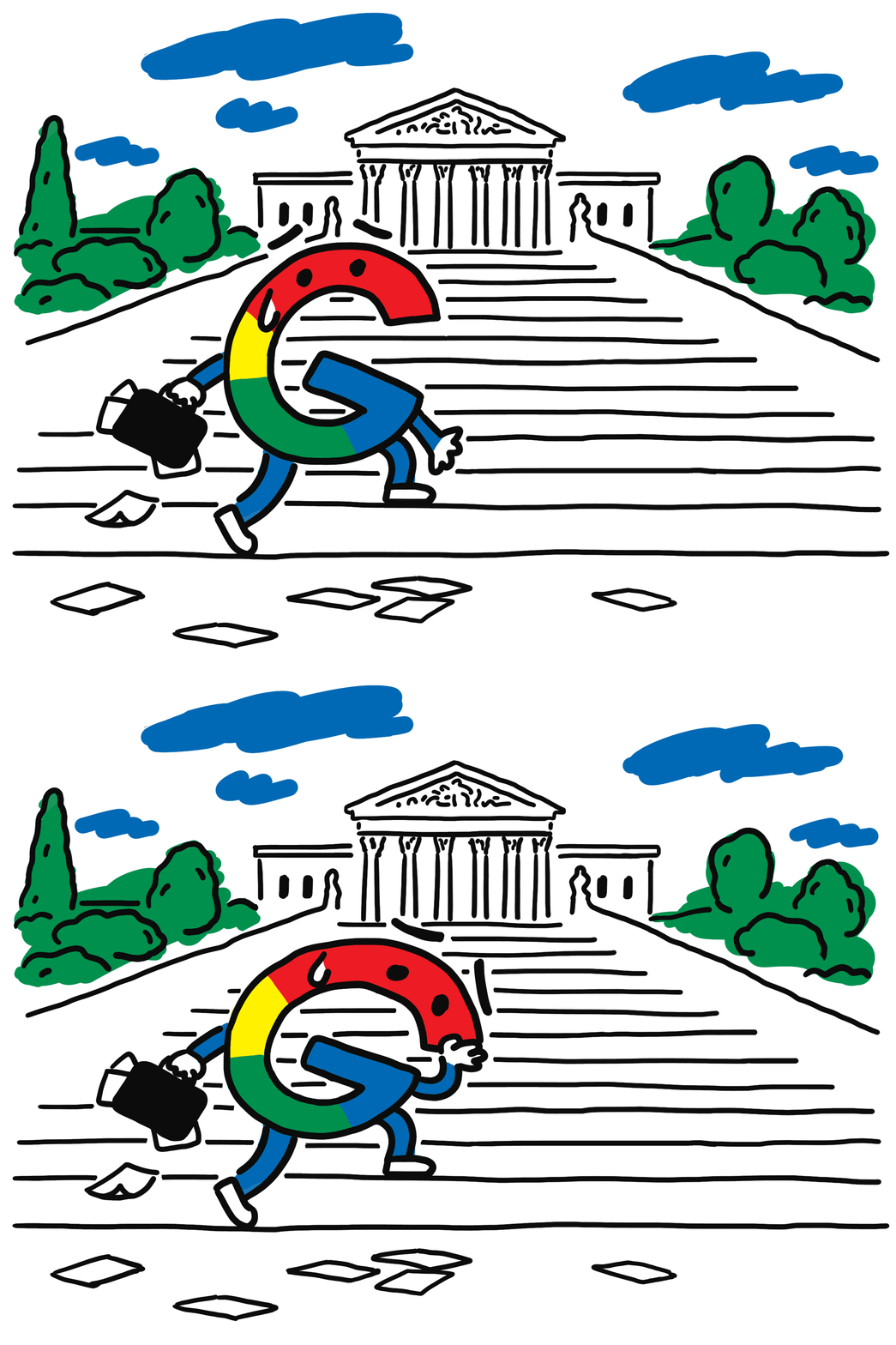
OpenAI Safety Record Under Scrutiny
If you follow AI policy, product launches, or the race between major labs, the OpenAI safety record matters more than the latest demo. It shapes how much trust you can place in frontier models, how regulators frame future rules, and how companies judge platform risk before they build on top of OpenAI’s stack. Now Elon Musk’s lawsuit is adding pressure at exactly the moment public tolerance for vague safety promises is wearing thin. The case does not just target corporate structure or founding intent. It also points attention toward internal governance, model release choices, and whether OpenAI’s public claims about caution match its actual behavior. That gap, if it exists, is where the real story sits. And yes, it deserves more than fan-club talking points from either side.
What stands out right away
- Musk’s lawsuit is forcing fresh attention on OpenAI’s safety decisions, not only its business strategy.
- The bigger issue is governance. Who gets to decide when a model is safe enough to ship?
- Public messaging around AI safety is easy. Internal restraint when competition heats up is the hard part.
- For builders and policymakers, the OpenAI safety record now looks like a live test case for the whole industry.
Why the OpenAI safety record is getting renewed attention
Tech companies get sued all the time. Most cases barely register outside legal circles. This one is different because it lands on a fault line that has been widening for years, namely whether OpenAI still operates with the safety-first posture it once sold to the public.
That question matters because OpenAI is not some niche lab. It sits near the center of the generative AI market, with ChatGPT, enterprise APIs, and partnerships that influence developers, Microsoft, regulators, and rivals such as Anthropic and Google DeepMind.
Look, legal filings are advocacy documents. They are built to persuade. But they can still surface useful facts, timelines, and contradictions worth examining. That is why the OpenAI safety record is now under a sharper lens than another standard Silicon Valley feud would bring.
Safety claims in AI are only meaningful when they survive commercial pressure.
What the lawsuit appears to raise
Based on the TechCrunch report, the dispute is helping reopen questions about whether OpenAI shifted too far from its original mission and whether safety safeguards kept pace as product competition accelerated. That does not mean every allegation is proven. It does mean the underlying concerns are credible enough to inspect.
You can break the debate into a few practical issues:
- Mission drift. Did OpenAI move from public-interest research toward a more conventional profit-driven posture?
- Governance strength. Were internal checks strong enough to slow releases or challenge leadership decisions?
- Release discipline. Did OpenAI test models rigorously before broad deployment?
- Public transparency. Did the company explain safety limits clearly, or mostly sell confidence?
That list is less exciting than billionaire courtroom drama. It is also far more useful.
How should you judge an AI lab’s safety record?
Start with behavior, not branding. Every major lab says safety matters. Fine. What do they actually do when speed, market share, and investor expectations collide?
Here are the signals that count most.
1. Governance that can say no
A safety team without power is window dressing. If product leadership can override concerns whenever launch targets slip, the structure is weak no matter how polished the policy blog posts look.
This is where OpenAI has drawn recurring scrutiny over time, especially after high-profile leadership turmoil and questions around board authority. A company cannot market itself as unusually careful while also looking internally chaotic. That is like building a skyscraper on a flashy lobby and shaky beams.
2. Testing before deployment
Frontier model evaluations should cover misuse risk, hallucinations, cyber abuse potential, persuasion risks, and failure under adversarial prompts. And they should happen before broad release, not after users find the sharp edges for free.
Honestly, this is non-negotiable.
3. Clear reporting on known limits
If a company knows where a model fails, you should hear about those failure modes in plain language. Not buried in vague scorecards. Not softened into marketing copy.
What would that look like? Concrete disclosures about benchmark performance, red-team findings, usage restrictions, and what changed between model versions (including regressions).
4. Willingness to delay
The best proof of a serious safety culture is a delayed launch. Anyone can claim restraint. Few firms show it when a rival is gaining ground and social media is chanting for the next release.
The broader problem behind the OpenAI safety record debate
The issue is bigger than OpenAI. Musk’s lawsuit may be the trigger, but the same pressure exists across the industry. Labs are trying to ship smarter models while also acting as their own referees. That setup was always going to strain.
And here’s the thing. Self-regulation works only when internal incentives support caution. In AI, they often do the opposite. Faster product cycles bring users, headlines, and revenue. Slower cycles bring criticism, lost momentum, and investor nerves.
So what happens when safety teams raise objections? That is the question every serious observer should ask.
What this means for builders, buyers, and regulators
If you build on OpenAI tools, or any frontier model provider, this story is a reminder to do your own risk review. Do not treat vendor reputation as a substitute for testing. A polished API page is not an assurance layer.
For enterprise buyers, a few steps make sense:
- Ask vendors how they conduct model evaluations and who signs off on release decisions.
- Request documentation on known failure modes relevant to your use case.
- Check whether the provider has published system cards, policy updates, or red-team summaries.
- Plan for fallback controls on your side, including human review and output monitoring.
For regulators, the lesson is simple. Voluntary promises are helpful, but they are not enough. External reporting standards, audit hooks, and incident disclosure expectations are starting to look less optional and more overdue.
What the TechCrunch report signals
The TechCrunch piece points to a shift in public conversation. OpenAI is no longer judged only by product quality or market reach. It is being judged by whether its internal conduct matches years of safety rhetoric.
That is healthy.
Public accountability around advanced AI should be routine, not reserved for moments when a famous plaintiff files suit. The same scrutiny should apply to Anthropic, Google DeepMind, Meta, xAI, and any lab pushing large language models toward wider deployment.
But OpenAI gets the hottest spotlight because it helped write the modern script for AI safety messaging. If you spend years presenting yourself as the adult in the room, people will notice when your own chair starts wobbling.
Where this likely goes next
Do not expect the legal fight alone to settle the argument. Courts can clarify facts, force discovery, and expose internal records. They are less equipped to answer the wider policy question of what an acceptable safety standard should be for frontier AI.
That debate is still being written in real time by companies, governments, researchers, and users. The OpenAI safety record will remain central because the company sits where research ambition, commercial muscle, and public risk now intersect.
If OpenAI wants to quiet skeptics, it will need more than another statement about responsible development. It will need stronger evidence of restraint, clearer disclosures, and governance that looks built for friction rather than speed. Otherwise, every future launch will invite the same blunt question. Safe enough for whom?