OpenAI Safety Team Resignation Raises Hard Questions
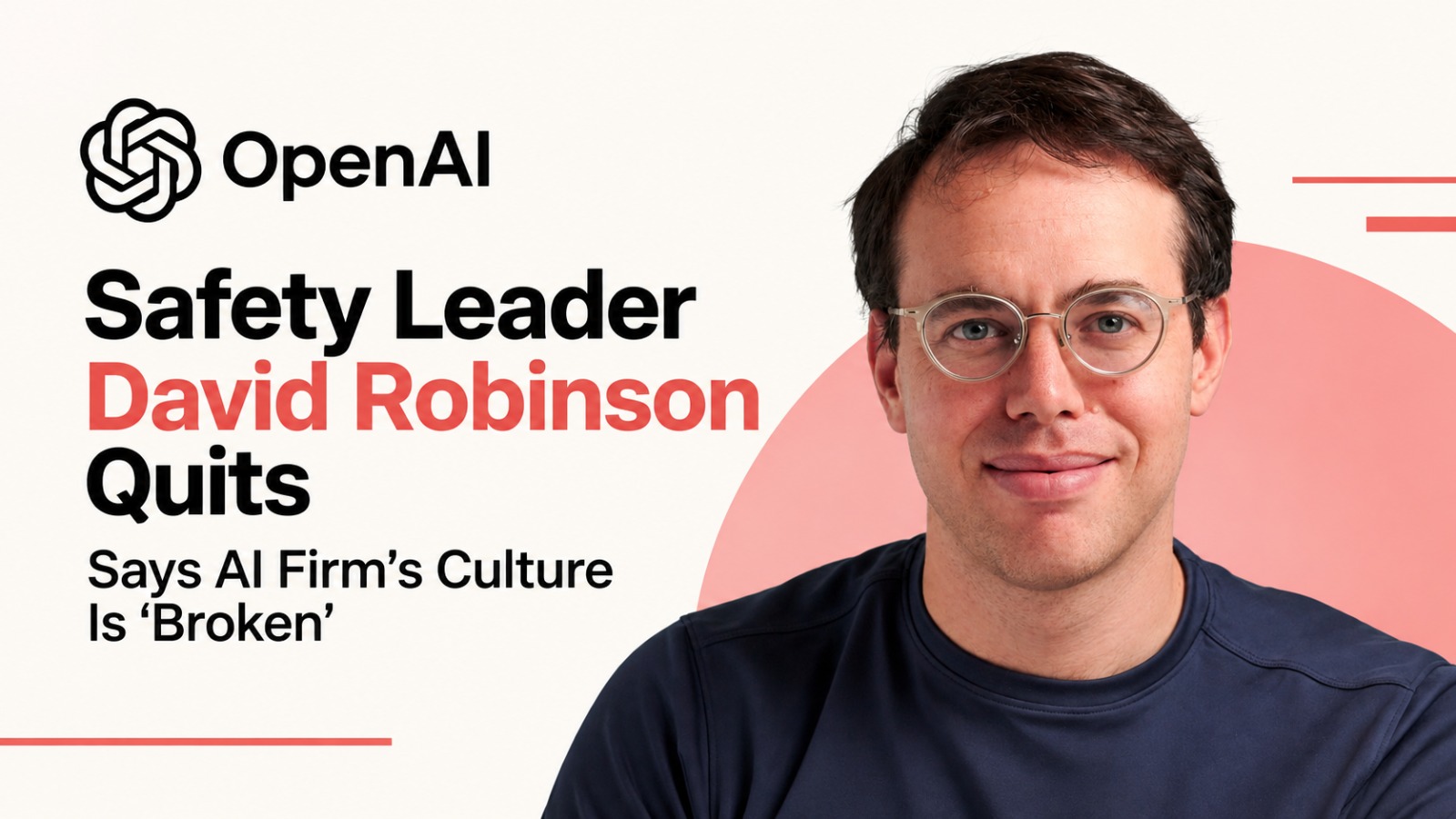
If you follow AI closely, the pattern now feels familiar. A major lab announces bold safety principles, pressure builds around product launches and funding, then researchers leave and say the internal reality did not match the public posture. The OpenAI safety team resignation reported by The Atlantic matters because it lands at a moment when AI systems are moving into work, education, coding, search, and personal decision-making. Safety is no longer a side channel for technical papers. It is product governance, risk management, and public trust rolled into one messy job.
The hard question is simple. If a leading AI company cannot keep safety researchers confident inside the building, why should users, developers, and regulators feel confident outside it? I have covered enough tech cycles to know that resignations can be noisy and political. But they can also reveal where power really sits.
What Stands Out
- The Atlantic report puts renewed focus on how much authority AI safety teams have inside OpenAI.
- Staff exits matter less as drama and more as evidence of tension between speed, revenue, and risk controls.
- Users should watch for concrete governance changes, not polished statements about responsible AI.
- Regulators may treat these departures as signals that voluntary self-policing is too weak.
Why the OpenAI Safety Team Resignation Matters
The OpenAI safety team resignation is not only a staffing story. It is a governance story. AI labs have spent years telling the public that advanced systems require careful testing, red teaming, model evaluations, and staged deployment. Those safeguards depend on people who can say no, slow a launch, or force changes before a model reaches millions of users.
That only works if safety teams have power.
Look, every tech company has internal friction. Product teams want shipping dates. Sales teams want enterprise contracts. Researchers want time to understand failure modes. The problem gets sharper with frontier AI because the downside is not limited to a buggy app update. A capable model can produce insecure code, persuasive misinformation, harmful instructions, or privacy failures at scale.
Safety work is not a press release function. It has to change product decisions, or it is theater.
The Atlantic’s report adds to an existing public record of conflict at OpenAI over governance and safety priorities. The company has also faced scrutiny since the 2023 boardroom crisis involving Sam Altman, which exposed deep disagreements about control, mission, and commercial pressure. You do not need to pick a side in every internal dispute to see the wider issue. The incentives are misaligned.
What the OpenAI Safety Team Resignation Says About AI Governance
AI governance sounds abstract until the people tasked with it leave. Then it becomes very concrete. Who can block a model release? Who reviews dangerous capability tests? Who reports risk concerns to the board? Who gets ignored?
For years, major AI labs have leaned on voluntary commitments. OpenAI, Anthropic, Google DeepMind, Meta, and others have published model cards, safety frameworks, and responsible AI principles. Some of that work is useful. Some of it is serious. But voluntary systems tend to bend under commercial load, much like a soccer defense that looks organized until a fast striker starts running at it.
The missing piece is enforceable accountability.
What good governance should include
- Independent risk review: Safety evaluations should not sit entirely under the same chain of command that benefits from faster launches.
- Clear release thresholds: Labs should publish what test results would delay or stop deployment.
- Board-level reporting: Safety leaders need direct access to directors, not filtered status updates.
- Whistleblower protections: Researchers should be able to raise concerns without risking their careers.
- Post-release monitoring: Model behavior changes in the wild, especially after tool use, fine-tuning, and user workarounds.
These are not exotic demands. Finance, aviation, medicine, and cybersecurity all use versions of this model. High-risk systems need independent checks because optimism is cheap and mistakes are expensive.
What Users and Businesses Should Watch Next
If you use OpenAI tools for work, the immediate question is not whether to panic. It is whether your own use of AI assumes more certainty than the company can provide. Many businesses have plugged large language models into customer support, coding pipelines, document review, and internal search. That can be useful. It can also create quiet exposure.
Ask a blunt question. What happens if the model is wrong, persuasive, and fast?
Here is the practical checklist I would use before expanding any AI deployment:
- Map high-risk use cases: Legal, medical, financial, HR, security, and child-facing workflows need tighter controls.
- Keep a human review layer: Do not let model output trigger irreversible decisions without oversight.
- Log prompts and outputs: You need audit trails when something goes sideways.
- Test for your domain: Vendor benchmarks rarely match your messy internal data.
- Set refusal paths: Employees should know when not to use the system.
Honestly, the companies that treat AI like a junior analyst will do better than the ones treating it like an oracle. The tool can move fast, summarize well, and write passable code. But it still needs supervision, especially in regulated or reputation-sensitive settings.
The OpenAI Safety Team Resignation and the Regulation Debate
The OpenAI safety team resignation will likely feed a larger argument in Washington, Brussels, and state capitals. Should frontier AI companies be allowed to set their own safety rules, or should governments require audits, incident reporting, and licensing for the most capable models?
The European Union has already moved with the AI Act, which creates obligations for high-risk systems and general-purpose AI models. In the United States, policy remains more fragmented. The Biden administration’s 2023 executive order pushed reporting and safety testing for powerful models, while agencies such as the National Institute of Standards and Technology have worked on AI risk management guidance. But much still depends on company cooperation.
That is a shaky foundation if internal safety staff keep walking out.
Regulation can also go wrong. Bad rules can freeze smaller players out, protect incumbents, or focus on paperwork instead of actual harm. But the answer cannot be blind faith in labs that face seismic pressure to raise capital, win enterprise deals, and ship faster than rivals.
How to Read OpenAI’s Next Moves
Do not judge OpenAI by the smoothness of its response. Judge it by what changes. A serious answer would include more transparency around safety authority, release criteria, and independent oversight. A weaker answer would lean on vague assurances and point to existing policies without changing who holds power.
Watch for these signals:
- Does OpenAI give safety leaders direct board access?
- Does it publish clearer model release standards?
- Does it allow outside audits of dangerous capability testing?
- Does it protect employees who raise risk concerns?
- Does it separate safety incentives from product growth targets?
One resignation can be a personnel issue. A string of resignations becomes a pattern. And patterns are what users, investors, and lawmakers should care about.
What Happens Now
The next phase of AI will not be decided by benchmark scores alone. It will be decided by whether the companies building these systems can prove that safety teams have teeth, not just titles. The Atlantic’s report puts OpenAI back under that microscope, and the company should expect harder questions from customers, policymakers, and its own staff.
If you run AI inside your organization, take the hint. Tighten your review process, document your risk decisions, and stop outsourcing judgment to vendor promises. The smartest move now is boring, practical governance. Will the labs accept the same standard for themselves?