OpenClaw Enterprise Security Update Explained
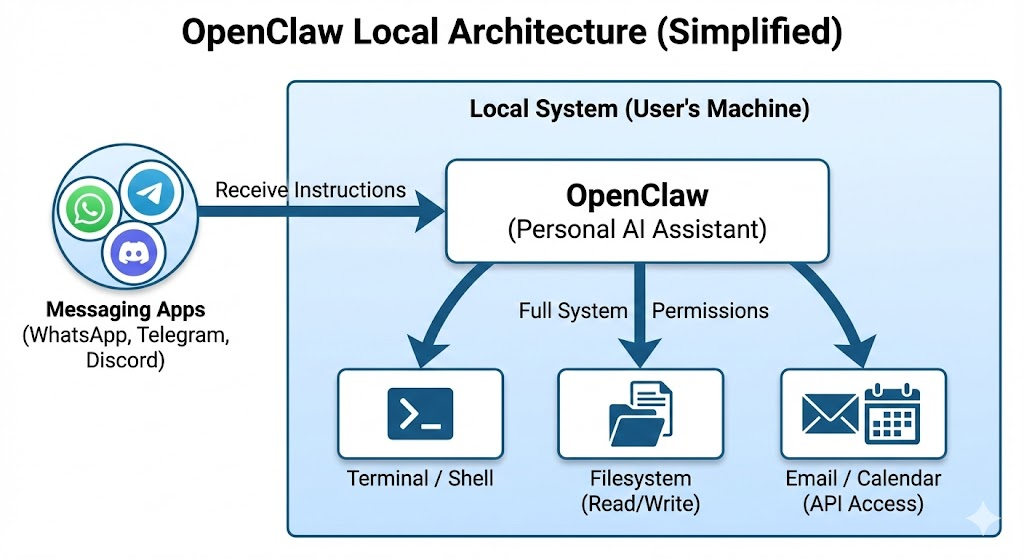
If your team is testing or running OpenClaw in production, security is probably the first thing blocking a wider rollout. That is why this OpenClaw enterprise security update matters right now. Red Hat’s OpenClaw maintainer has pushed changes aimed at making enterprise deployments safer, which speaks directly to the risk that slows down adoption in large companies.
And that risk is real. Enterprises do not get judged on how fast they deploy a new AI tool. They get judged on what breaks, what leaks, and what auditors find six months later. So if a core maintainer tightens the deployment model, you should pay attention.
What stands out
- The OpenClaw enterprise security update focuses on safer deployment defaults, which matters more than flashy new features.
- Enterprise AI rollouts live or die on trust, especially around access control, isolation, and configuration hygiene.
- Maintainer-led security work carries extra weight because it shapes how downstream users deploy the software.
- Teams should review their current OpenClaw setup for gaps between old deployment habits and new safer patterns.
Why the OpenClaw enterprise security update matters
Look, this is the part many AI product stories skip. Software does not become enterprise-ready because a company says it is. It becomes enterprise-ready when the boring parts improve: permissions, secrets handling, network exposure, default settings, and operational guardrails.
That seems to be the real signal in this OpenClaw enterprise security update. A maintainer tied to Red Hat is not chasing hype here. The focus appears to be reducing deployment risk, which is exactly what large organizations want from open source AI infrastructure.
Enterprise buyers can tolerate missing features for a while. They do not tolerate weak security posture.
Think of it like building design. A shiny lobby impresses visitors, but the fire exits, load-bearing walls, and wiring determine whether the building is safe to use. AI infrastructure works the same way.
What likely changed in practice
TechCrunch’s report points to safer enterprise deployments, and that usually means changes in a few non-negotiable areas. While every implementation differs, teams should expect improvements around deployment defaults, access boundaries, and operational controls.
Safer defaults
Good enterprise software assumes users will make mistakes. So the platform should default to the least risky option, not the easiest shortcut. That can include locked-down network settings, reduced privilege levels, or stricter service exposure rules.
Better secret and credential handling
Credentials are often where early-stage deployments get sloppy. If OpenClaw now makes it easier to keep secrets out of plain configuration files or better align with enterprise secret managers, that is a meaningful step.
Stronger isolation
Multi-tenant or team-based AI deployments need clear boundaries. One group should not be able to wander into another group’s data, tools, or agents because of weak policy design. Obvious, yes. Still a common failure point.
Cleaner operational guardrails
Security is not only about blocking attackers. It is also about reducing foot-guns for admins. Better validation, safer setup flows, and stricter deployment checks can prevent bad configurations before they hit production.
That is where mature maintainers earn trust.
What enterprise teams should check now
If you already run OpenClaw, do not treat this as just another release note. Ask a simple question: are you using the old convenience-first setup while the project is moving toward a safer model?
- Review deployment defaults. Compare your current configuration to the latest recommended baseline.
- Audit service exposure. Check what is reachable from public or internal networks, and whether that access is still necessary.
- Inspect credential storage. Make sure tokens, API keys, and service accounts are not sitting in weak locations.
- Recheck permissions. Look for broad access grants that were acceptable in testing but dangerous in production.
- Update internal runbooks. A safer platform does not help much if your operators follow outdated steps.
Honestly, this is where many teams stumble. They install a newer, safer version but keep the old operational habits.
Why maintainer credibility changes the story
There is a difference between a vendor marketing security and a maintainer improving it in the core project. The second one usually matters more because it affects the actual deployment path, not just the sales narrative.
Red Hat has long built its enterprise reputation around supportability, lifecycle discipline, and security posture. So when an OpenClaw maintainer from that orbit pushes safer deployment patterns, enterprise buyers will read that as a sign of maturity (and they should).
But here is the catch. One improvement does not make any platform fully enterprise-safe. It only moves the baseline. Your environment, integrations, data flows, and user behavior still shape the real risk.
How this fits the broader AI infrastructure market
Open source AI tooling is under pressure to grow up fast. Companies want flexibility and lower lock-in, but they also want procurement-friendly controls, compliance support, and predictable operations. That tension is shaping the market.
The OpenClaw enterprise security update fits that pattern. Open projects that want serious enterprise adoption have to prove they can handle governance and security as well as they handle features. Why would a bank, hospital, or large manufacturer bet on anything less?
And this is where hype tends to fall apart. The winning AI platforms will not be the ones with the loudest product demos. They will be the ones security teams stop fighting.
What to watch next
The smart move is to watch for follow-through. Does the project document the new safer deployment path clearly? Are there migration guides? Are container, Kubernetes, and identity integration patterns getting tighter over time? Those details tell you whether this is a one-off patch or part of a serious enterprise push.
If you are evaluating OpenClaw, use this moment to test its operational maturity, not just its output quality. Run a security review. Pressure-test the defaults. See how hard it is to do the safe thing.
That is usually the product’s real character test, and OpenClaw now has a chance to prove it can meet the standard enterprises actually care about.


