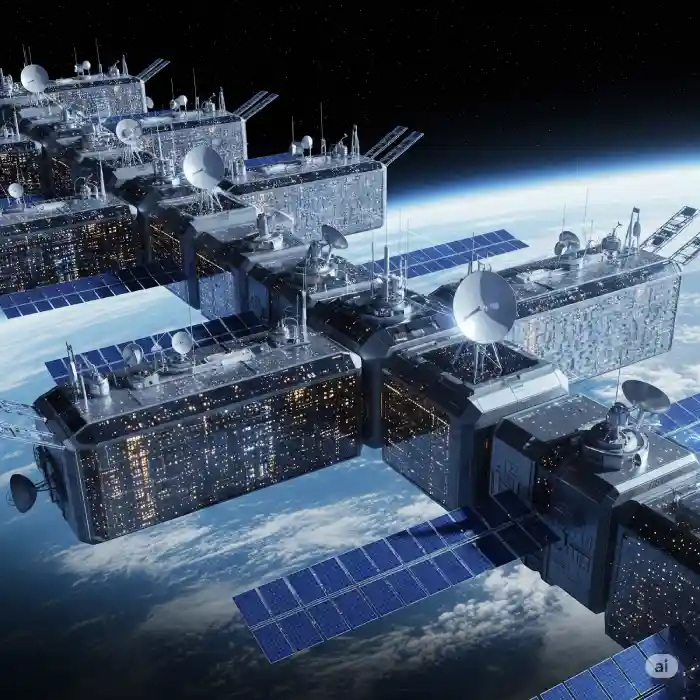
Orbital Data Centers Could Rewire SpaceX’s Sky-High Valuation
Your question is simple: can orbital data centers give SpaceX the revenue story investors want right now? Demand for AI compute and low-latency connectivity is spiking, and orbital data centers promise proximity to satellites and global reach. The catch is whether the technology, launch cadence, and capital stack line up before rivals or regulators close the window. The idea of orbital data centers sits at the center of this debate, and the next few quarters will show whether this is a solid bet or just marketing oxygen.
Why This Matters Now
- AI workloads crave low-latency backbones, and orbital data centers could tighten the loop with LEO networks.
- SpaceX needs fresh narratives to justify a towering valuation as launch services mature.
- CapEx, power delivery, and thermal control in orbit still raise hard engineering and regulatory questions.
- Competitors from AWS to national space programs are circling the same prize.
Orbital Data Centers as a Valuation Story
Investors want more than launch revenue. They want a platform. Orbital data centers wrap launch, Starlink, and potential in-space processing into one pitch. It mirrors how a chef preps mise en place before dinner service: every component must be ready, or the meal flops.
SpaceX needs orbital data centers to be a revenue flywheel, not a science project.
Here’s the thing. If SpaceX can show contracted demand from AI-heavy customers, the narrative shifts from promise to backlog. That is the difference between hype and a believable discounted cash flow.
Cost and Timeline Reality
Launch costs fall with reuse, but building a radiation-hardened, power-stable data center in orbit is not cheap. Power delivery, thermal management, and on-orbit servicing all carry new line items. Who funds the first units while revenue lags? That tension decides whether this stays a slide or becomes a product.
Single-sentence gut check.
Technical Viability of Orbital Data Centers
Thermal control in vacuum is tricky. Without convection, radiators must be oversized, adding mass and cost. On-orbit power likely means large solar arrays plus batteries, raising deployment complexity. Any AI-oriented orbital data center also needs hardened GPUs or specialized accelerators built for radiation resilience.
And what about data movement? Latency improves when data rides Starlink’s mesh, but backhaul to terrestrial clouds still adds hops. Are customers willing to re-architect workloads to exploit orbital proximity? That question should keep product managers awake.
Operational Risks
- Debris mitigation plans must satisfy regulators and insurers.
- On-orbit servicing and replacement cycles need contracts and providers.
- Ground-to-space security demands hardware roots of trust and zero-trust overlays.
- Supply chain for radiation-hardened components is thin, raising schedule risk.
Market Pull: AI and Edge Demand
AI inference at the edge already strains terrestrial networks. Orbital data centers could pre-process imagery, maritime traffic, or ISR feeds before downlink, cutting bandwidth and speeding alerts. That is a real use case, not a buzzword salad.
But how many paying customers sign on before the first stack flies? Without anchor tenants, even a low-cost launch provider faces painful payback periods.
Competitive and Regulatory Landscape for Orbital Data Centers
SpaceX is not alone. Sovereign programs in Europe and Asia explore sovereign edge compute in orbit. Cloud giants will want a piece, and they own terrestrial relationships. Spectrum, debris rules, and export controls could slow deployments faster than any engineering delay.
Think of it like building a stadium before you know the league rules. You need certainty on licensing and cross-border data flows to attract marquee teams.
Investor Signals to Watch
- Signed multi-year contracts with AI-heavy customers.
- Prototype launches showing on-orbit compute with real workloads.
- Partnerships with chip vendors on radiation-tolerant accelerators.
- Regulatory approvals for frequency use and debris mitigation plans.
- Unit economics that improve with each block upgrade.
Why wait? If even two of these land in the next year, the valuation story hardens. If not, expect investors to discount the orbital data centers line item heavily.
Looking Ahead
Orbital data centers could knit Starlink, launch, and AI together into a unified growth engine. Or they could stay a clever slide until power, thermal, and regulatory puzzles resolve. Would you bet on near-term contracts or a longer R&D slog? Either way, the next launch manifest will tell us more than any investor deck.