Period Tracker Privacy Risks: What Your App May Be Sharing
You probably opened your period app to log symptoms, not to become part of an ad pipeline. But period tracker privacy risks are real, and they matter now because reproductive health data can reveal far more than a calendar entry. That includes cycle timing, sexual activity, medication use, pregnancy signals, and patterns that feel personal for a reason.
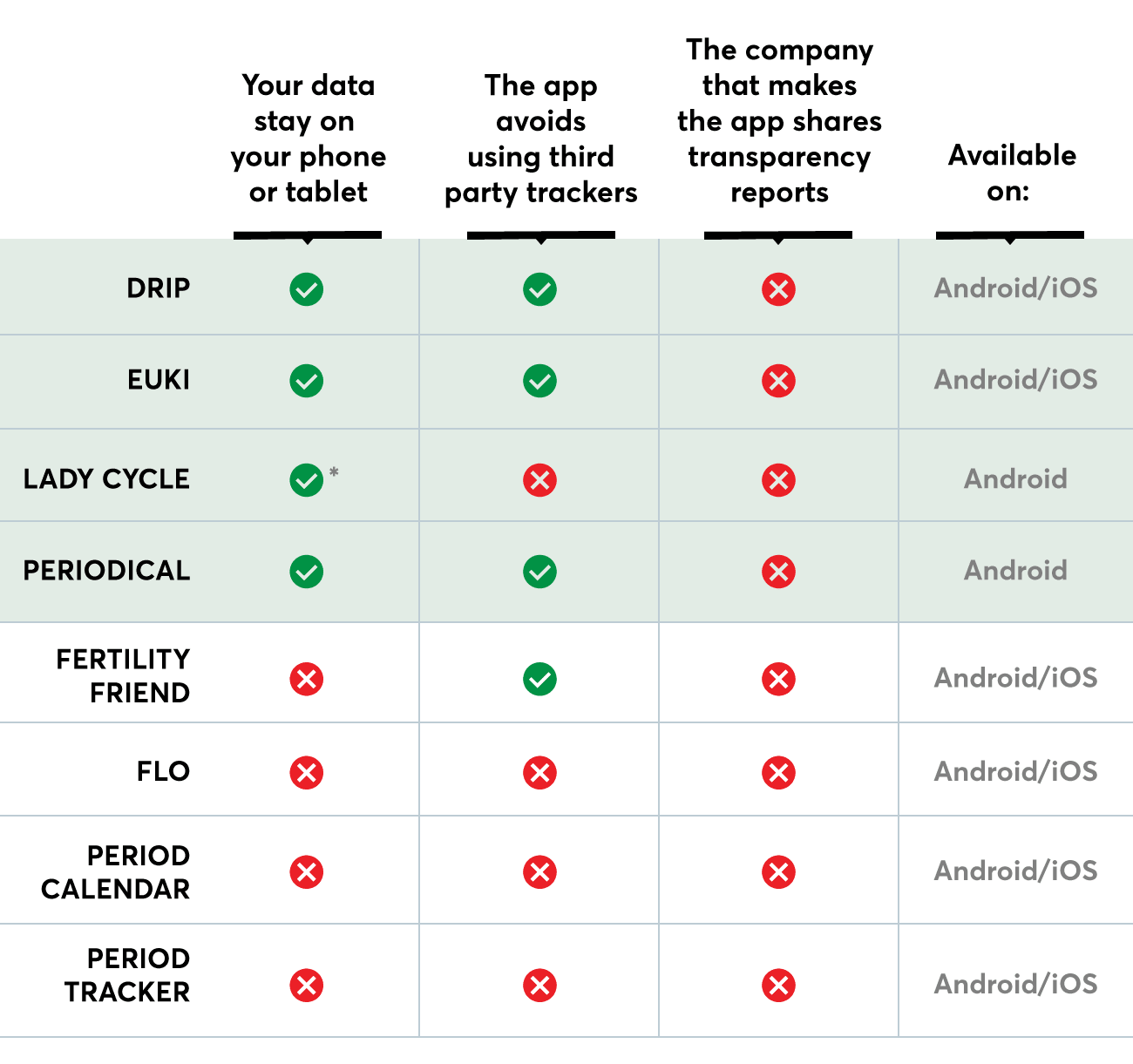
Some apps keep that data close. Others share it with analytics firms, ad networks, or data brokers in ways buried in privacy policies. If you live in a state with abortion restrictions or you simply care about basic data hygiene, this is not abstract. It is about who can see your body data, how long they can keep it, and what they can infer from it. Why hand over that much detail without checking the fine print?
What the biggest period tracker privacy risks look like
- Data sharing with third parties. Some apps send event data to analytics or ad partners.
- Weak consent design. Privacy settings can be hard to find or default to sharing.
- Broad data collection. Apps may collect identifiers, device info, and usage patterns along with health logs.
- Retention problems. Deleted entries do not always mean deleted backups or copied records.
- Legal exposure. Reproductive health data can be requested, subpoenaed, or obtained through account access in some cases.
Think of a period tracker like a kitchen ledger. If you write down every ingredient, recipe, and guest in one place, you would want to know exactly who can read it. Health apps deserve the same scrutiny.
How period tracker privacy risks show up in the real world
The problem usually starts with collection, not scandal. An app may ask for your age, symptoms, partner-related notes, mood, basal temperature, and pregnancy plans. Put that together and the profile gets sensitive fast.
Then comes sharing. Some apps use mobile analytics kits that automatically transmit usage data. Others say they de-identify information, but de-identified data can still be re-identified when it is combined with other records. That is the part many users miss.
And yes, the language in privacy policies matters, but only if you read it. Look for terms like “business partners,” “service providers,” “advertising,” “research,” and “affiliates.” Those words can signal data use that goes well beyond cycle tracking.
How to check your mainKeyword settings before you log another symptom
Start with the app itself. Open settings and look for privacy, data sharing, and account deletion options. If the app makes opt-out hard to find, that is a bad sign. Honestly, that should make you pause.
- Turn off ad personalization inside the app and in your phone settings.
- Review permissions for location, contacts, photos, microphone, and Bluetooth.
- Read the privacy policy for third-party sharing and retention language.
- Check whether you can use the app without an account. Fewer linked identifiers usually means less exposure.
- Download or delete your data if the app offers that option. Then confirm the deletion terms.
Look, this is less like installing a note app and more like handing a landlord a copy of your diary. You want to know what keys they have, and whether they made duplicates.
What safer period tracker privacy choices look like
Not every app is equally risky. Some are built with local storage, minimal analytics, and clearer controls. Others are ad-supported and data hungry. That split matters.
If you want a lower-risk setup, favor apps that support on-device storage, strong encryption, and transparent privacy practices. Also check whether the company has a public history of handling health data carefully. A clean privacy page is useful. A clear record is better.
And if you do not need a full-featured app, a paper calendar or encrypted notes app can work just fine. Simple wins here. Not glamorous, but solid.
Questions to ask before you trust an app
What data does it collect? Who gets it? How long does it keep it? Can you delete it completely? If the answers are vague, the app is asking for trust it has not earned.
One single sentence matters here.
The Federal Trade Commission has already taken action against companies that mishandled sensitive health data, which should tell you how high the stakes are.
Why period tracker privacy risks are a bigger deal now
Health data is not just another category of personal information. It can be used to infer pregnancy, sexual activity, fertility, and medication history. In the wrong hands, that becomes a map of your private life.
That is why data minimization is the right standard. If an app needs only cycle dates, it should not demand your contacts or precise location. Keep the footprint small. That is the cleanest defense.
So before your next log entry, check what your app is really collecting. The next update may add a new feature, but does it add new trust?