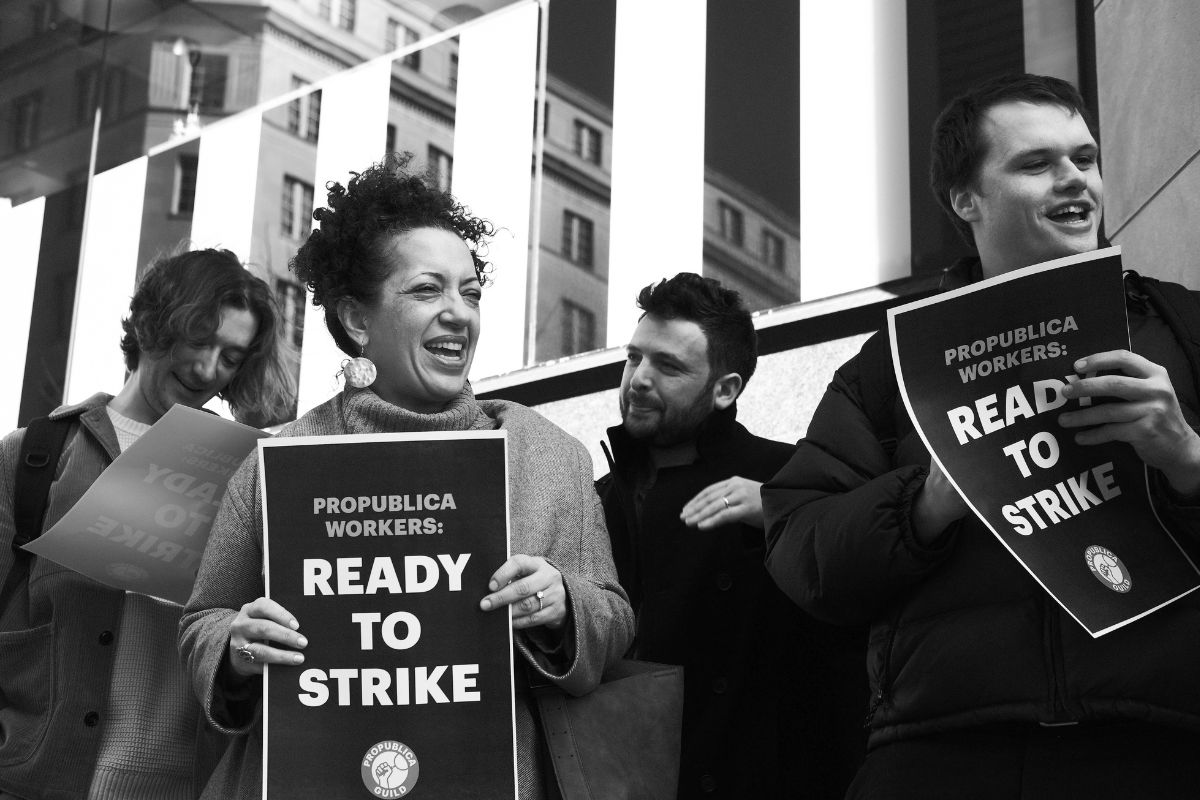
ProPublica Union Strike Tests AI Layoff Playbook
Workers at ProPublica are staring down layoffs tied to budget pressures and the creep of AI tools, and they are ready to strike if talks fail. The fight over headcount and automation is not abstract; it shapes whether investigative reporters keep jobs or get replaced by software. You care because the same pressures are hitting every newsroom that leans on donor dollars while experimenting with automation. The clock is ticking, and the union says the board can still avert a walkout by choosing people over short-term savings. The core issue is clear: will management prove AI augments reporting, or will it cut humans first? That question defines the ProPublica union strike debate right now.
Flash Points You Need to Track
- Union set a strike authorization amid AI-linked layoff fears.
- Management leans on budget gaps while rolling out automation experiments.
- Readers could see investigations stall if a walkout hits.
- Board pressure may decide whether layoffs pause or proceed.
Why the ProPublica union strike matters for every newsroom
Look, this is not just an internal HR spat; it is a stress test for nonprofit media that promised to insulate reporters from commercial shocks. ProPublica’s fundraising model depends on trust, and nothing erodes that faster than cutting journalists while piloting bots. Think of a newsroom like a kitchen line. You can add a shiny new oven, but firing the chefs means dinner never leaves the pass.
One sentence can carry a lot of weight.
The union argues AI tools should assist investigative digging, not replace it. Management counters that budget shortfalls demand cuts before the next fiscal cycle. Who do you believe?
What is actually on the table
- Planned layoffs that would hit reporters and editors as early as next quarter.
- Automation pilots for transcription and data scraping that management touts as efficiency wins.
- A strike threat that could freeze long-form investigations midstream.
“We will not accept AI as a pretext for shrinking journalism,” union leaders said in their latest memo.
How the ProPublica union strike could reshape AI adoption
Here is the thing: if the union forces a pause on layoffs, it sets a precedent that AI rollouts must come with job protections. That shift would echo through other nonprofit outlets watching from the sidelines. It also signals to donors that funding experiments must include headcount safeguards.
Management likely sees automation as a way to keep output steady with fewer staff. But readers pay attention to bylines, not bots. A strike would test whether audience loyalty sticks when investigations slow and newsletters thin out.
Practical playbook for leaders
- Tie any AI tool launch to clear job guarantees for at least one budget cycle.
- Publish an AI transparency page that lists tools, data sources, and human review steps.
- Invite union observers into AI procurement discussions to defuse suspicion.
- Model the budget: show how maintaining staff plus AI compares to layoffs plus churn costs.
Think of it like a baseball lineup. Bench too many starters and the new analytics software cannot win games alone.
What staff can do while negotiations stall
Reporters are not powerless. They can collect evidence on AI tool performance, highlight error rates, and push for pilot evaluations with clear metrics. They can also surface donor appetite for human-led investigations, reminding the board that credibility is the product.
- Document how human editors catch context errors that AI transcripts miss.
- Share case studies where automated scraping misread datasets.
- Propose hybrid workflows that save time without cutting staff.
And if talks falter, a strike fund and reader outreach can maintain pressure without burning bridges. The goal is not to freeze innovation; it is to make sure innovation does not gut the newsroom.
Signals to watch before a walkout
Pay attention to board meeting agendas, donor statements, and hiring freezes. A sudden pause in job postings can hint at deeper cuts. If management publishes an AI ethics framework, read the fine print: does it mention staffing guarantees or just tool vetting?
Another tell is source protection. Investigative shops must ensure automated tools do not store sensitive data in third-party systems. If that risk is ignored, expect union lawyers to push back hard.
What happens next for the ProPublica union strike
Negotiations will either yield a moratorium on layoffs or set the stage for a picket line. If the board steps in with bridge funding and a transparent AI roadmap, a strike may fade. If not, brace for a newsroom slowdown that ripples across collaborative investigations with other outlets.
So, does ProPublica want to be the case study for balancing AI and labor, or the cautionary tale others cite when they choose people over automation? Your move, board.