Push Notification Privacy: How to Keep Your Alerts Out of Government Files
You trust your phone to buzz only when it matters, yet the quiet pipeline behind push notification privacy is leaking. Recent disclosures show US agencies tapping Apple and Google for metadata about those alerts, and you rarely hear about it in transparency reports. That should worry you if you cover sensitive sources, run a small business, or simply want your habits out of official dossiers. The issue is urgent because push services centralize who sends what to your device, creating a single chokepoint that can be compelled by a court order. So how do you keep control while still getting the pings you need?
Why This Matters Right Now
- Push notification privacy investigations often skip public transparency reports, leaving blind spots.
- Law enforcement can request sender IDs, timestamps, and routing data without cracking your phone.
- Enterprise and newsroom workflows that rely on alerts are exposed by default.
- Apple and Google act as mandatory intermediaries, concentrating risk in two companies.
How Push Notification Privacy Breaks Down
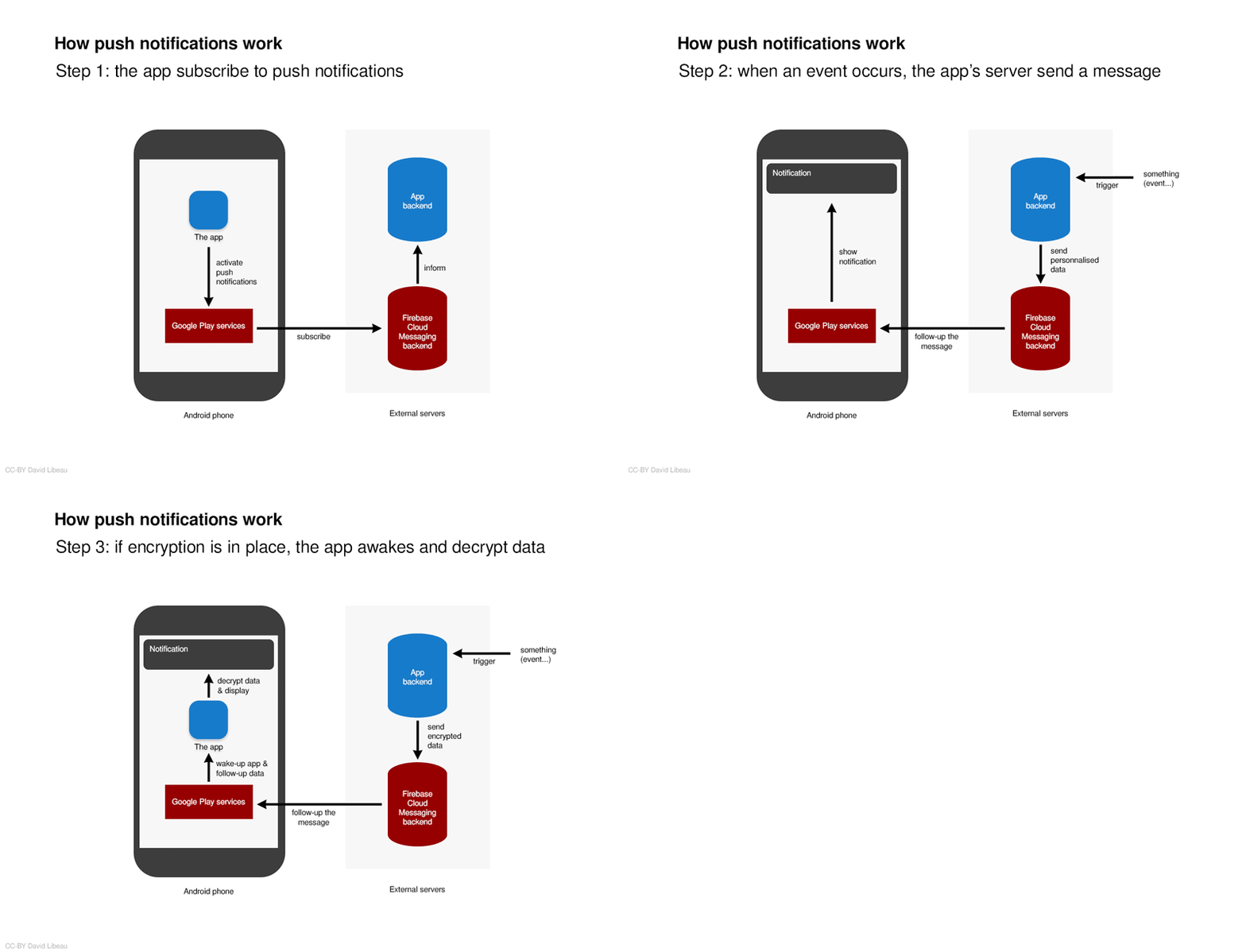
Push systems work like a relay race: your app hands a message to Apple or Google, they hold it, then sprint it to your phone. That relay is where subpoenas land. Agencies ask for device tokens, sender accounts, and timing details to map relationships. Think of it like watching a soccer match from overhead. Even if you cannot hear the players, you can track every pass and infer the playbook.
Metadata paints a picture even when message content stays sealed.
That silence makes people uneasy.
What Agencies Actually Get
Investigators rarely see full message text. They often grab identifiers: which app triggered the alert, when it fired, and which device received it. For a protest organizer using group chats, that breadcrumb trail can outline the entire network. And for companies running incident response through mobile alerts, those traces can reveal vendor names and system roles.
One rhetorical question hangs over the practice: how do you know if your app is sharing alerts with investigators?
Practical Moves to Protect Your Pushes
- Disable what you do not need. Turn off alerts for sensitive threads or use per-app controls so fewer requests are logged.
- Use end-to-end services. Apps that encrypt message content still leak some metadata, but tighter client-side delivery limits exposure.
- Favor local polling. Some privacy-focused tools check for updates on your device instead of relying on cloud push (a bit like cooking at home instead of ordering delivery).
- Separate identities. Run work and personal profiles apart to keep device tokens from mixing.
- Watch transparency updates. Read Apple and Google reports for new categories and request volumes; gaps often signal where to ask harder questions.
What Apple and Google Should Clarify
Both companies need to add push notification privacy metrics to their public reports and spell out the legal thresholds they require. Transparency should include counts of push-related orders, how many accounts were targeted, and whether gag orders blocked notice. Without that detail, even seasoned security teams are guessing. Look, trust thrives on daylight.
Risk Tradeoffs for Enterprises
Companies that lean on mobile alerts for incident response or customer support should map data flows. Which systems generate the alerts? Which identities tie to each token? A short tabletop exercise can surface hidden exposure fast. But do not forget staff training, because one tap on “Allow” in the wrong app can rebuild the very data trail you just trimmed.
Push Notification Privacy and International Law
Requests do not stop at the US border. Mutual legal assistance treaties and local laws can force Apple or Google to comply elsewhere. You cannot assume a single compliance baseline. For teams working across regions, create a policy that mirrors your most restrictive market to avoid surprises.
Where to Push Next
Demand clearer reporting from platform providers and audit your own alert footprint this week. If major vendors refuse to surface numbers, regulators should require it. Why leave such a central part of mobile life in the dark?