Rivian AI Assistant Arrives in Latest Software Update
If you drive a connected car, software updates can feel hit or miss. Some add real value. Others bury small tweaks under flashy language. Rivian AI assistant features land in that first category, at least on paper, because they aim to solve a simple problem drivers face every day: getting useful help from the car without tapping through menus. That matters now because car makers are racing to turn dashboards into software platforms, and voice control is becoming a non-negotiable part of that push. Rivian’s latest update adds an onboard assistant that can answer questions about the vehicle and help with common functions. The pitch is straightforward. Less menu hunting, more natural interaction, and quicker access to vehicle info while your eyes stay on the road.
What stands out right away
- Rivian AI assistant is built into the vehicle experience, not bolted on as a phone-based extra.
- It focuses on vehicle knowledge and common controls, which is smarter than trying to be an all-purpose chatbot on day one.
- Rivian is leaning into software as a product advantage, the same way Tesla has for years.
- The real test is reliability. Drivers will use it only if it works the first time, fast.
What the Rivian AI assistant actually does
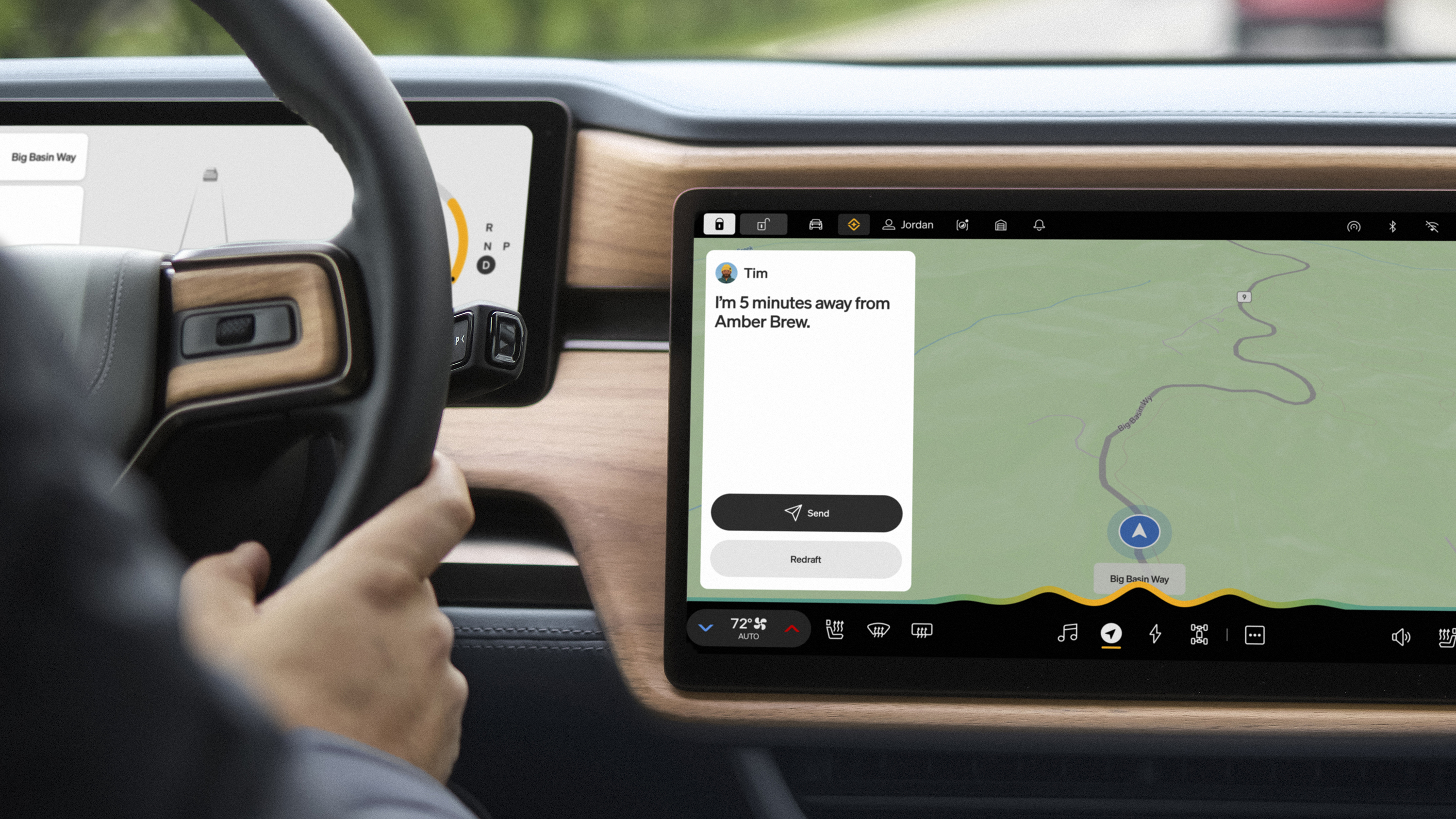
Based on Ars Technica’s report, the new assistant is designed to answer questions about the vehicle and help owners interact with onboard systems in a more conversational way. Think less “set temperature to 70” and more “how do I improve range” or “what does this warning mean.” That is a better use of AI in a car.
Look, this is the obvious near-term lane for in-car assistants. Drivers do not need a dashboard philosopher. They need quick answers about charging, range, drive modes, settings, and features buried in a digital manual.
Rivian appears to be treating AI as a support layer for the ownership experience, not as a novelty feature.
That distinction matters. A car interface should work like a good pit crew. Fast, precise, and mostly invisible when you do not need it.
Why Rivian AI assistant makes sense for software-defined vehicles
Modern EVs are stuffed with features, settings, and screens. That creates a usability problem. The more your vehicle can do, the more likely you are to forget where something lives in the interface.
And that is where the Rivian AI assistant could earn its keep. Instead of forcing owners to search through nested menus, it can act as a live guide to the car they already paid for. That is especially useful for newer owners who have not yet learned the system, but experienced drivers may lean on it too for edge cases and troubleshooting.
One thing veteran auto reporters have seen over and over is this: car makers love adding features, but they are often weaker at explaining them. An AI assistant can patch that gap if it is grounded in the vehicle’s actual systems and documentation.
Where this could help drivers most
The strongest use cases are practical, narrow, and repeatable. Not flashy. Useful.
- Vehicle education
Owners can ask what a feature does, how a setting affects performance, or what a dashboard alert means. - Range and charging help
Drivers may get clearer answers about charging behavior, battery preconditioning, and efficiency tips. - Feature discovery
Many EV owners never use half the functions in their vehicle. A conversational layer can surface tools they would otherwise miss. - Reduced distraction
If voice works well, drivers spend less time poking at screens while moving.
That last point is the big one.
Touchscreens in cars remain a mixed bag for safety and usability. If Rivian can make spoken help faster than manual searching, the assistant has a real job to do.
What to watch before you get too excited
Honestly, every in-car assistant sounds good in a product demo. The hard part starts after release. Does it understand normal speech? Can it handle follow-up questions? Does it answer clearly, or does it spit out vague filler that wastes your time?
Those questions matter more than the AI label. Consumers have heard enough inflated promises. The bar is not “impressive for a car company.” The bar is “good enough that you use it instead of ignoring it after a week.”
There are a few pressure points to watch:
- Latency. Slow responses kill trust fast.
- Accuracy. Bad guidance about charging, warnings, or settings is worse than no guidance.
- Scope control. A focused assistant usually beats one that tries to answer everything.
- Privacy. Drivers will want to know what data is processed in the car, what is sent to the cloud, and how it is stored.
Ars Technica’s report centers on the feature launch, but the longer story is about execution. That is where software reputations are made or broken.
How Rivian compares with the wider auto industry
Rivian is hardly alone. Automakers across the market are trying to bring generative AI and smarter voice interfaces into the cabin. Mercedes-Benz, Volkswagen, and others have been public about similar efforts, often with help from outside AI providers.
But Rivian has one advantage. Its brand is already tied to a software-first identity, and its customers are primed to expect regular updates. That gives the company more room to improve the assistant over time (assuming it listens to owner feedback and ships fixes quickly).
Here is the broader pattern. Cars are turning into rolling consumer electronics, except the stakes are higher because the product weighs several tons and moves at highway speed. So the winners will not be the companies with the loudest AI pitch. They will be the ones that make the interface calmer, safer, and easier to trust.
Should Rivian owners care about this update?
Yes, but with measured expectations. If you own a Rivian and you regularly dig through menus, forget where features are, or want better answers than a static manual can give, this update could make daily use smoother. If the assistant is reliable, it becomes one of those quiet quality-of-life upgrades that sticks.
But if Rivian stretches the feature beyond what it can do well, drivers will tune it out. Nobody wants a chatbot trapped in the dash giving fuzzy advice about a real machine.
What this says about the next phase of EV software
The bigger signal is not that Rivian added AI. It is that EV makers now see the owner interface itself as a battleground. Battery specs still matter. Charging networks still matter more. But software experience is moving up the list fast.
So here is the question worth asking: will in-car AI become a genuine utility, or just another checkbox on a press release? Rivian has a better shot than most if it keeps the feature grounded in the simple stuff drivers actually need, then builds from there.