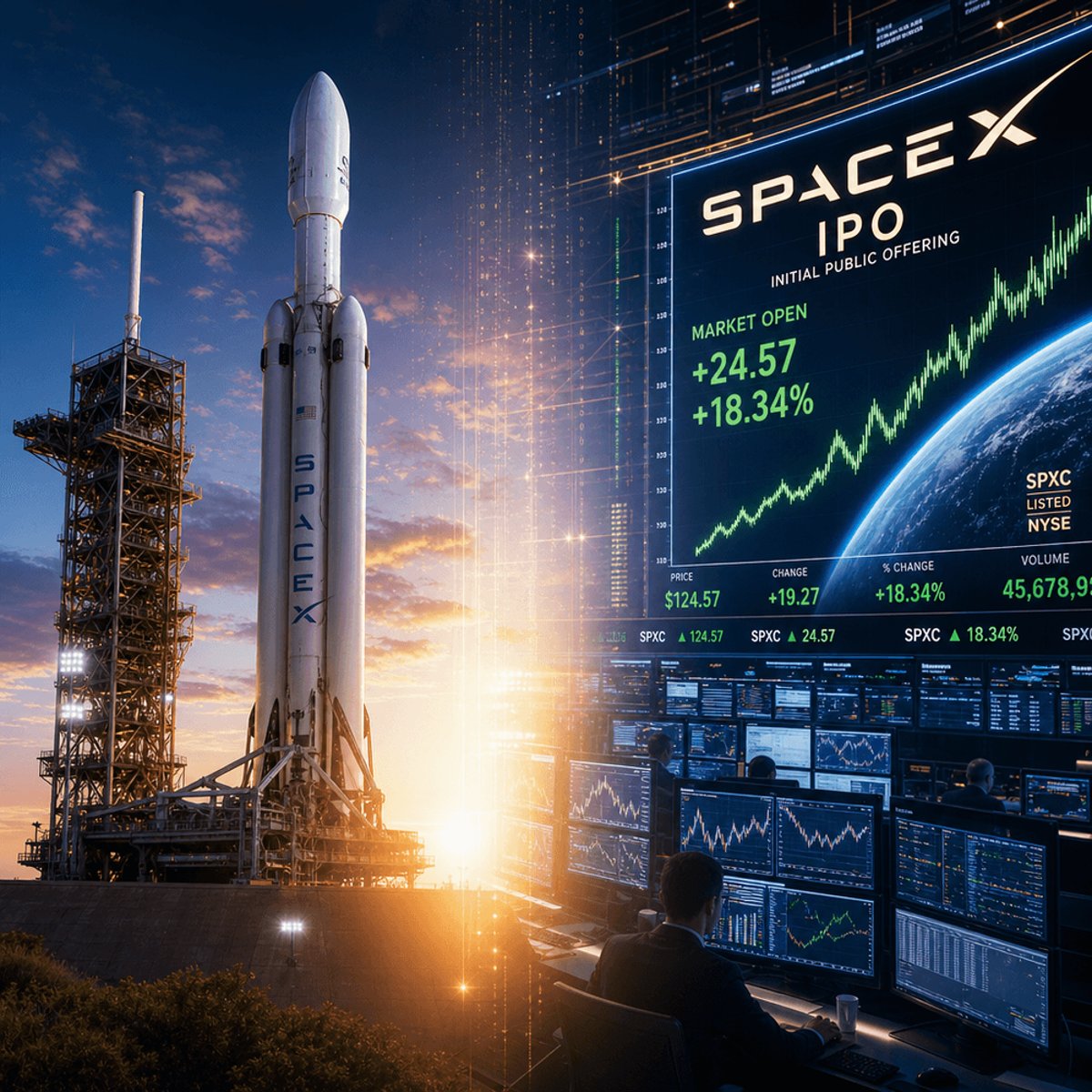
SpaceX IPO Priced at $135: What It Means for Investors
SpaceX pricing its shares at $135 is a headline that can pull in even people who do not usually watch capital markets. This SpaceX IPO priced at $135 puts a hard number on years of hype, private-market bids, and fan fiction about what the company is really worth. That matters now because the price is not just a ticker detail. It sets the entry point for public investors, frames expectations for future upside, and tells you how much faith the market has in Elon Musk’s most valuable company.
Here’s the thing. IPO pricing is part math, part theater, and part stress test. If the stock clears at this level, the market is saying it believes in Starlink, launch cadence, and the long runway for space infrastructure. If it stalls, the gap between private valuation and public reality gets exposed fast. And yes, that gap can be brutal.
What stands out about the SpaceX IPO priced at $135
- The price signals scale. A $135 share price implies a valuation story built on far more than rockets.
- Investor demand is the real tell. IPOs of this size need deep institutional support to work.
- The business mix matters. Starlink, launch services, and government contracts all carry different risk profiles.
- Public markets will demand clarity. Cash flow, margins, and capex will get more scrutiny than private buyers ever applied.
Why the pricing matters more than the headline
The number itself is only the starting point. What investors really need to ask is whether the company can justify the valuation after the first flush of excitement fades. IPOs often trade like a debutante ball. Everyone shows up for the photos, then the market starts asking who is paying the bills.
SpaceX is different from a normal tech listing. It is closer to a hybrid of aerospace contractor, telecom operator, and infrastructure builder. That makes it harder to value with a clean software-style multiple, which is why the SpaceX IPO priced at $135 will draw so much argument.
“A high IPO price is not proof of quality. It is proof that enough buyers agreed, for one moment, that the story was worth the ask.”
What investors should watch after the listing
- First-day trading range. A strong opening can still fade if early holders sell into strength.
- Lockup timelines. When insiders can sell, supply pressure can change the stock’s tone quickly.
- Revenue mix. Watch how much comes from launch services versus Starlink and government work.
- Capital spending. Space business burns cash. Rockets do not build themselves, and factories are expensive.
- Execution risk. Delays, launch failures, or satellite deployment issues can hit sentiment hard.
Is the valuation grounded or overcooked?
That depends on your horizon. If you are buying for next quarter, the stock may feel like a stretched serve in tennis. If you are buying for a decade, the question changes. Can SpaceX keep lowering launch costs, expand Starlink, and stay ahead of rivals like Blue Origin and legacy aerospace firms?
The market will also compare this deal with other giant listings and late-stage private rounds. But SpaceX is not a normal software IPO with a neat growth chart and recurring subscriptions. Its business is lumpy, capital intensive, and tied to engineering risk. That is why the market may reward the company one week and punish it the next. Same company. Different lens.
How to think about the SpaceX IPO priced at $135
If you are an investor, treat the number as a starting point, not a verdict. A strong brand and a loyal customer base can carry a valuation only so far. After that, the market wants evidence.
Ask three plain questions. Can SpaceX keep growing revenue faster than its spending? Can it turn Starlink into a durable cash engine? And can it keep shipping launches without turning every hiccup into a stock drawdown?
The answers will matter more than the debut print. They always do.
Watch the first earnings call, the first guidance update, and the first sign that public shareholders are willing to hold through the turbulence. That is where the real price discovery begins. What if the most important number is not $135 at all, but what the stock does after the hype clears?
What happens next
For now, the market has a price and a story. The tougher test comes next, when analysts, traders, and long-term holders stop cheering and start comparing notes. If SpaceX can meet the expectations baked into the SpaceX IPO priced at $135, the stock could become a core holding for investors who want exposure to launch, broadband, and space infrastructure in one name. If not, the IPO may end up as another reminder that great companies and great stocks are not the same thing.