Trump Super Intelligence Force: What It Means for AI Policy
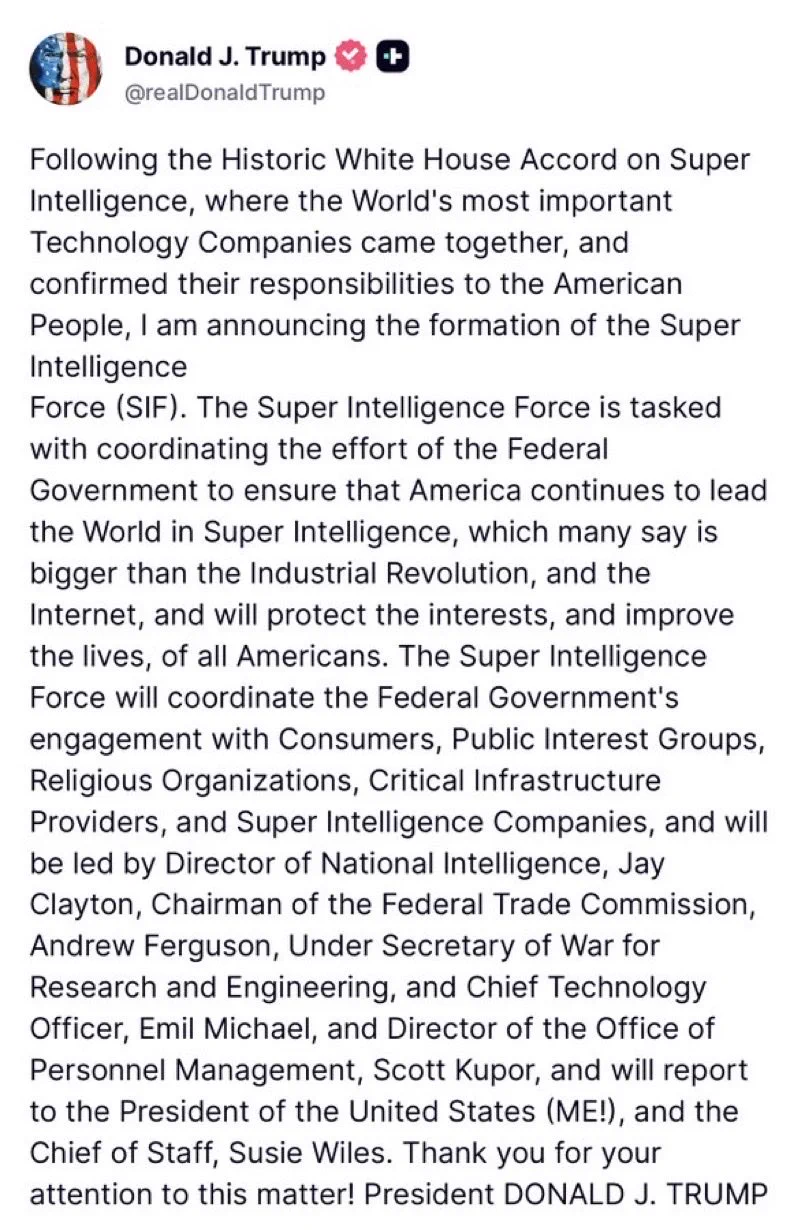
You now have another federal AI plan to track, and this one could matter more than the usual agency memo. The Trump Super Intelligence Force, reported by TechCrunch, lands at a tense moment for artificial intelligence policy in Washington. AI models are getting stronger, government buyers are moving faster, and national security agencies want systems that can sort, predict, and act at machine speed. That mix can produce useful tools. It can also produce sloppy procurement, weak oversight, and expensive theater. The name sounds muscular, but the real test is plain: will this group set clear rules for advanced AI inside government, or will it become a branding exercise wrapped around contracts? I have covered enough tech policy launches to be wary of grand labels. Details decide whether this is serious.
What Stands Out
- The plan signals that advanced AI is now being treated as a federal power issue, not a narrow software upgrade.
- Compute, talent, data access, and procurement rules will matter more than speeches.
- Any federal AI unit needs public accountability if it touches surveillance, defense, immigration, or law enforcement.
- The private AI sector will watch closely because government demand can shape product roadmaps and model safety practices.
What Is the Trump Super Intelligence Force?
The Trump Super Intelligence Force appears to be a new federal push centered on high-end AI capability, based on TechCrunch’s report on the announcement. The label suggests a focus on systems beyond basic automation, including frontier models, decision support, and tools that can process large volumes of government data.
That is where the policy rubber meets the road. A task force can coordinate agencies, set procurement standards, and advise on model safety. Or it can become a press-release machine with a bigger font.
Federal AI policy is no longer about whether agencies should use AI. The question is who controls the systems, who audits them, and who pays when they fail.
Look, the government already uses AI in fraud detection, logistics, cybersecurity, document review, and intelligence analysis. The new piece here is ambition. If this force is aimed at advanced or general-purpose AI, then it sits close to national security, civil liberties, and industrial policy at the same time.
Why the Trump Super Intelligence Force Matters Now
AI policy used to move at the pace of hearings and white papers. That era is gone. OpenAI, Anthropic, Google DeepMind, Meta, xAI, and other labs are releasing models that can write code, analyze images, summarize intelligence, and operate software tools with less hand-holding.
Government demand could become a major accelerant. If Washington starts buying frontier AI at scale, vendors will adapt their products for defense, intelligence, and federal workflows. That is like building a stadium before agreeing on the rules of the game. You can do it, but someone will get hurt if the basics are missing.
Speed is policy.
What should you watch first? Follow the money. A real AI force needs budget authority, hiring power, cloud or compute access, and a mandate that other agencies respect. Without those, it is a committee with a sharper name.
The Practical Questions That Decide Whether This Works
Who owns the compute?
Frontier AI is expensive because training and running large models takes specialized chips, energy, cloud contracts, and skilled engineers. If the force depends entirely on private vendors, it may inherit their pricing, product limits, and policy choices. If it builds internal capacity, it faces a slow federal hiring and infrastructure grind.
The better answer may be mixed. The government can buy commercial tools where they fit, but it should keep sensitive workloads under tighter control. Classified data, law enforcement data, and health records cannot be treated like ordinary office files.
Who audits the models?
Advanced AI systems fail in strange ways. They can hallucinate, overfit to bad data, hide uncertainty, or produce convincing nonsense. In government, that can affect benefits, investigations, immigration decisions, or battlefield planning.
A credible force needs independent red teams, model evaluations, incident reporting, and clear appeal paths for people affected by AI-assisted decisions. Who checks the checker? That question cannot be left to the same vendor selling the tool.
Who gets hired?
The federal government has a talent problem. Top AI engineers can earn far more in private labs, and agency hiring cycles are often slow. A Super Intelligence Force will need technical leaders who understand machine learning, security, data governance, and procurement law.
Political loyalty should not be the main hiring filter. That sounds obvious, but it is non-negotiable for systems that may touch national security and civil rights. Skilled public servants can disagree on politics and still write safer technical rules.
What the Trump Super Intelligence Force Means for AI Companies
For AI vendors, this could open a lucrative federal lane. The obvious winners would be cloud providers, model labs, data infrastructure firms, cybersecurity vendors, and consultants that know federal procurement. Defense-focused startups will also pitch hard.
But federal work changes product incentives. Companies may need stronger logging, data residency controls, audit trails, and model behavior guarantees. That is boring plumbing, but it is what separates a demo from a deployable government system.
- Model providers will need clearer documentation on training data, limitations, and safety testing.
- Cloud firms may compete on secure compute, not only raw performance.
- Startups will need patience because federal sales cycles can chew up runway.
- Consultancies may package AI governance services for agencies that lack in-house expertise.
The risk is procurement capture. Large vendors often know how to win federal deals before their products prove value. Smaller firms may have sharper tools, but fewer lawyers and contracting officers on speed dial.
Where Oversight Can Go Wrong
The danger is not that government uses AI. The danger is that agencies use AI with fuzzy accountability. If a system flags someone as risky, denies a service, or recommends enforcement action, the public deserves to know the role AI played.
There is also the surveillance problem. Advanced AI can fuse video, location, social media, financial signals, and government records at scale. Even if each data source looks lawful on its own, the combined system can become far more invasive than the public expects.
Congress should demand basic guardrails before money pours in. Those guardrails should include public reporting, inspector general access, privacy impact reviews, and clear bans on certain uses unless lawmakers authorize them. A vague promise to be responsible is not enough.
How to Judge the Next Announcement
Do not grade this initiative by its name. Grade it by the documents that follow. Serious AI governance leaves paperwork, budgets, audits, and measurable limits.
- Ask whether the force has a published charter with defined authority.
- Look for named technical leaders, not only political appointees.
- Check whether civil liberties groups, state officials, and independent researchers get a seat at the table.
- Track procurement notices and cloud contracts for signs of vendor concentration.
- Watch whether agencies disclose AI use cases in public inventories.
One more test matters. If the initiative can explain what it will not do, it is more mature than most federal tech launches. Boundaries are a sign of discipline (especially with systems this powerful).
The Smart Move From Here
The Trump Super Intelligence Force could help the federal government buy and govern advanced AI with more discipline. It could also centralize power without enough sunlight, which is exactly how bad tech policy ages into scandal.
The next practical step is simple: publish the charter, name the technical leadership, and define the audit process before major deployments begin. If the government wants public trust in superintelligent tools, it should start with ordinary transparency.