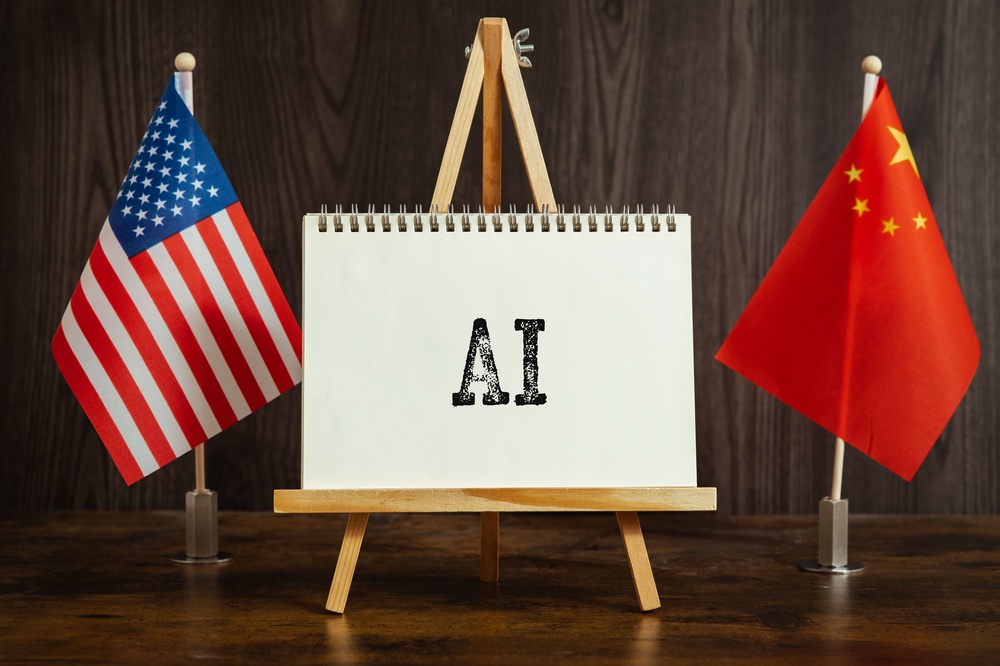
US China AI Security Talks Test a Fragile Alert System
You do not need to be a defense analyst to see the problem. AI systems are moving into cyber operations, intelligence work, military planning, and influence campaigns faster than governments can write rules for them. That is why US China AI security talks matter now. According to WIRED, officials from Washington and Beijing have discussed whether the two governments should alert each other about serious AI-linked national security threats. The idea sounds sensible. If an AI system helps trigger a dangerous cyber incident, a false military signal, or a fast-moving disinformation campaign, early warning could keep a bad day from becoming a seismic one. But this is also US-China relations, where even basic facts can become bargaining chips. The proposal raises a blunt question. Can two rival powers share enough information to reduce risk without giving away secrets?
What Stands Out
- US and Chinese officials are exploring alerts for AI-related national security risks, WIRED reported.
- The concept resembles crisis hotlines, but AI adds speed, ambiguity, and attribution problems.
- Cyberattacks, autonomous military systems, and synthetic media are likely flashpoints.
- The biggest barrier is not technology. It is trust.
Why US China AI Security Talks Are Happening Now
AI has become a national security issue because it compresses decision time. A phishing campaign can scale in minutes. Fake audio can spread before officials verify it. Automated tools can probe networks at a pace human teams cannot match.
That speed changes diplomacy. Traditional crisis management assumes leaders have time to assess, call allies, and check intelligence. AI-driven incidents may not allow that luxury, especially if military systems or critical infrastructure are involved.
WIRED reports that US and Chinese representatives have discussed notifying each other about major AI threats. This does not mean the two countries are close to a treaty. It means both sides appear to recognize a shared danger. Rivalry does not remove the risk of accidental escalation.
Early warning only works if both sides believe the warning is real, timely, and not a trick. That is the hard part of any US-China AI safety channel.
What an AI Threat Alert Could Actually Cover
An alert system would need tight boundaries. If every suspicious AI use becomes a diplomatic message, the channel turns into noise. If the threshold is too high, it may fail when it matters.
Based on the risks already discussed by national security officials and AI researchers, the most likely alert categories include:
- AI-assisted cyber operations: Large-scale network probing, malware development, or attacks on critical infrastructure.
- Military misinterpretation: AI systems producing false signals about troop movements, missile activity, or command intent.
- Autonomous systems incidents: Drones, maritime systems, or defensive tools behaving in unexpected ways near contested areas.
- Synthetic media during a crisis: Fake video, audio, or documents that appear designed to trigger panic or retaliation.
- Model misuse by third parties: Non-state actors using AI tools to create threats that could be wrongly blamed on a government.
Look, none of this is clean. AI can blur authorship. A model trained in one country, hosted in another, and used by a criminal group somewhere else can produce a mess that looks state-directed. Who gets the blame?
The Trust Problem Inside US China AI Security Talks
The United States and China already talk through military and diplomatic channels, but those channels have a shaky record during tense periods. AI alerts would need something stronger than polite language and scheduled meetings.
They would need proof standards. They would also need agreed timelines, secure communication paths, and people with authority to act. A warning that sits in an inbox for six hours is not a warning. It is paperwork.
This is the non-negotiable issue.
Both governments would worry about revealing intelligence sources. If Washington says it detected an AI-assisted intrusion linked to a Chinese system, Beijing may ask how it knows. If Beijing warns of a synthetic media operation, US officials may wonder whether the warning itself is meant to shape the story.
The sports analogy fits here. A referee can stop a match only if both teams accept the whistle. If one side thinks every call is tactical, the rulebook does not matter much.
How US China AI Security Talks Could Work in Practice
A useful system would probably start small. Sweeping agreements make good press releases, but narrow channels are easier to test. The first version could focus on AI-linked incidents that affect nuclear command signals, military aircraft and ships, or critical infrastructure.
Here is what a practical alert process might include:
- A high threshold: Alerts only for incidents with possible national security consequences.
- A shared template: Time, affected system type, suspected AI role, confidence level, and requested action.
- Protected technical details: Enough evidence to make the warning credible, without exposing sensitive sources.
- Fast human review: Senior officials and technical experts on call, not a slow committee chain.
- Post-incident review: A private review after each alert to see what worked and what failed.
That last part matters. Governments often build channels, then let them rust. AI security communication would need drills, updates, and pressure tests (the boring work that prevents public failure).
Why This Is Different From Old Crisis Hotlines
The Cold War hotline model is the obvious comparison, but AI brings different problems. Nuclear alerts were terrifying, but the main questions were often physical. Was a missile launched? Was a radar signal real? Was an aircraft where it appeared to be?
AI incidents can be softer and stranger. A fake recording of a leader may look real enough for markets to move. An AI-generated spear-phishing campaign may hide its sponsor. A military decision-support tool may recommend action based on corrupted data.
And then there is pace. Diplomacy likes time. AI systems eat time.
What Businesses Should Watch
This story is not only for diplomats. If the US and China create any AI alert norms, companies will feel the effects. Cloud providers, model developers, cybersecurity firms, chip companies, and social platforms may become part of the evidence chain.
That means businesses should prepare for more government questions about AI safety controls, model access, logging, and incident reporting. The same applies to companies that operate in both US and Chinese markets. They may face competing disclosure expectations.
Practical steps for security and legal teams:
- Map where your organization uses generative AI in security, operations, and customer systems.
- Keep logs that can support incident review without exposing more user data than needed.
- Define who can contact government agencies during a serious AI-related incident.
- Test your response plan against synthetic media, AI-assisted phishing, and model misuse.
The Real Test Comes During a Crisis
US China AI security talks are worth taking seriously, but nobody should confuse talks with safety. The test will come when one side sends an alert that is inconvenient, embarrassing, or politically costly to accept.
Still, the alternative is worse. Without a trusted channel, each side may assume the darkest explanation during a fast-moving AI incident. That is how technical confusion turns into strategic danger.
The next smart step is narrow and practical. Pick one high-risk category, run quiet drills, and see whether the channel survives contact with reality.