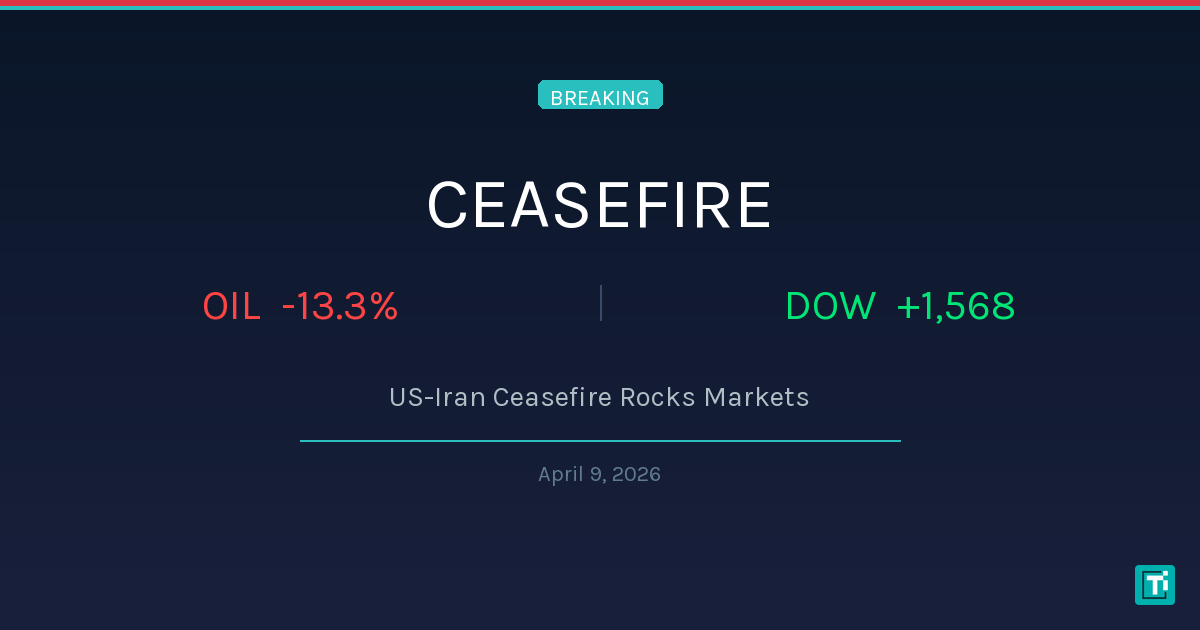
US-Iran Ceasefire Market Impact: Futures Surge and What Traders Should Watch
Stock index futures ripped higher after reports of a two-week US-Iran ceasefire, a brief pause that could reset sentiment after a tense week. The US-Iran ceasefire market impact hits fast because algos and humans alike instantly reprice risk when missiles stop flying, yet history reminds you that ceasefires can fray. You care now because positioning was defensive, liquidity was thin, and earnings season looms. Will this two-week pause stick long enough to calm price swings? I have covered too many false dawns to take anything on faith, so here is what actually matters in the next few sessions.
What Just Moved
- Dow, S&P 500, and Nasdaq futures popped on the ceasefire headline.
- Oil eased as traders discounted immediate supply shocks.
- Defense names gave back some safe-haven bid while megacap tech caught a relief bounce.
- Rates drifted lower as bond buyers stepped back from panic mode.
US-Iran ceasefire market impact on equities
Think of this truce like a coach calling a timeout late in the game: it stops the bleeding but does not change the scoreboard yet. Equity desks will watch whether cash markets confirm the overnight spike or fade it, especially with earnings from banks and semis on deck. Heavyweights such as Apple, Microsoft, and Nvidia often act as shock absorbers; if they hold gains into the close, breadth should improve.
Volatility loves a vacuum.
Traders should scan for short-covering in cyclicals and financials, because those groups were the most crowded shorts into the headline. If breadth fails and defensives lead again, the rally was just a relief pop.
Quick equity checklist
- Track pre-market breadth and volume in SPY and QQQ. Thin pops often retrace.
- Watch bank earnings commentary for geopolitical hedging costs and credit demand.
- Set alerts on VIX futures; a drop below recent highs signals improving risk appetite.
“Ceasefires are timeouts, not trophies,” one veteran trader told me years ago. The line still holds.
US-Iran ceasefire market impact on energy and rates
Oil’s dip reflects relief on supply risk, yet the Strait of Hormuz remains a chokepoint. A single incident can flip the tape, so energy traders should keep stops tight. Gasoline cracks could stay firm if refiners keep inventories lean.
On the rates side, the flight-to-quality trade is easing. If the 10-year yield climbs while breakevens stay steady, equities can handle it. If yields spike alongside higher oil, that is a warning of renewed stress.
Signals to watch now
- Brent holding under recent highs suggests the ceasefire is priced in.
- High-yield spreads narrowing would confirm risk-on, while a stall hints at fragility.
- Dollar softness would amplify the equity move; a dollar rebound could cap it.
Trading moves for the next 48 hours
Here’s the thing: you do not need hero trades. Scale in with smaller size, widen your timeframes, and avoid chasing the open. Pair trades can help manage headline risk—long a quality tech name against short a stretched defensive utility, for example. If you trade futures, consider bracket orders to contain slippage in case headlines flip.
An analogy from cooking fits: let the sauce reduce before tasting. Give the market a session or two to show whether buyers have conviction.
And remember, every ceasefire is a provisional bet on human restraint.
Where this could go next
If diplomats extend the truce, risk assets can grind higher into earnings, helped by calmer energy prices and a softer dollar. If the ceasefire cracks, expect an instant round trip in futures and a rush back into defense, energy, and gold. What would make me change my stance? A sustained drop in VIX, improving market breadth, and credit spreads tightening together. Until then, trade small and stay nimble.