Vercel CEO on the Model vs Agent Split
If you are building with AI right now, the biggest headache is not picking a model. It is figuring out where the model ends and the agent begins. That split matters because it changes how you design products, how you price them, and how much control you keep over the user experience. The mainKeyword here is simple enough, but the business impact is not. Guillermo Rauch, Vercel’s CEO, has been pushing on this fault line for a reason. Teams keep treating models and agents like the same thing, then wonder why their systems get messy, slow, or expensive. They are different layers. And if you do not separate them cleanly, you end up building on sand.
- Models generate the output. Agents decide what to do next.
- The split affects latency, cost, and reliability.
- Product teams need clearer boundaries between orchestration and inference.
- Vercel’s view points to a more modular AI stack.
Why the mainKeyword matters now
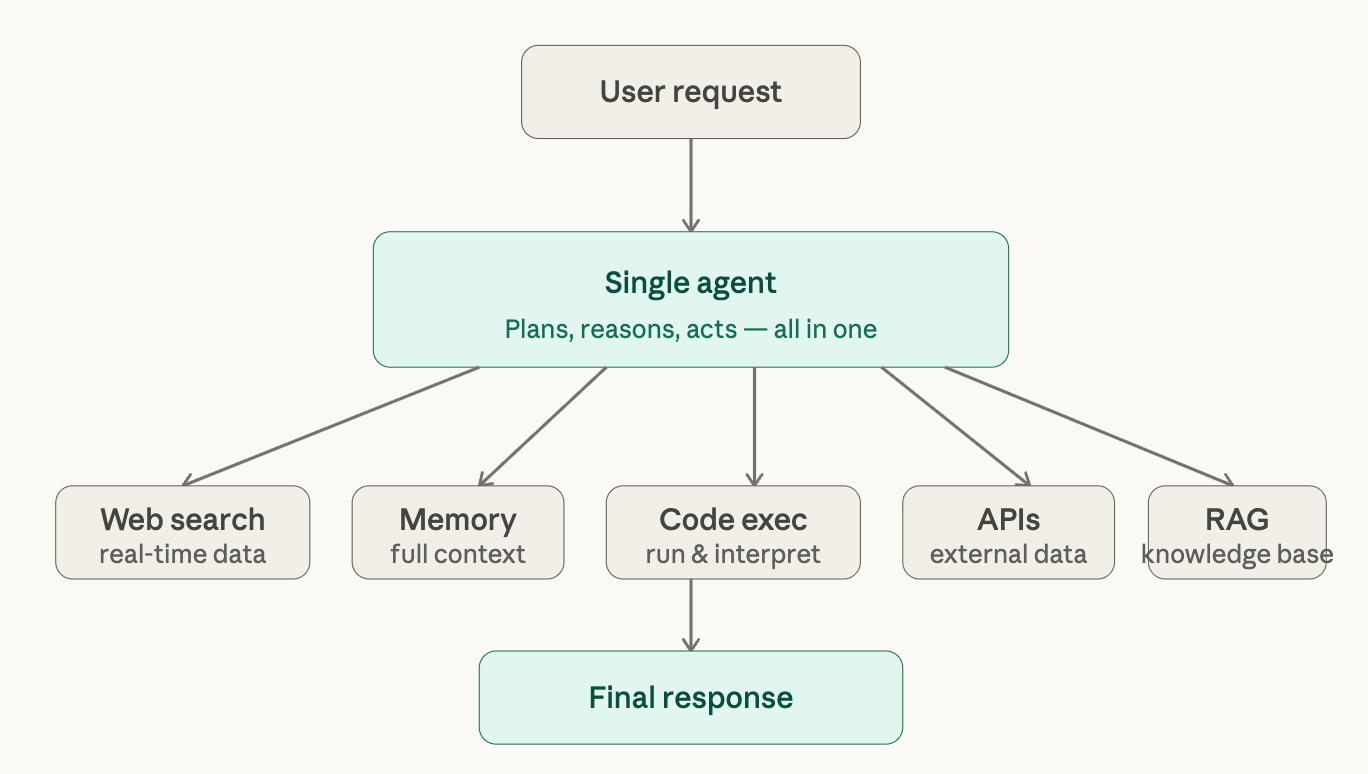
AI products are moving past chat boxes and into workflows. That shift forces a harder question: do you want a smart model, or do you want a system that can plan, call tools, and keep state across steps? Those are not the same problem. A model can answer a prompt. An agent has to act like a small operations team (with all the coordination problems that implies).
Look at the cost side. A model call is one unit of work. An agent can trigger multiple model calls, tool requests, retries, and checks. That means the budget can grow fast, and the failure modes multiply. If your product team treats an agent like a single API call, you are setting yourself up for surprise bills and uneven performance.
“The winning stack will not be one giant brain. It will be a system that knows when to think, when to act, and when to stop.”
How the mainKeyword changes product design
Good AI products need clear seams. The model should handle language, reasoning, or generation. The agent layer should manage state, tools, permissions, and retries. If you blur those jobs, debugging becomes a nightmare. Was the answer wrong because the model failed, or because the agent chose a bad tool path? That is the sort of bug that burns weeks.
There is a clean analogy here. Building an AI product without separating models from agents is like building a kitchen where the oven also handles inventory, delivery routing, and customer support. It can work for a minute. Then the whole place gets chaotic.
- Keep inference isolated. Treat the model as a service with defined inputs and outputs.
- Put orchestration in its own layer. Agents need state, memory, and control logic.
- Track every tool call. Logs matter when the agent chain breaks.
- Design fallback paths. If the agent stalls, users should not be stranded.
What builders get wrong about agents
Too many teams add agent features because it sounds current. That is a weak reason. Does your user need multi-step autonomy, or do they just need a faster answer? If the job is simple, an agent adds overhead without much value.
That is where the hype gets dangerous. Agents are useful when the task has branching decisions, external tools, or repeated verification. They are less useful when the workflow is narrow and predictable. In those cases, a direct model call often wins on speed and clarity. Simple beats clever more often than people want to admit.
Signs you need an agent layer
You probably do if your product needs any of the following:
- Tool use across systems like search, CRM, or code execution
- Step-by-step planning with checkpoints
- Memory across a session or task
- Error recovery after a failed action
Why Vercel cares about the split
Vercel sits close to the application layer, where product decisions become user experience decisions. That gives the company a sharp view of what breaks when AI systems get tangled. Developers want predictable deployments, fast response times, and fewer moving parts. The more an agent can do, the more pressure it puts on those goals.
That is why the model vs agent split is not just a technical debate. It shapes platform architecture. It shapes pricing. It shapes the way teams think about observability and security. And it raises a plain question: if agents keep expanding, who owns the guardrails?
What to do next
Start by drawing a line between generation and orchestration in your own stack. If you cannot explain which part is responsible for reasoning, tool use, and state, your system is already too blended. Keep that boundary visible in code, logs, and product docs.
That is the discipline this market needs. The next wave of AI winners will not be the teams that bolt on the most agent features. They will be the ones that know exactly where the model stops and the agent takes over. Which side of that line is your product actually on?