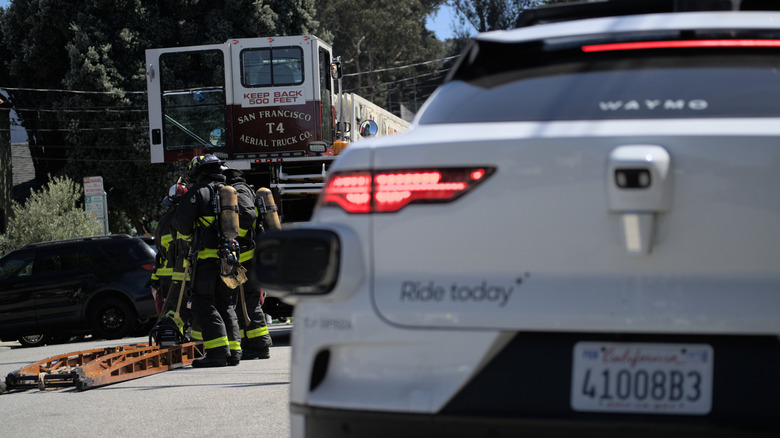
Waymo Emergency Response Problems Are Getting Harder to Ignore
If you live in a city where robotaxis are spreading fast, you probably care about one question more than any product demo or investor pitch. What happens when a self-driving car meets a real emergency? The latest reporting on Waymo emergency response problems suggests that answer is still messy. First responders in places where Waymo operates say some vehicles are stopping in the wrong places, entering active emergency scenes, and forcing crews to work around software behavior that does not read chaos the way humans do.
That matters now because autonomous vehicles are no longer a pilot project tucked into a test zone. They are part of daily traffic. And once a technology shares the street with police, firefighters, and ambulances, safety claims need to survive the ugliest edge cases, not just calm suburban routes.
What stands out
- First responders told Wired that some Waymo vehicles are interfering with active emergency scenes.
- The issue is not only collision risk. It is delay, confusion, and crew attention pulled away from urgent work.
- Waymo says it has protocols and training for emergency interactions, but field reports suggest the system still breaks down in live incidents.
- Public trust in robotaxis will turn on how they handle rare, high-stakes moments, not routine rides.
Why Waymo emergency response problems matter more than a bad traffic stop
A self-driving taxi blocking a lane is annoying. A self-driving taxi drifting into a fire scene is different. Emergency response runs on speed, prediction, and clear authority. If a vehicle does not react the way a human driver would, responders have to spend precious seconds figuring out what the machine will do next.
Look, that is the real issue here. The burden shifts from the car adapting to the scene to the humans adapting to the car.
Wired reported that emergency workers described repeated trouble with Waymo vehicles. Those accounts included cars crossing caution tape, entering restricted areas, and failing to respond cleanly to hand signals or scene control. Even if those events are infrequent, the cost of one bad interaction can be high. Ask any firefighter trying to position equipment on a narrow street.
Autonomous driving does not need to fail often to create a public safety problem. It just needs to fail at the wrong moment.
What first responders say is going wrong
The central complaint is not mysterious. Emergency scenes are chaotic, improvised, and full of exceptions. Roads close without digital notice. Signals come from gestures, flashlights, cones, sirens, and shouted instructions. Human drivers can be erratic too, of course, but they usually understand the social rules of a crisis scene.
Software has a harder time with that.
Common failure points
- Scene intrusion. Vehicles may enter areas that responders have effectively closed off.
- Weak response to manual direction. Hand signals and ad hoc commands do not always produce the expected behavior.
- Unplanned stopping. A car can freeze in a place that blocks access, hoses, or vehicle movement.
- Responder distraction. Crews have to split focus between the emergency and the autonomous car.
That last point gets too little attention. During a fire, crash, or medical call, every mental cycle counts. If responders are babysitting a robotaxi, the street has a design flaw.
Waymo’s side of the story
Waymo has said for years that it works with emergency agencies and builds procedures for interactions with police, fire, and EMS. The company has also published safety material and described training efforts for first responders. On paper, that is the right approach.
But paper is not pavement.
The gap between controlled protocol and live street behavior is where this story sits. A company can have hotlines, operating guides, and response teams. That helps. It does not erase the fact that emergency scenes are fluid and often ugly, a bit like trying to run a restaurant kitchen during a power surge while someone keeps wheeling in a machine that only follows half the instructions.
Honestly, this is where a lot of autonomous vehicle messaging goes soft. Companies highlight disengagement rates, miles driven, and simulation gains. Fine. Yet the public judges safety through edge cases that people can picture. A car that confuses a burning building scene will do more damage to trust than a thousand clean airport trips will repair.
Are these incidents proof robotaxis are unsafe?
No. And saying that would overreach the evidence.
But they are proof that safety claims need tighter framing. Autonomous systems can perform well in many driving conditions and still be unreliable in emergency contexts. Those two facts can live together. The problem is that emergency handling is not optional. It is a non-negotiable part of operating on public roads.
That raises a harder question. What standard should cities apply before letting fleets scale?
Three tests that matter
- Responder control: Can police and firefighters quickly stop, move, or redirect the vehicle without guesswork?
- Scene awareness: Does the car reliably recognize cones, tape, flares, hand gestures, and unusual road layouts?
- Failure behavior: If the system is unsure, does it fail in a way that clears the scene rather than complicates it?
If a company cannot answer those questions with real-world data, city officials should slow expansion. That is not anti-tech. It is basic street governance.
What cities and regulators should do about Waymo emergency response problems
Local governments do not need to wait for a national rulebook. They can set operating conditions now. And they should, especially in dense urban zones where emergency access is already fragile.
Practical steps
- Require incident reporting by category. Separate routine traffic issues from emergency-scene interference.
- Give first responders direct override tools. A hotline alone is too slow during active incidents.
- Run joint drills. Cities should test robotaxis in staged fire, crash, and police scenarios, then publish results.
- Tie fleet growth to performance. More vehicles on the road should depend on clean emergency interaction records.
- Share data across cities. A failure in Phoenix or San Francisco is relevant to Los Angeles and beyond.
None of this is radical. Aviation, rail, and industrial safety all rely on structured reporting and drills. Streets should not get a looser standard because the product happens to look sleek in an app.
The bigger problem for the robotaxi business
The business case for robotaxis depends on trust, regulatory patience, and smooth expansion. Emergency scene failures threaten all three. One reason is simple. These stories are easy to understand. Nobody needs a machine learning background to see why a car should stay out of the way of firefighters.
There is also a policy risk. If first responders in multiple cities keep raising the same complaints, local officials will have political cover to impose caps, restrictions, or new permit conditions. Investors may tolerate technical setbacks. They are less relaxed when deployment timelines slip because public agencies stop believing the operator has the basics under control.
And that could shape the whole autonomous vehicle market, not only Waymo. Cruise already showed how one high-profile safety crisis can trigger a wider credibility hit for the sector. The lesson is plain. Street legitimacy is earned incident by incident.
What to watch next
Watch for three things over the next year. First, whether Waymo publishes more specific data on emergency interactions. Second, whether cities demand formal responder performance metrics. Third, whether first responder agencies start speaking with one voice instead of filing isolated complaints.
If that happens, the debate changes. It stops being a niche operational issue and becomes a public safety benchmark for the entire robotaxi industry.
The companies that win this market will not be the ones with the flashiest demos. They will be the ones whose cars know when to get out of the way.


